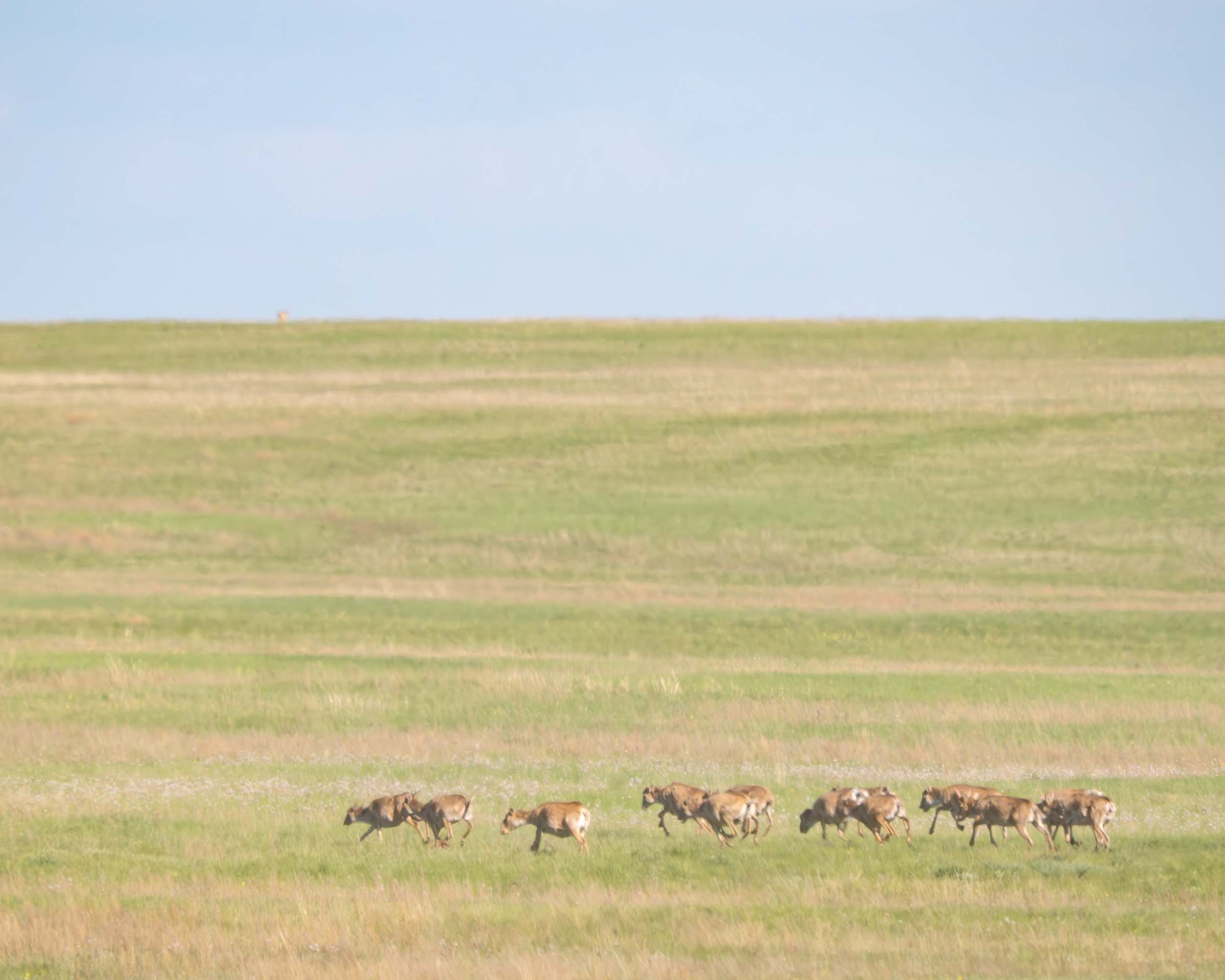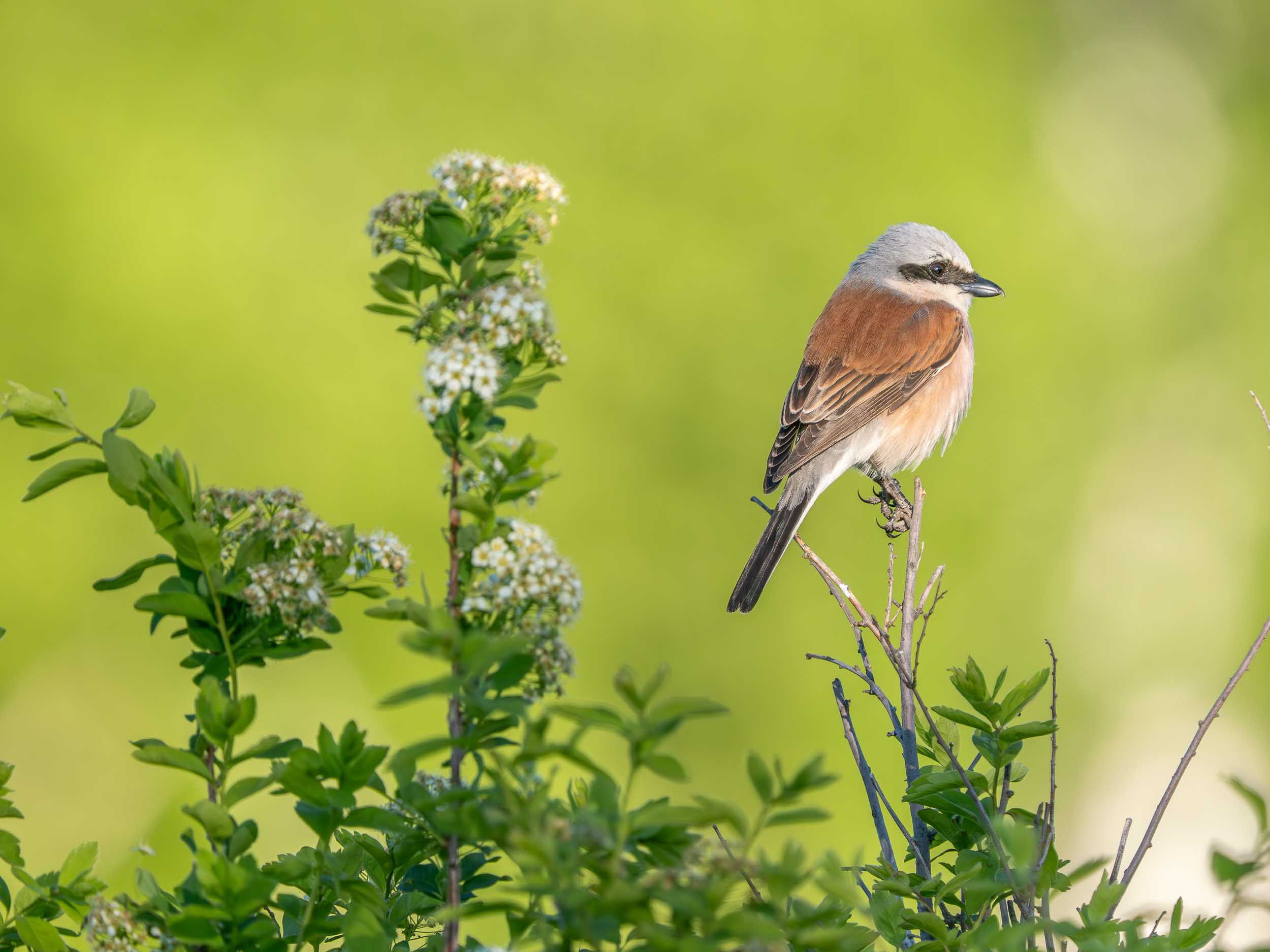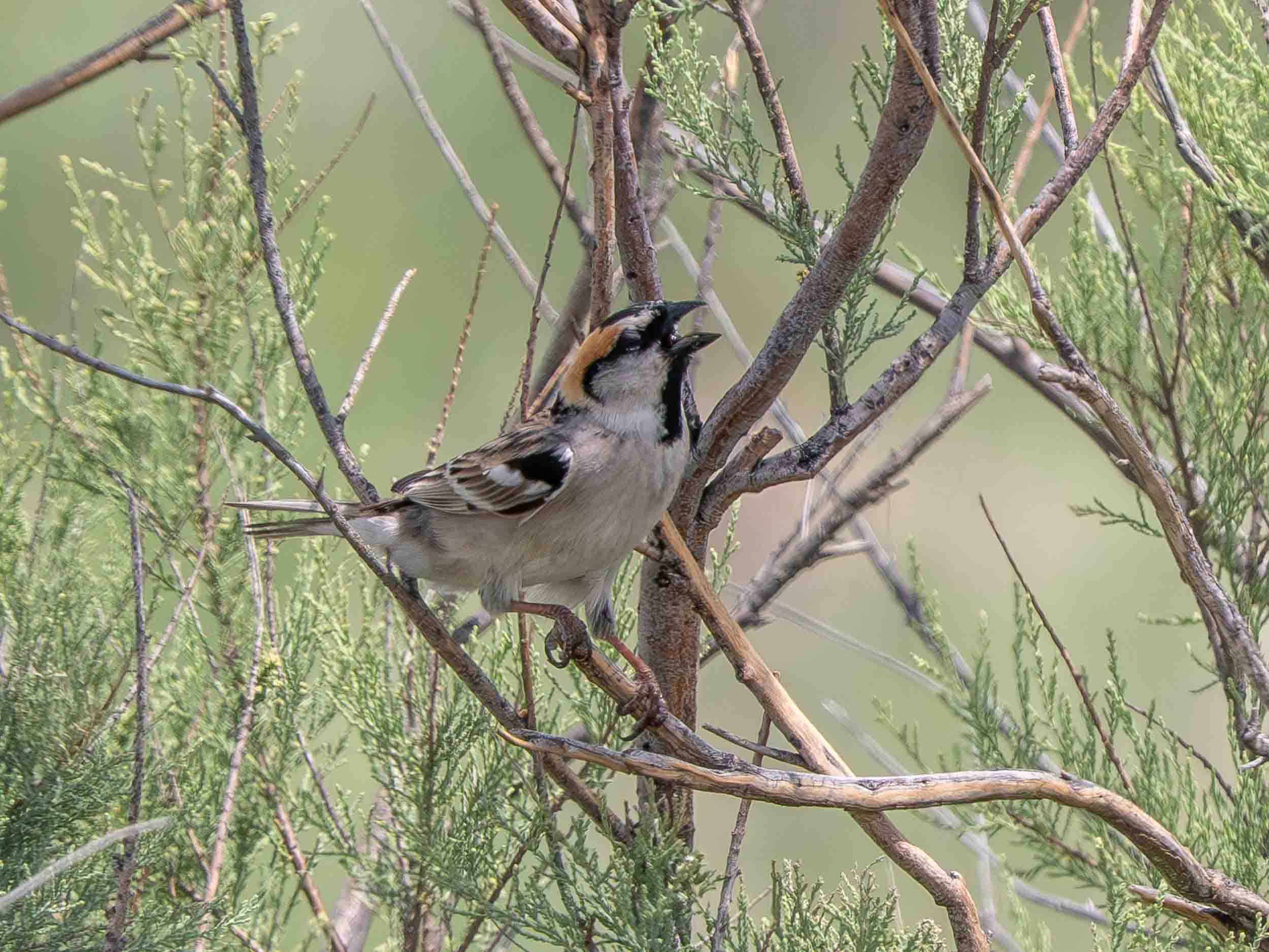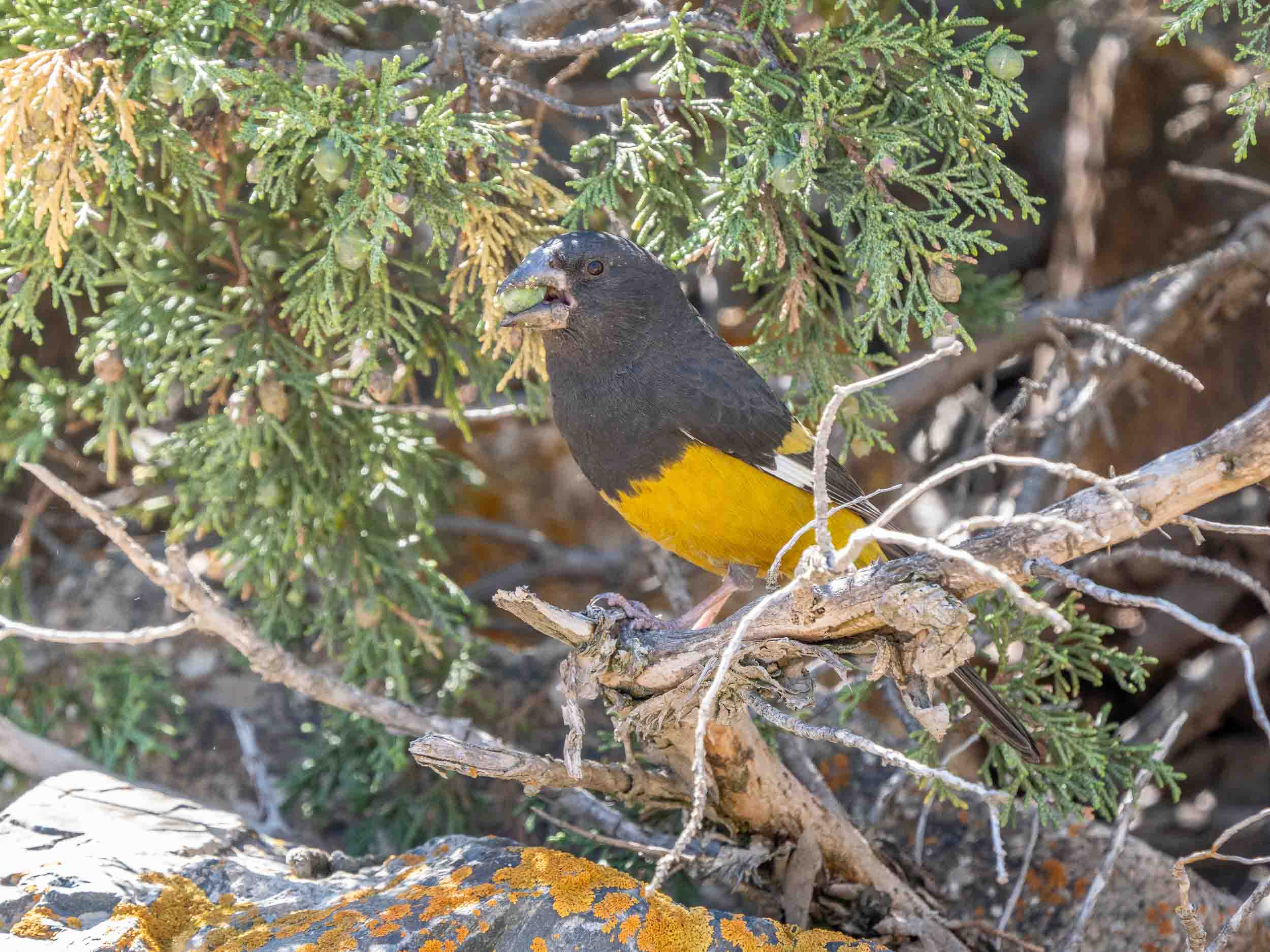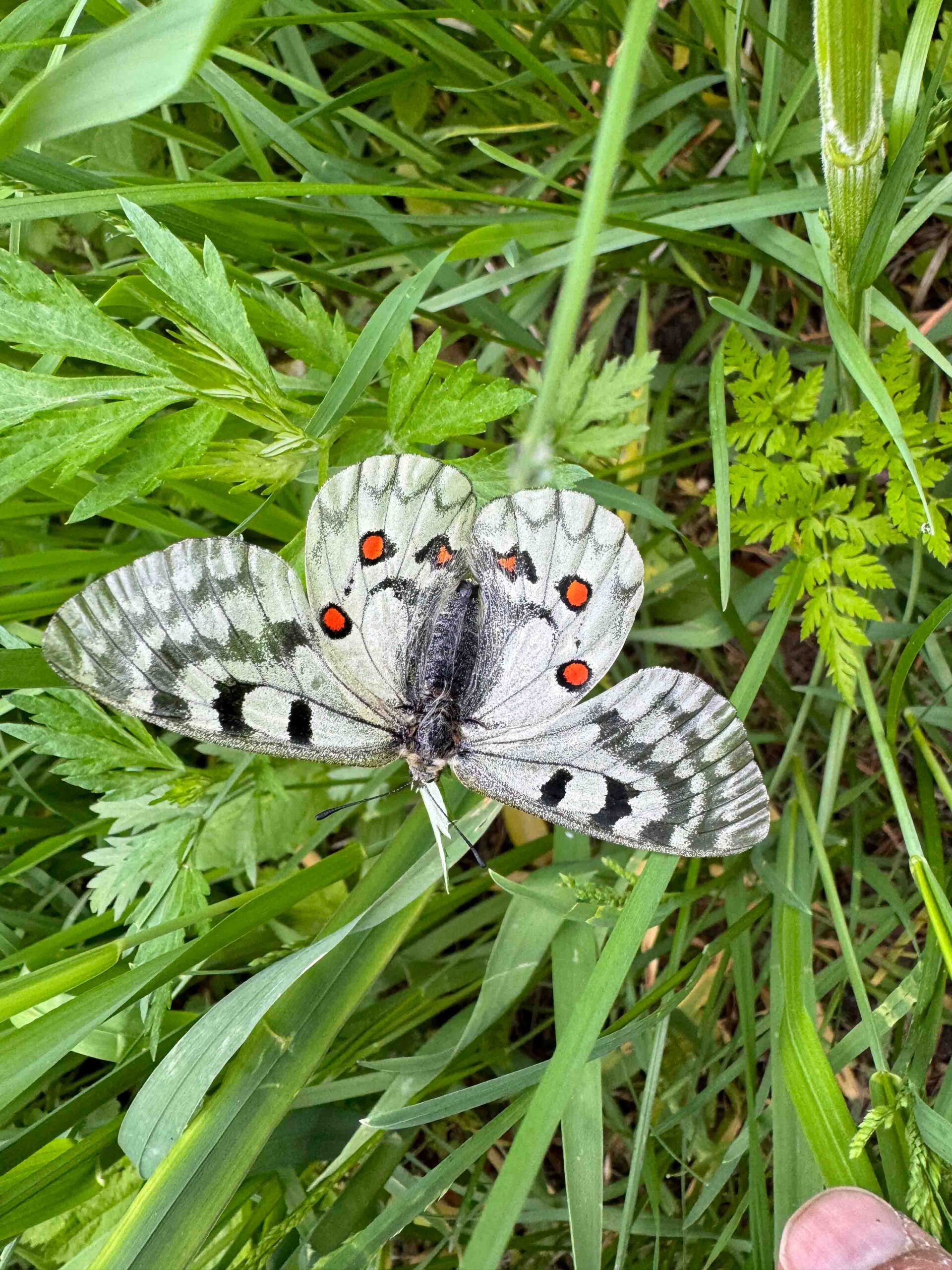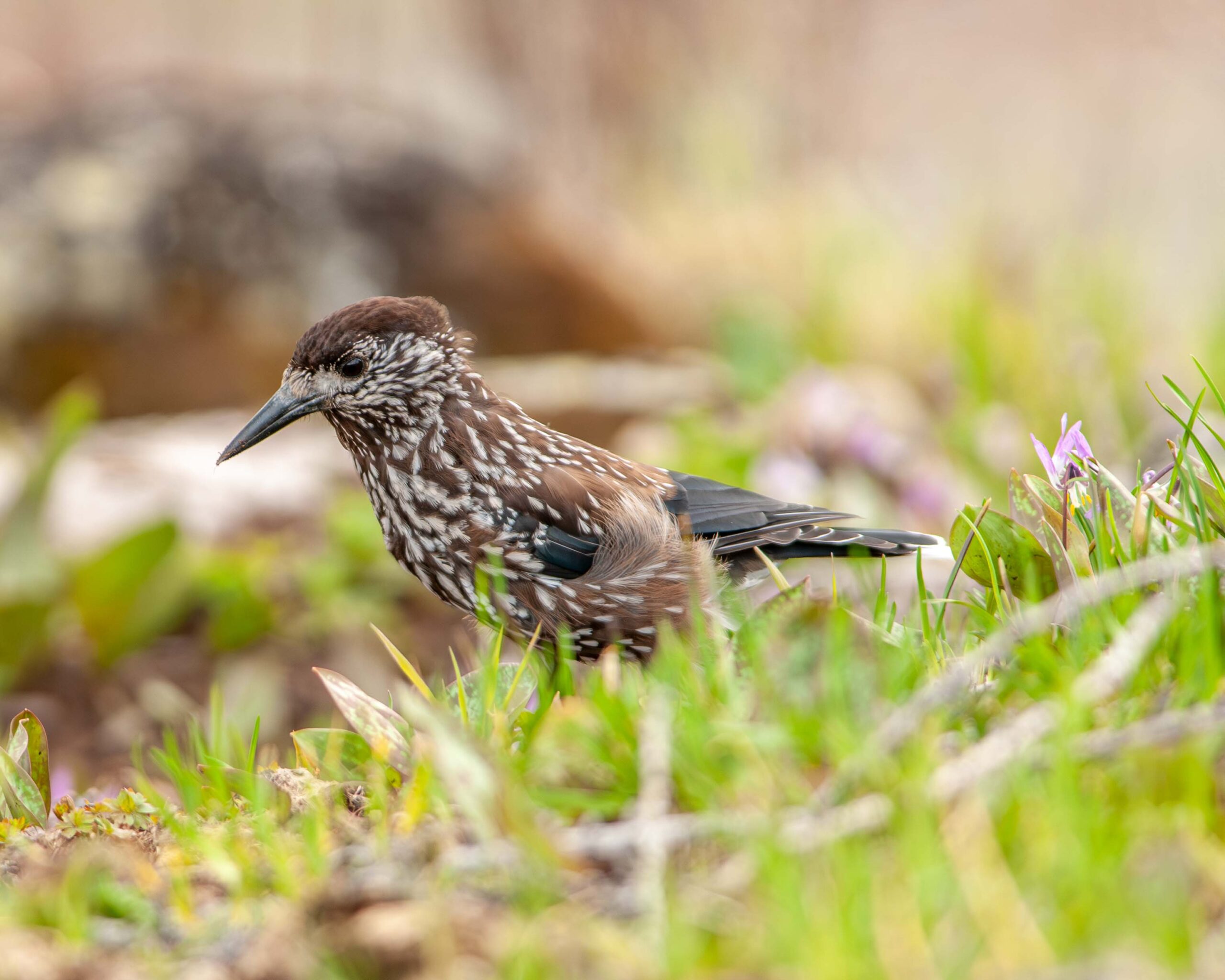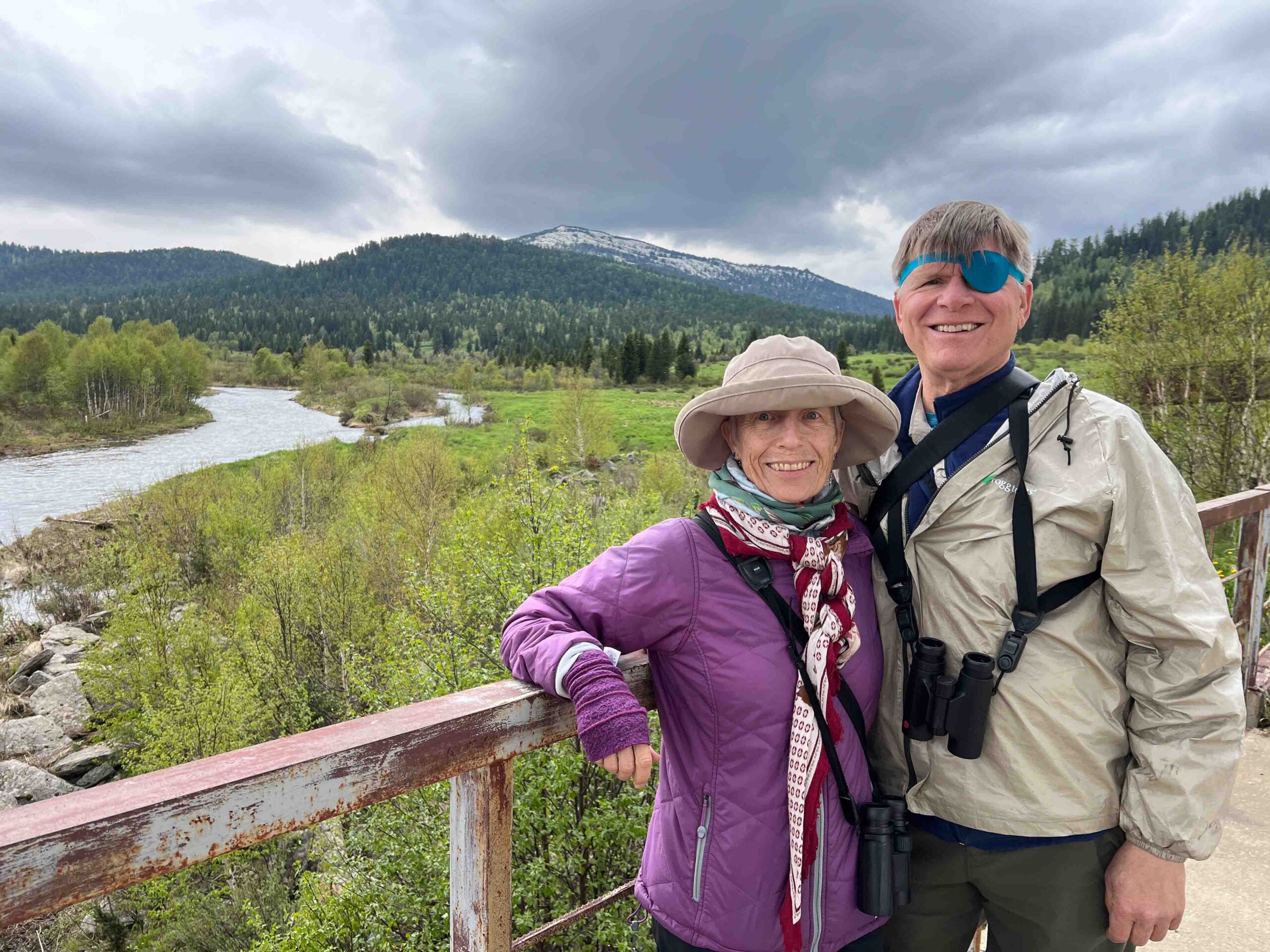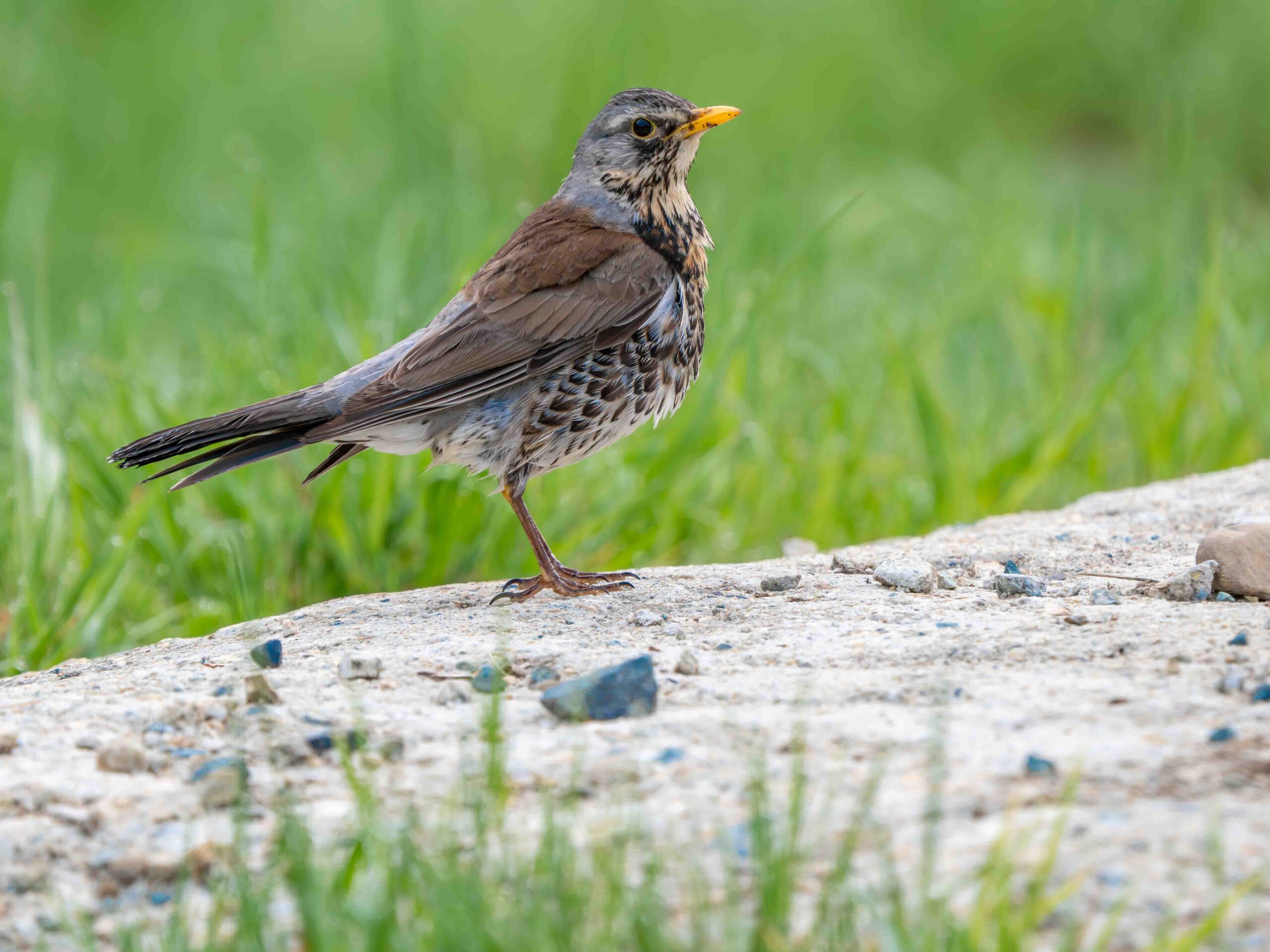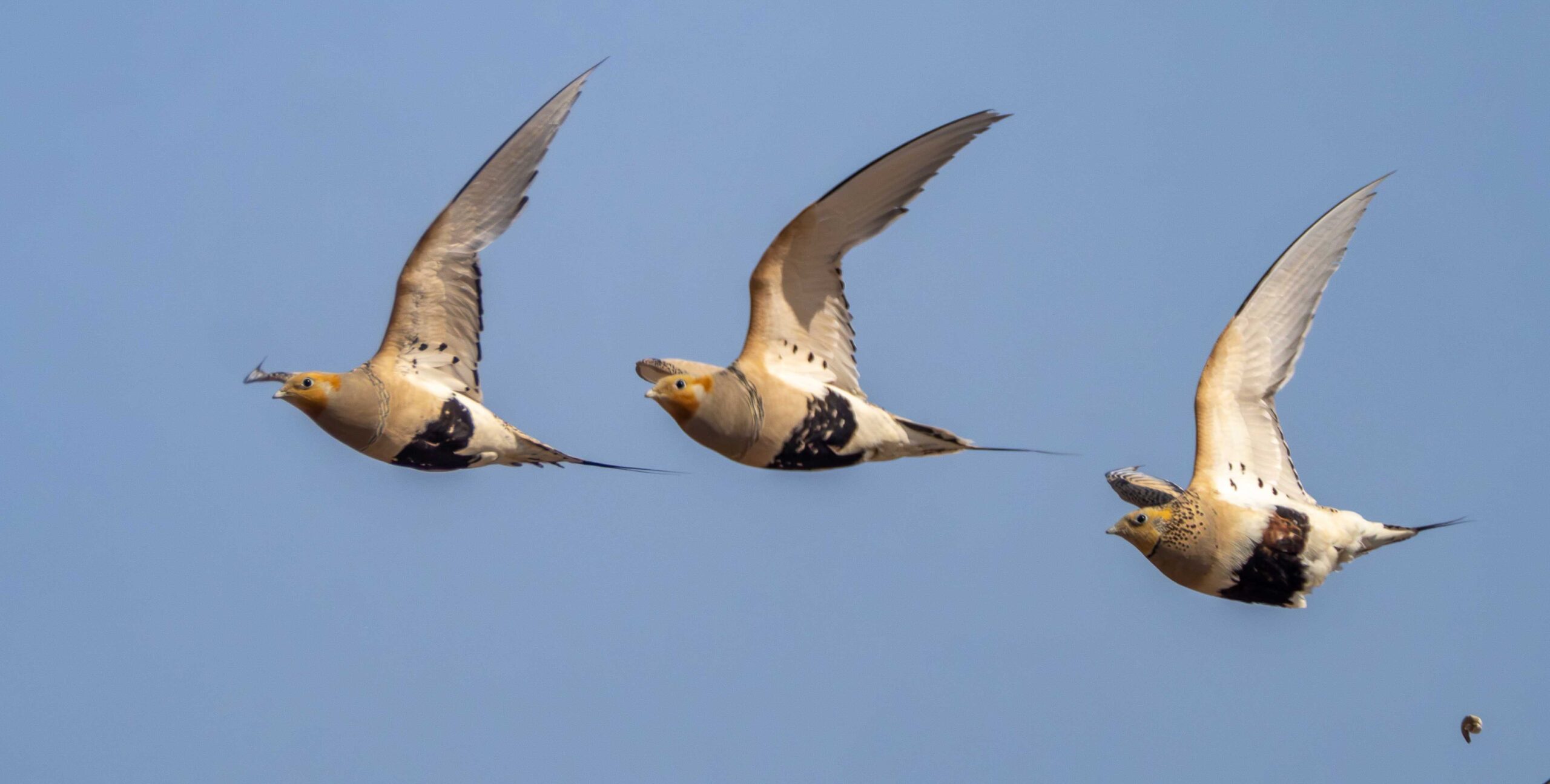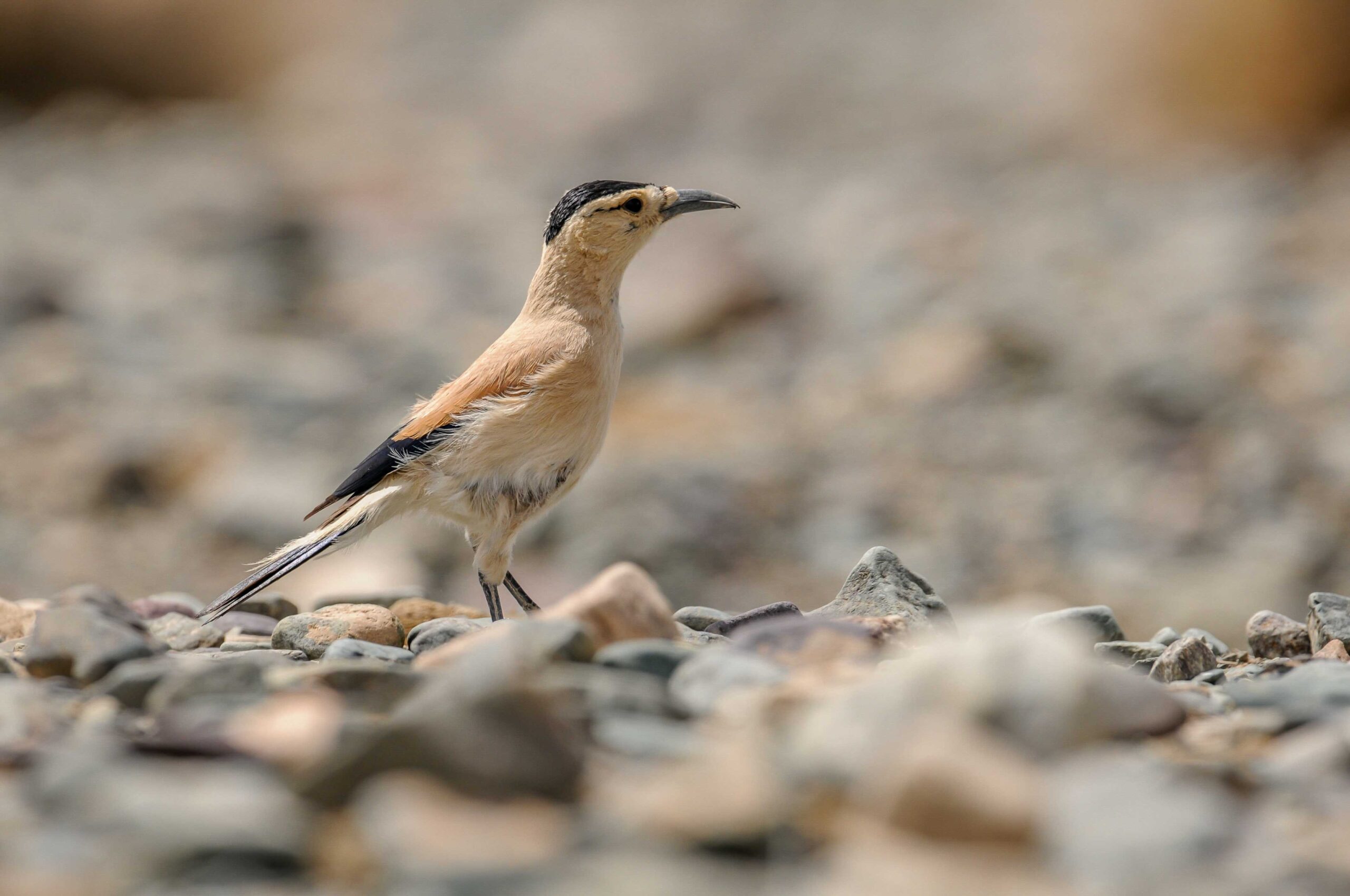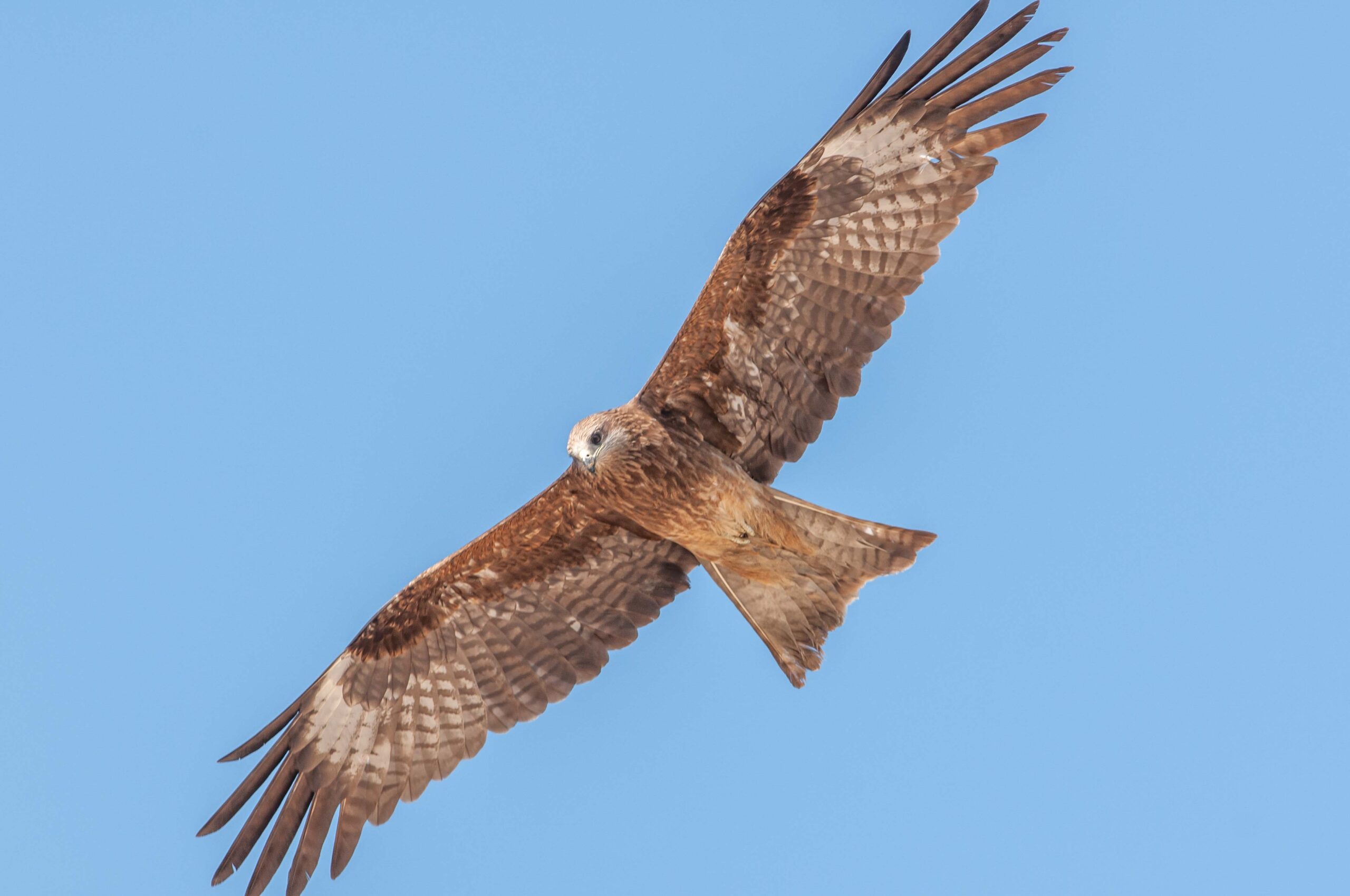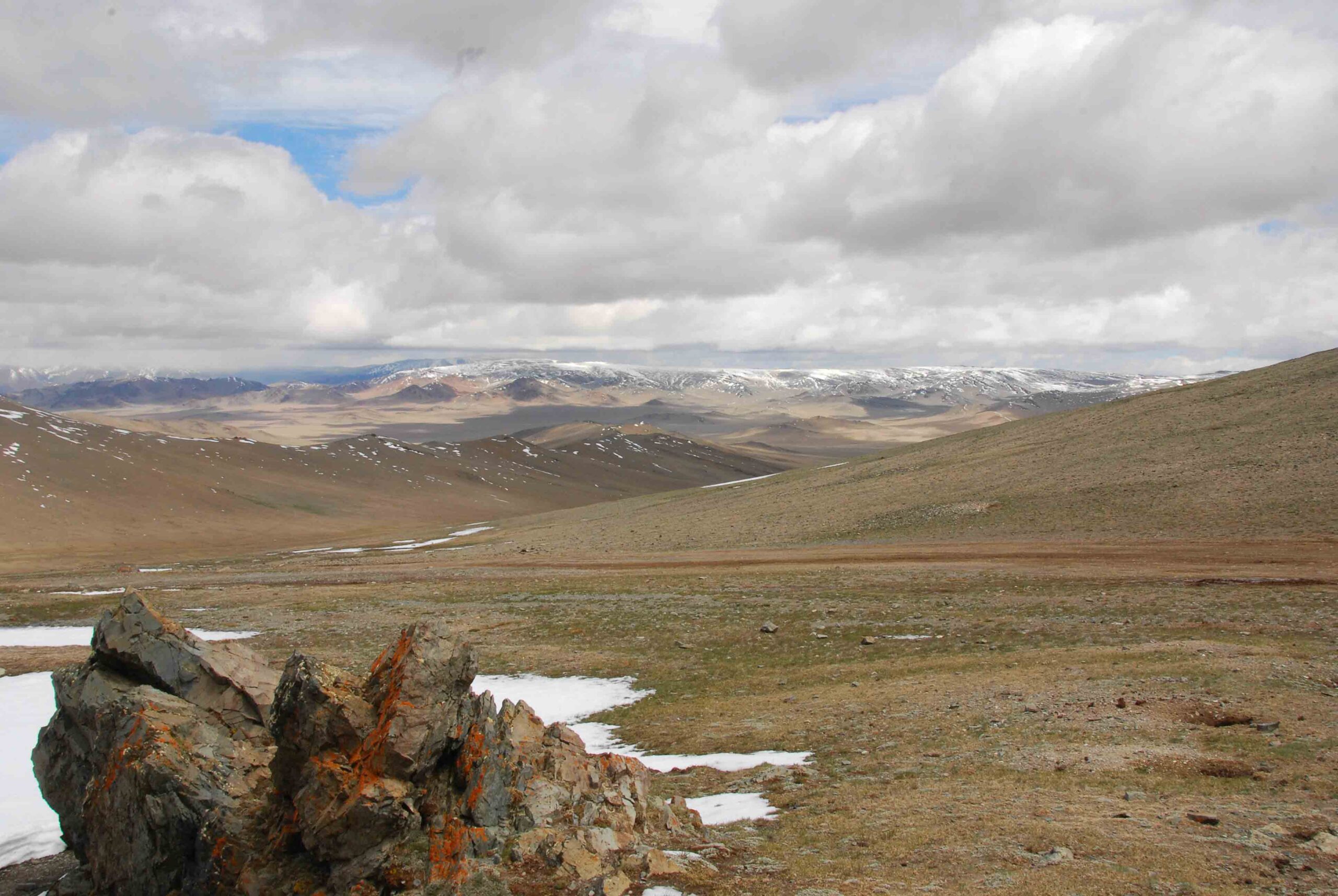
Central Asia 2025 Season Recap – Highlights and Rare Sightings
Central Asia 2025 Season Recap
Rubythroat Birding Tours proudly serves as the trusted ground operator for many internationally based wildlife tour agencies. The 2025 birding season in Central Asia was one of our most vibrant yet, bringing together over 150 birdwatchers from across the globe to explore the wild, diverse landscapes of Kazakhstan, Kyrgyzstan, and Uzbekistan. Our tours were filled with unforgettable moments, exciting discoveries, and exceptional encounters with the region’s rich and unique birdlife. Below is a recap of some of the season’s standout highlights.
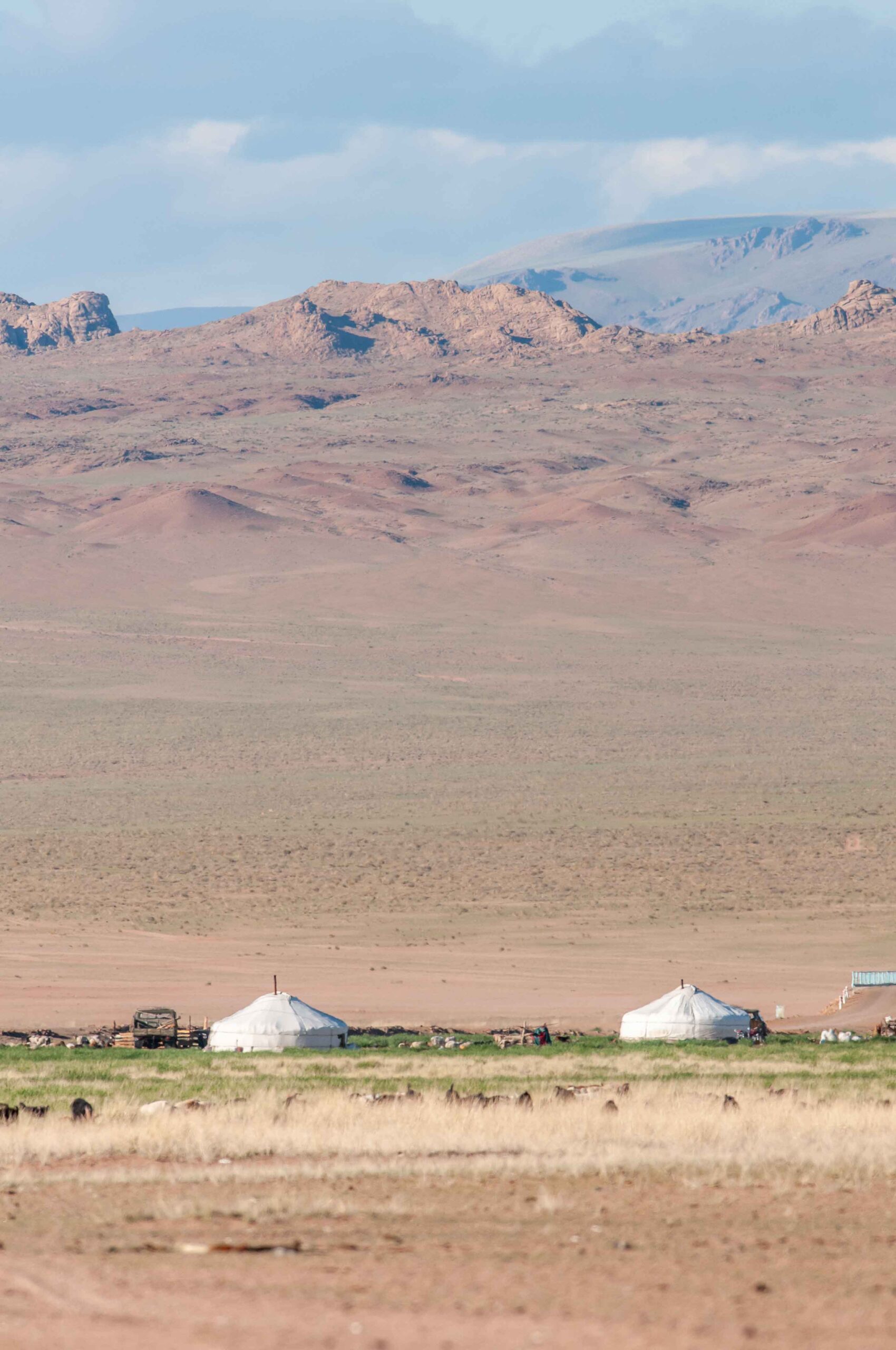
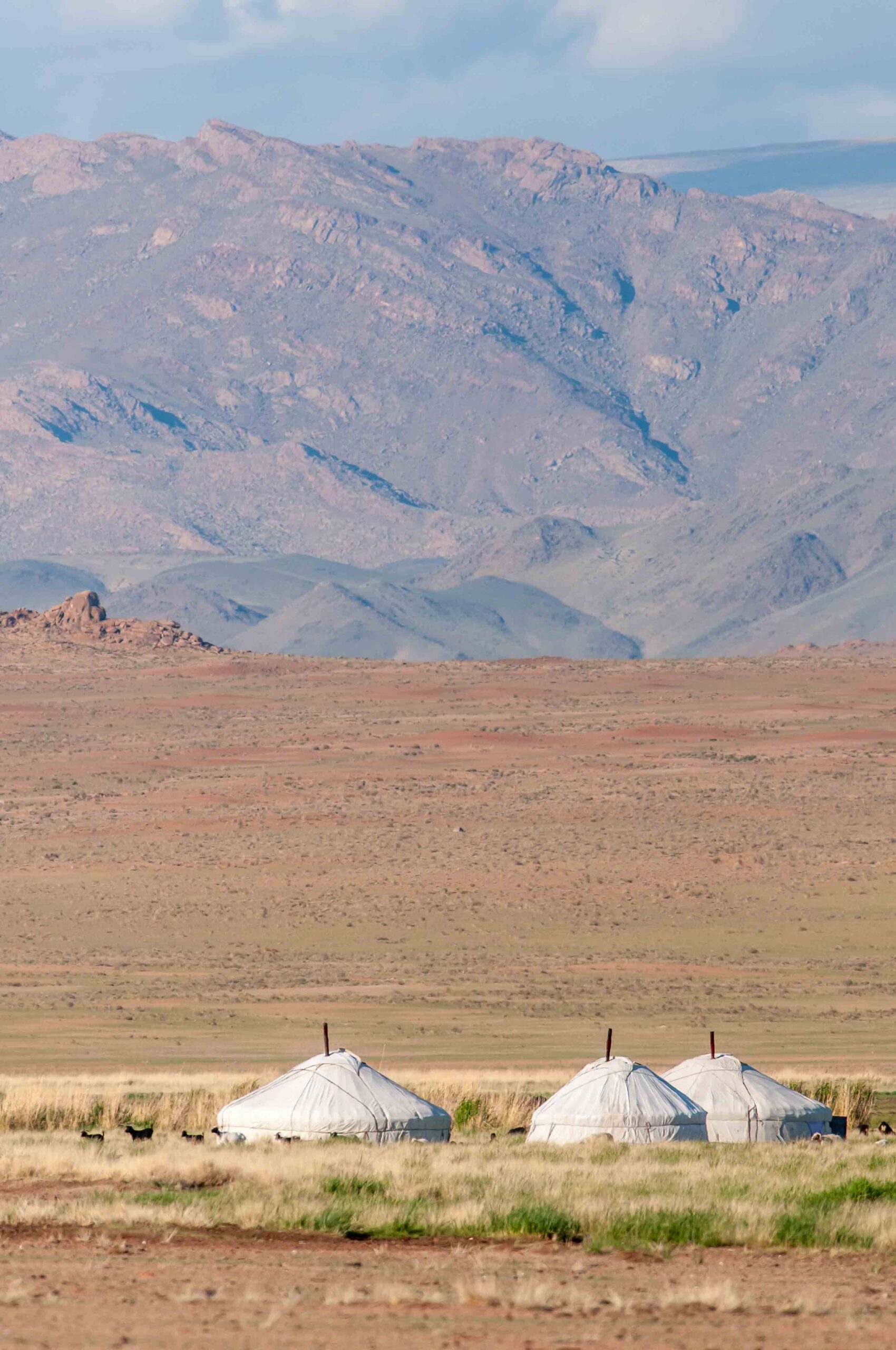
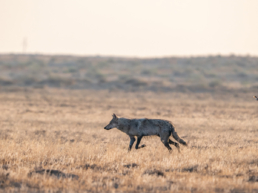
Taukum Desert and RBT yurt camp
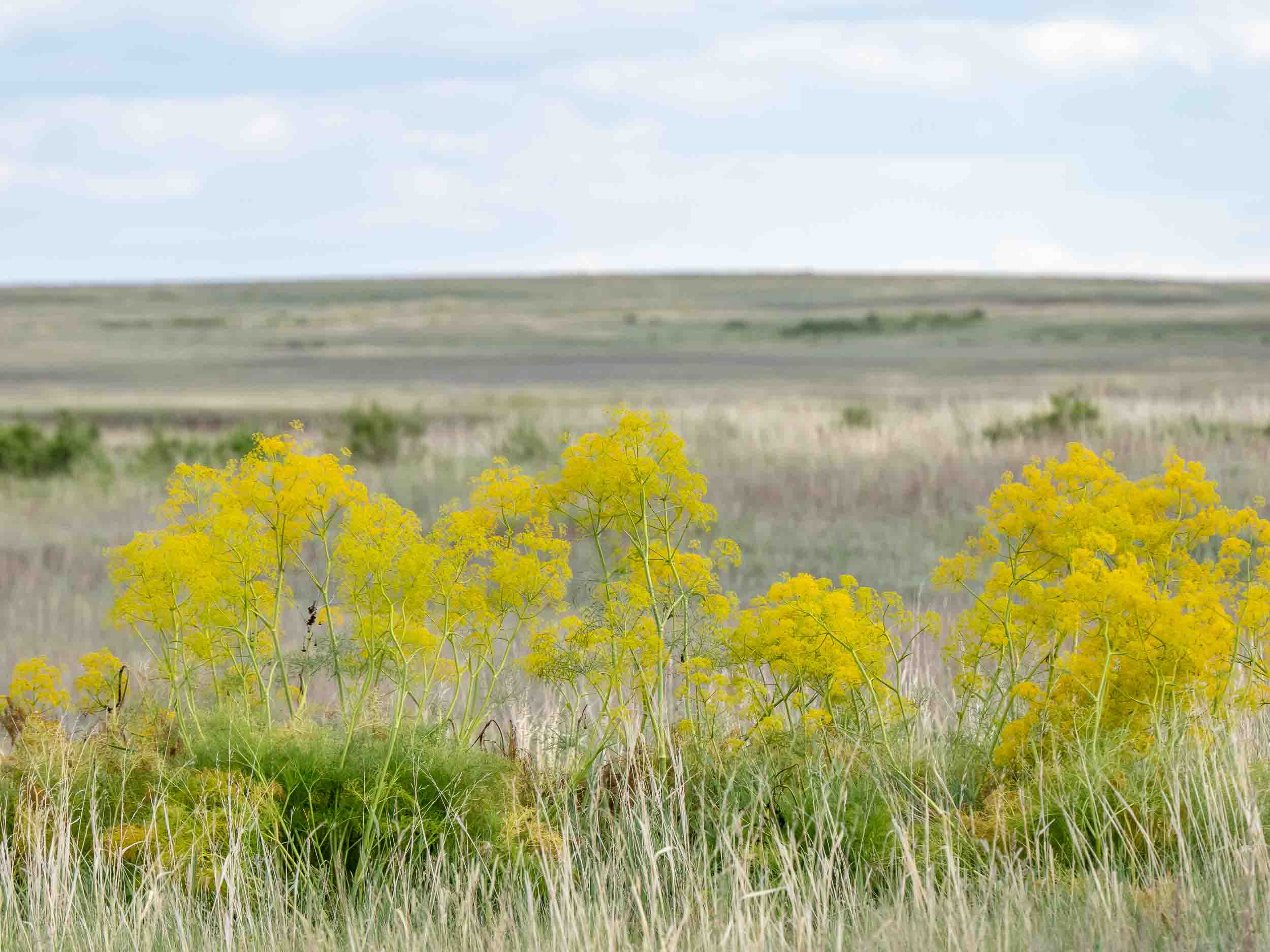
Spring arrived unusually early this year, with temperatures in the Taukum Desert reaching nearly 40°C in the first week of May—an exceptional event for the region. By late April, we were already observing Greater Sand Plovers with chicks, a clear indication that the breeding season had begun ahead of schedule.
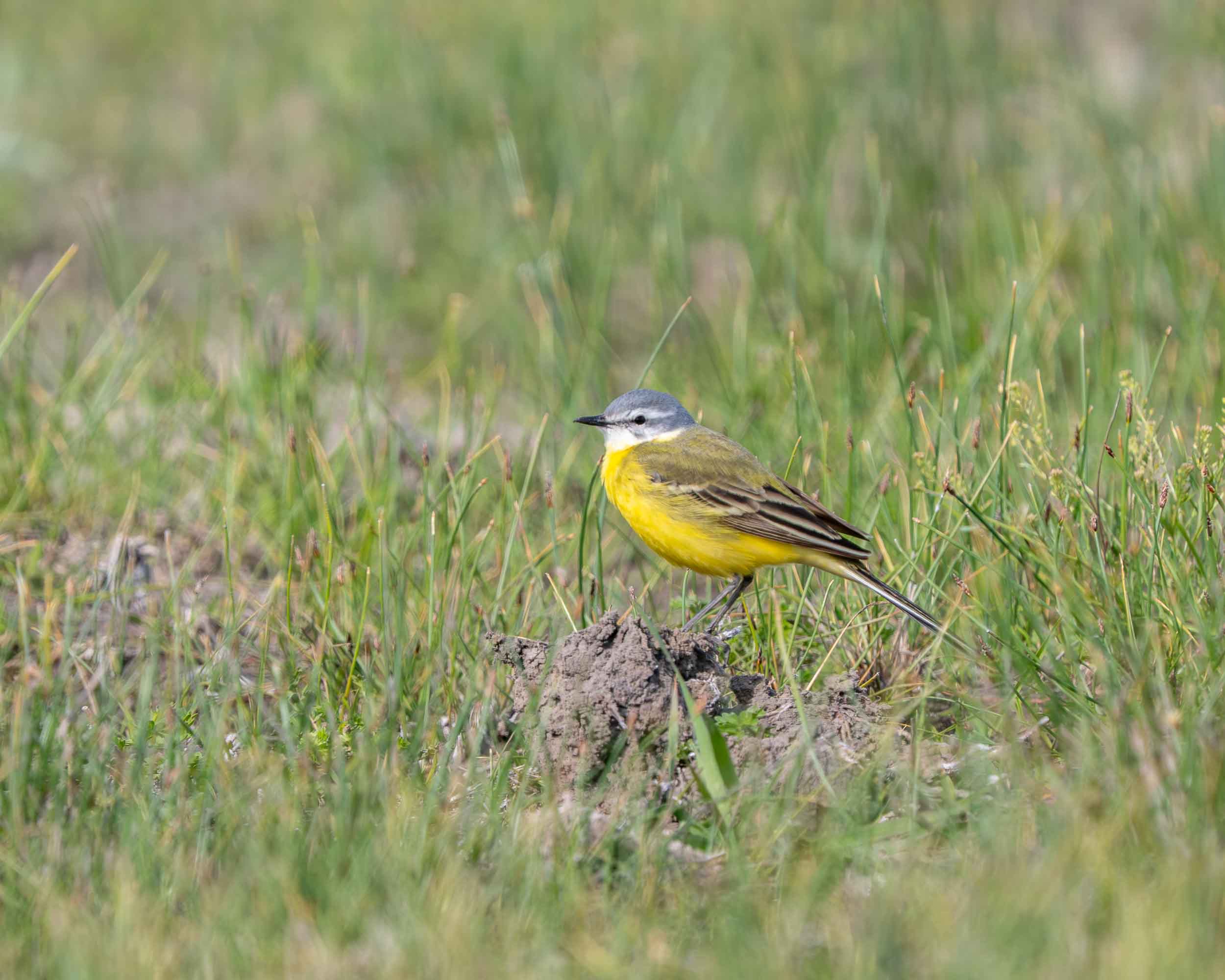
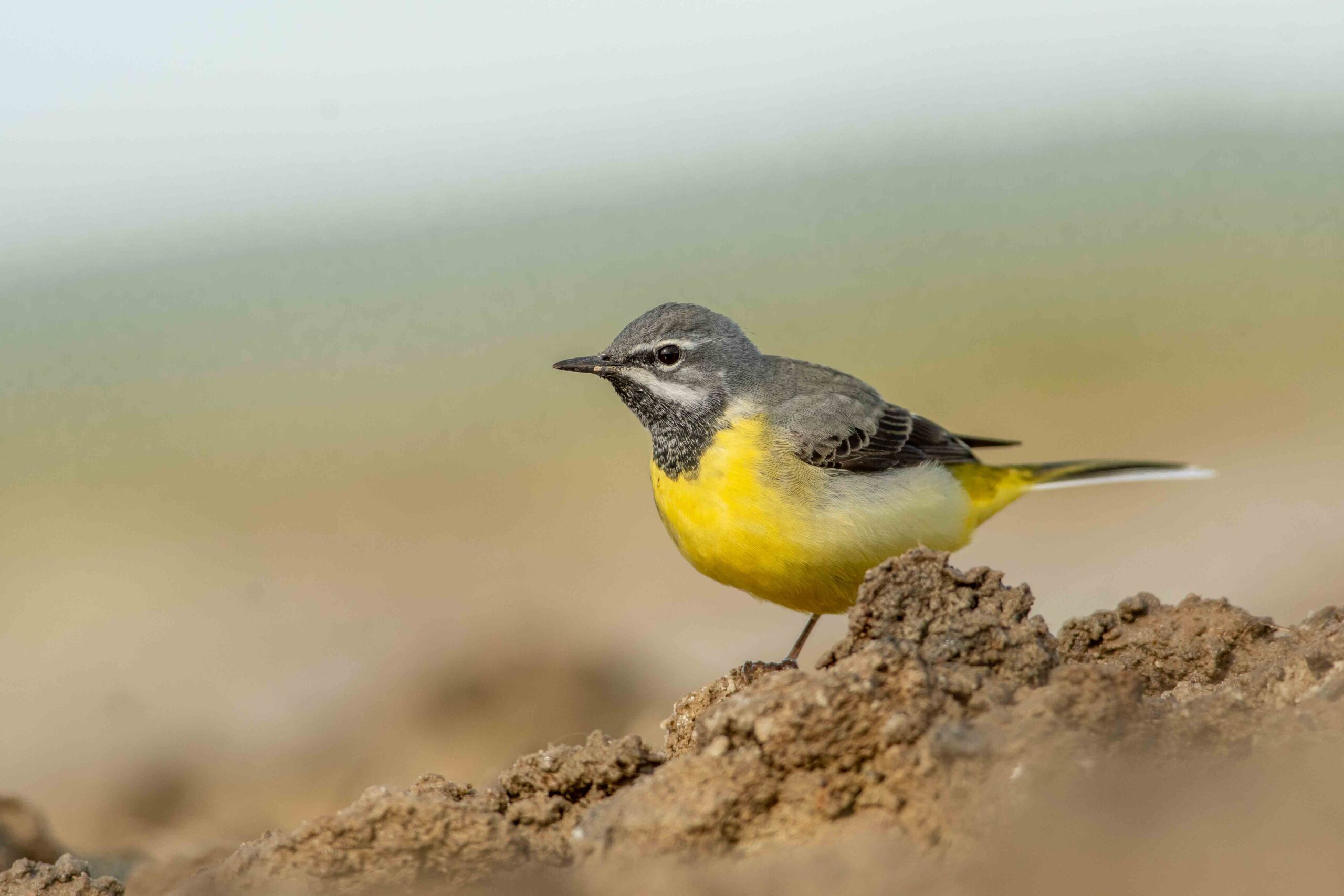
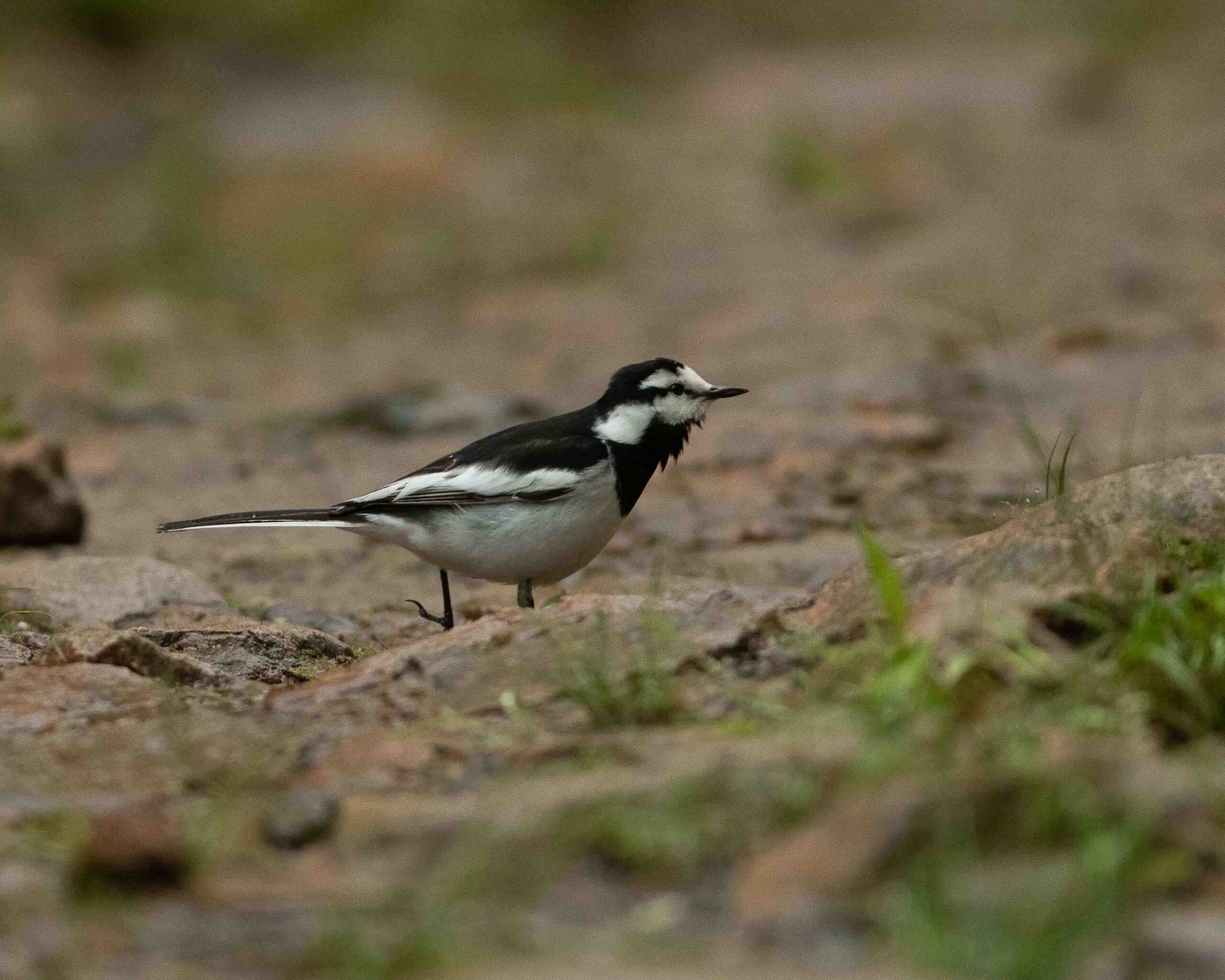
The first half of May brought the peak of wader and wagtail migration, with impressive numbers of Western Yellow Wagtails, particularly the beema and thunbergi subspecies, moving through the desert. A true highlight was the striking white-headed race leucocephala—always a showstopper for wagtail enthusiasts.
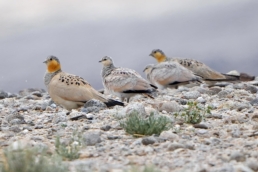
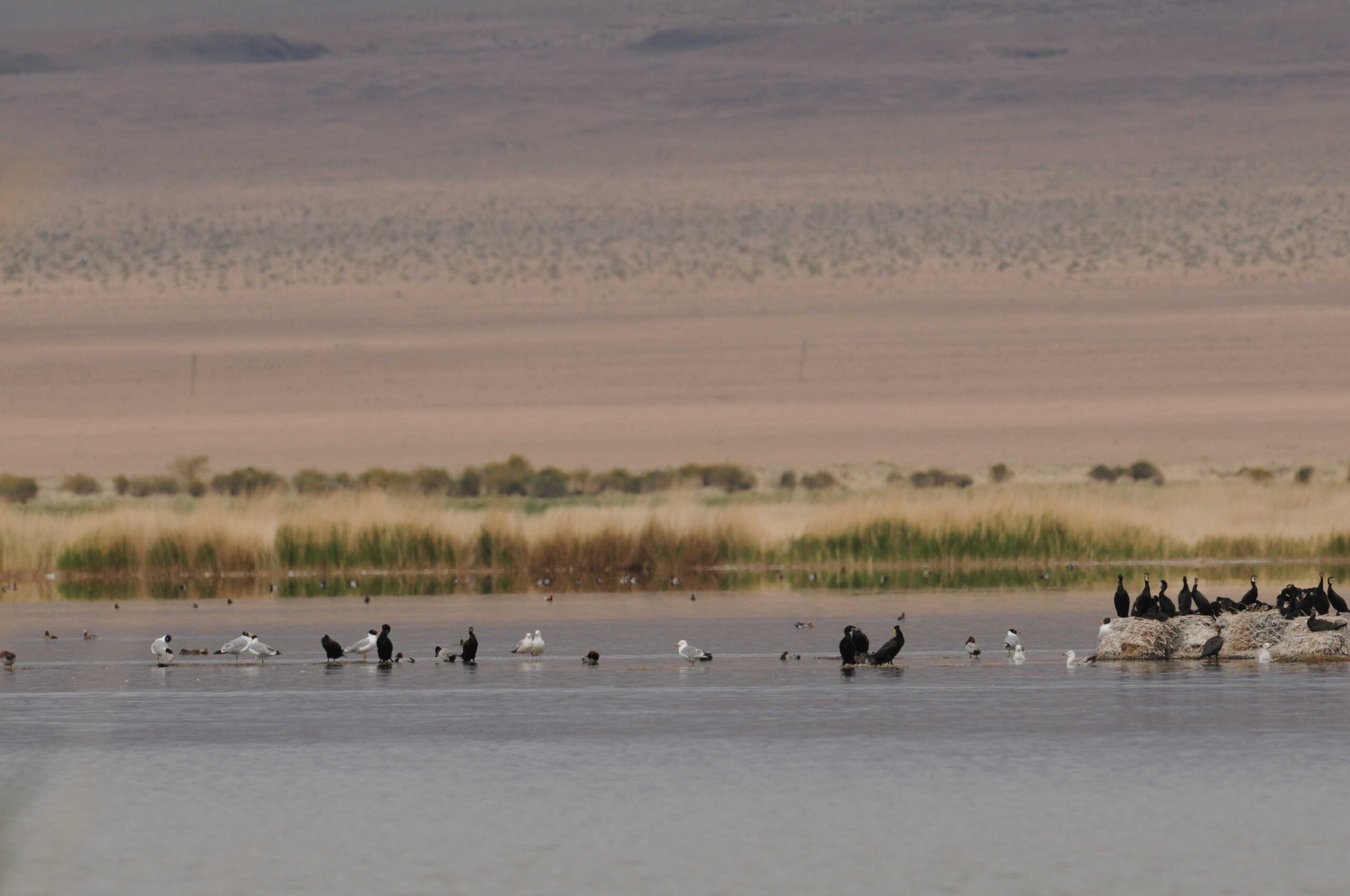
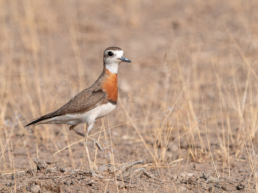
Last year, for the first time in all our years of running tours, we missed the breeding Caspian Plovers. Thankfully, this season delivered: an early pair was discovered, followed by additional sightings at the same site, with a maximum count of 14 Caspian Plovers. This area also overlaps with our Macqueen’s Bustard location, which proved inconsistent again this year, reflecting the species’ continued decline due to hunting and habitat loss.
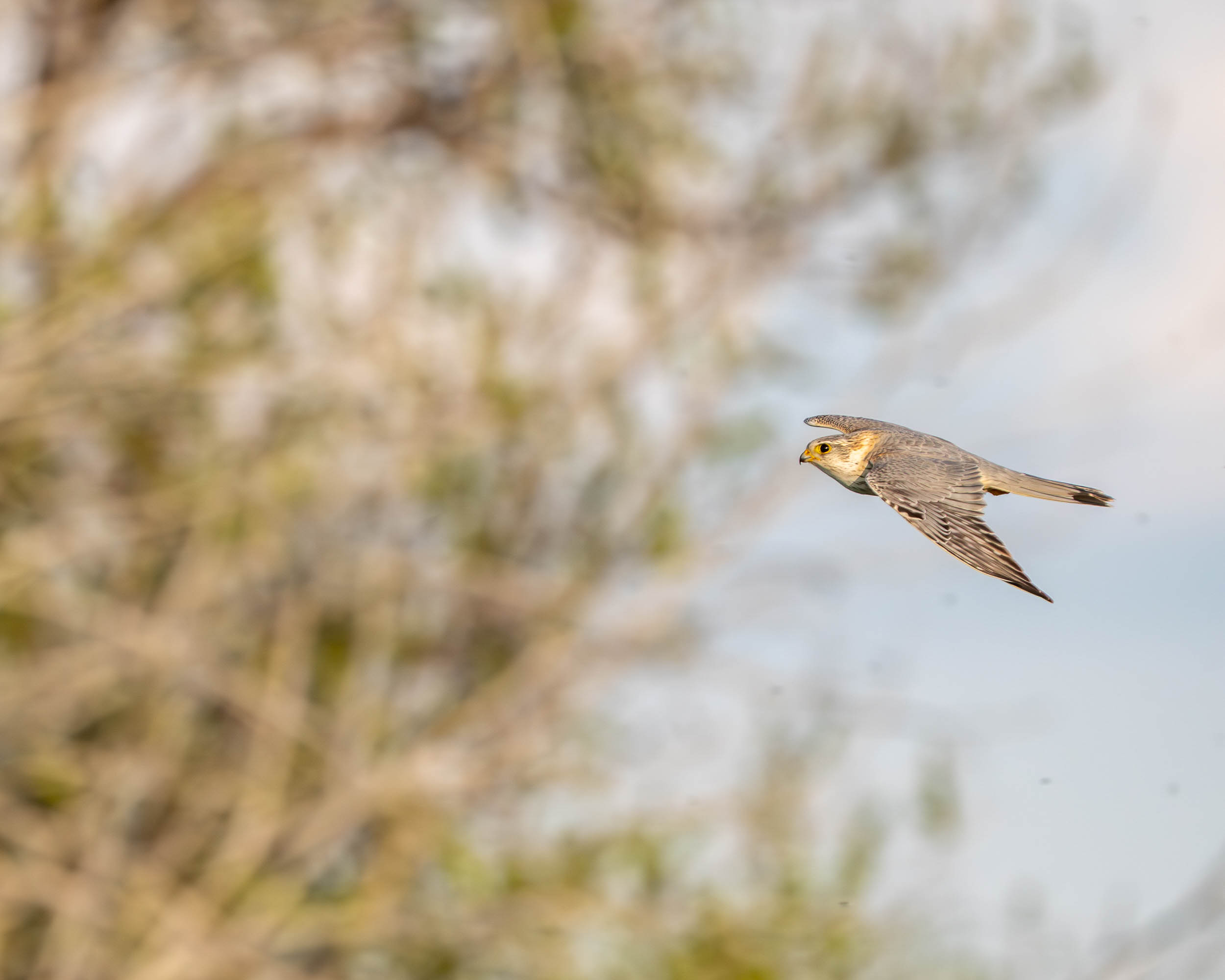
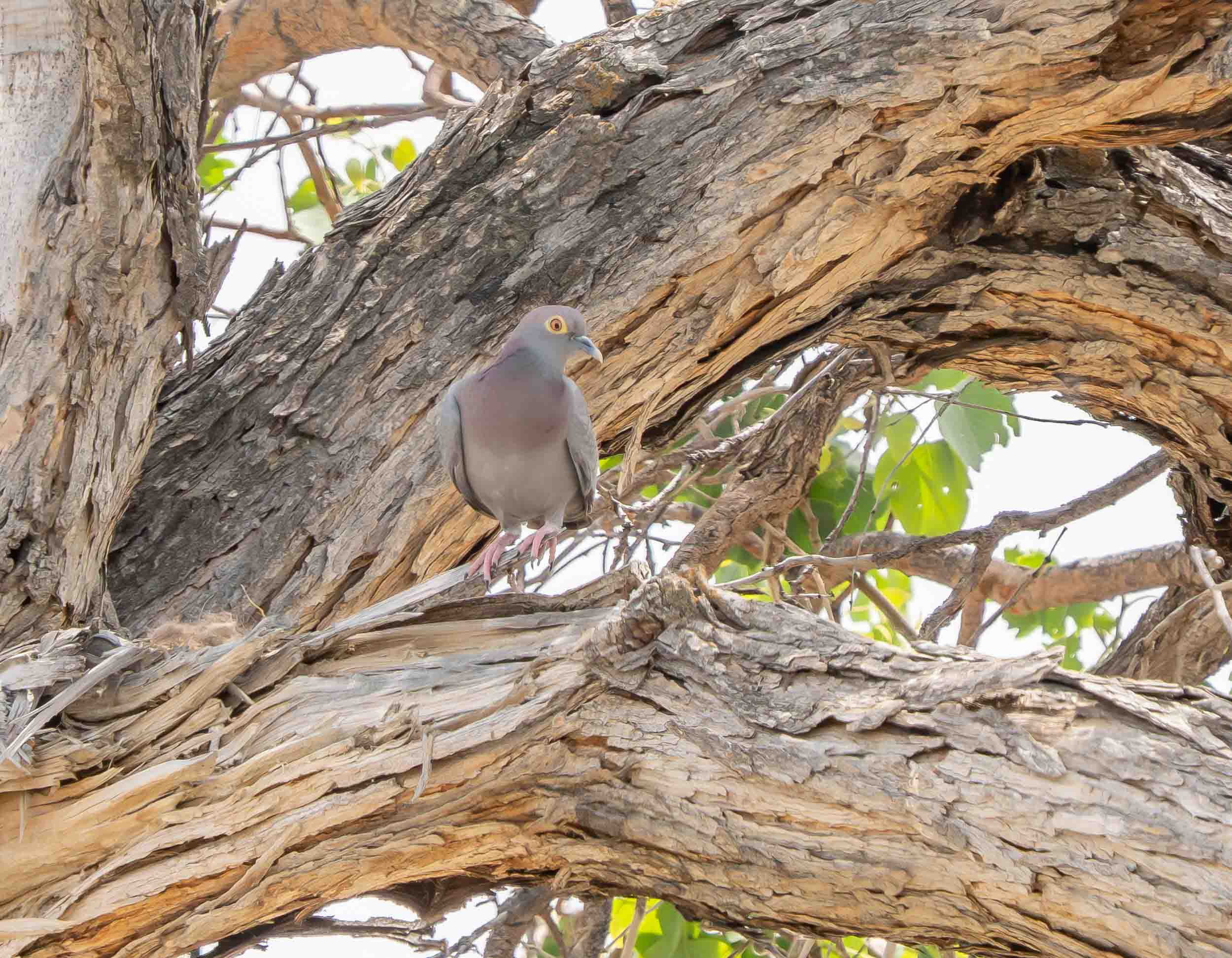
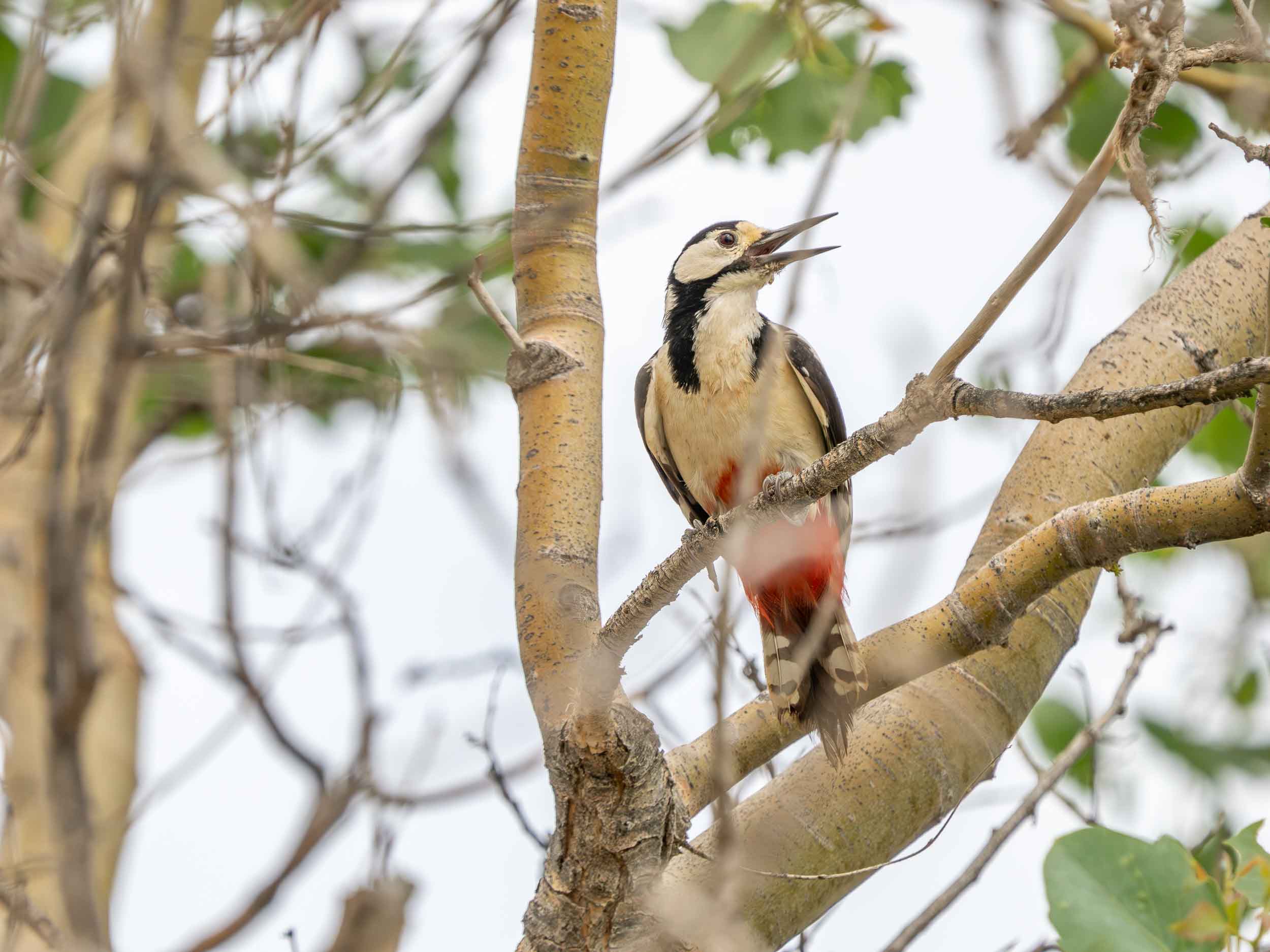
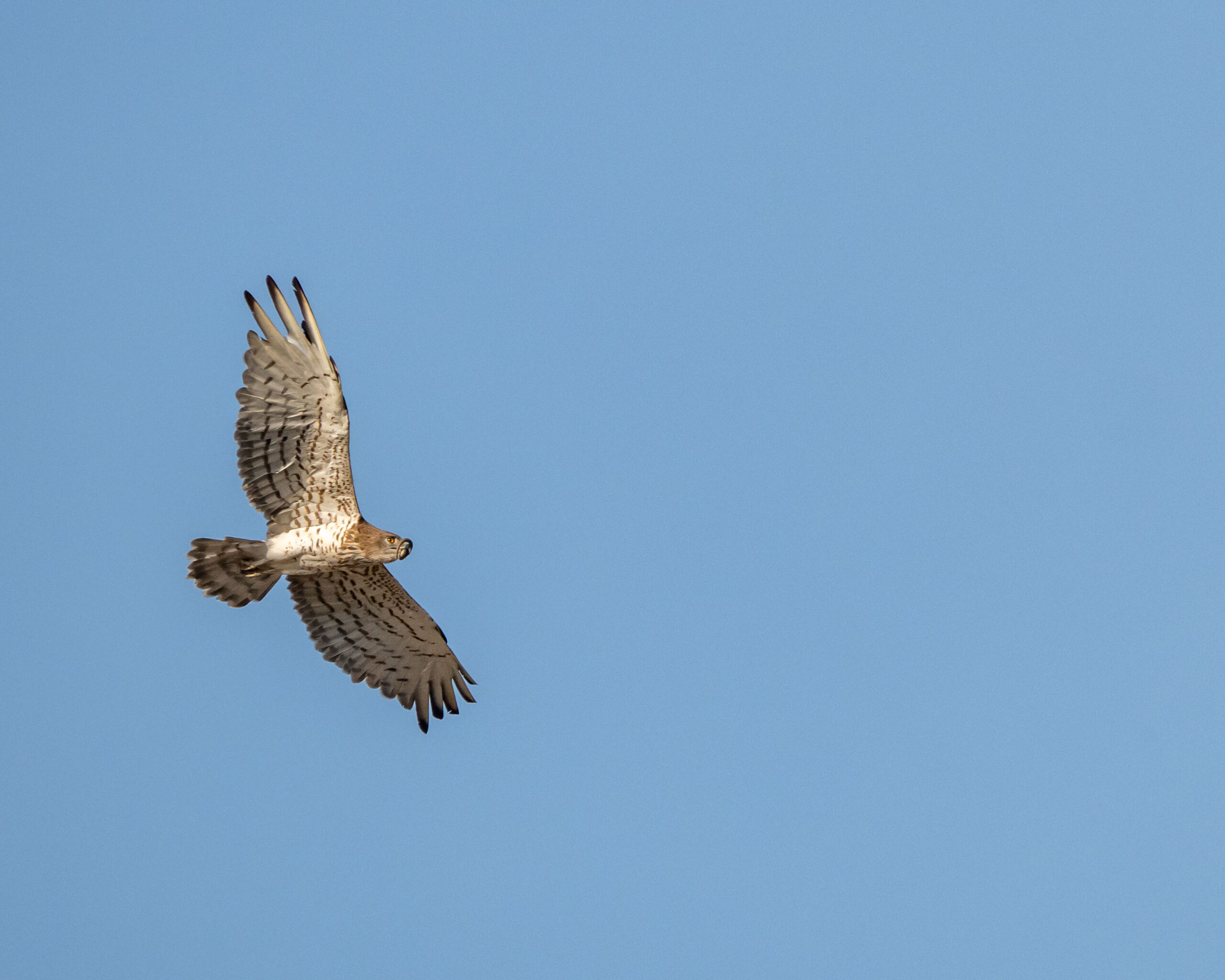
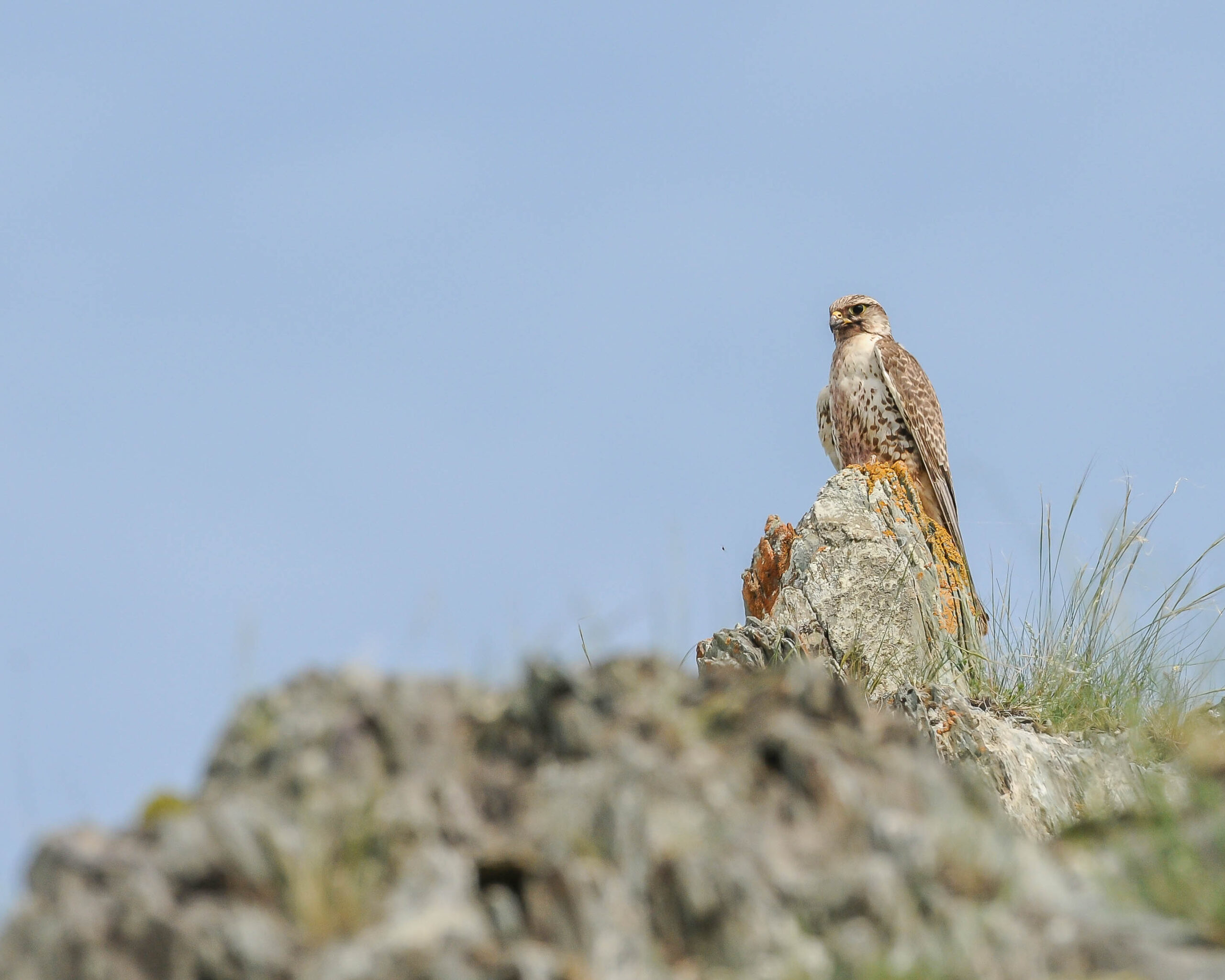
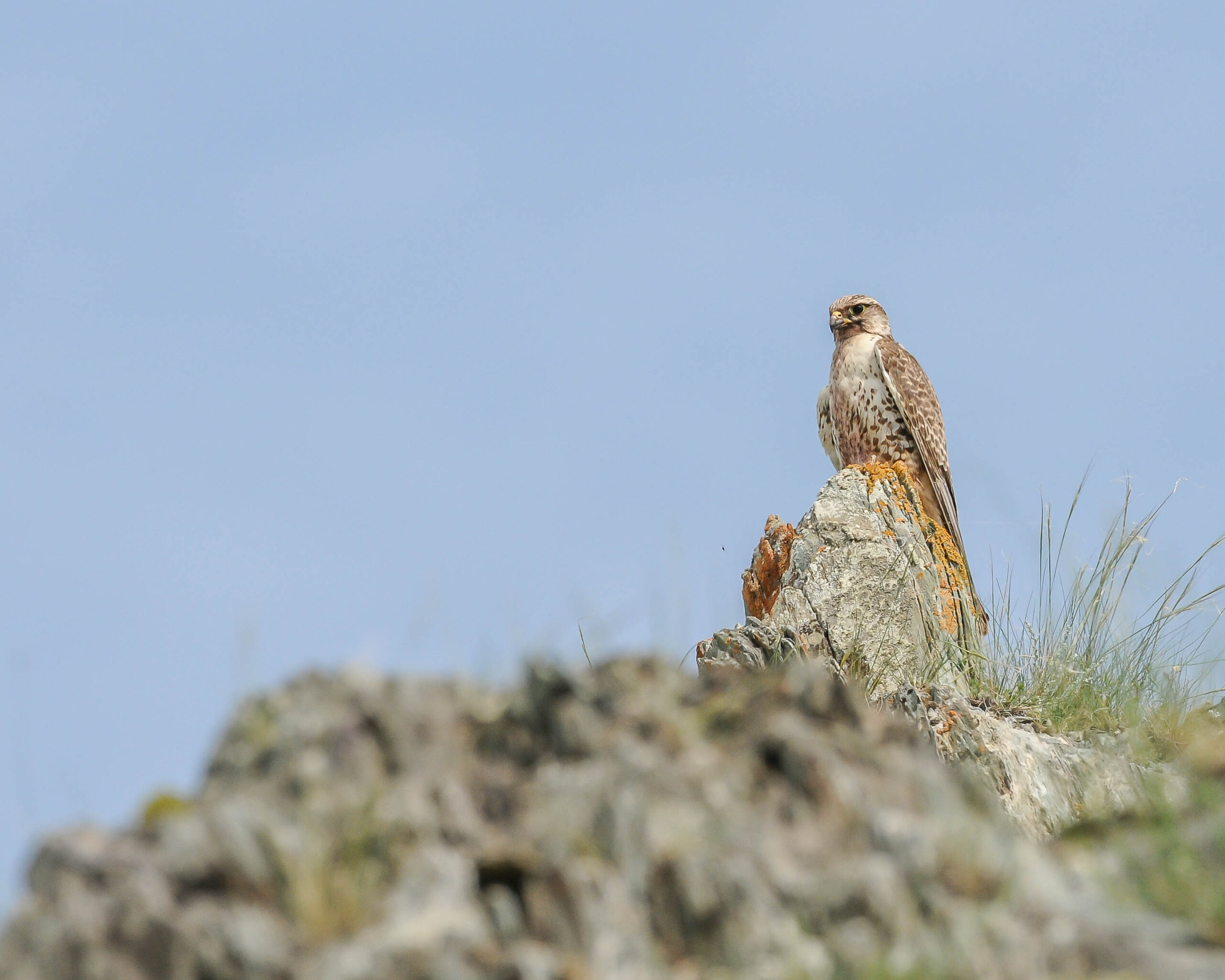
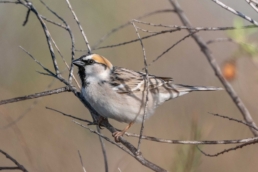
One group was treated to spectacular views of a Saker Falcon, though not hunting bustards on this occasion. Meanwhile, visits to the Zheltorangly Desert Poplar Forest proved reliable, with all groups recording the “wanted five”: Shikra, Yellow-eyed Dove, Saxaul Sparrow, Turkestan Tit, and White-winged Woodpecker.
Charyn Canyon
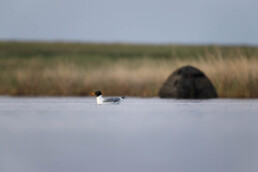
In the Sogety region, we located a nesting Long-eared Owl, while several groups observed Common Mergansers along the Charyn River—a very rare species for this area. Unfortunately, the well that once offered the best chances for the Asian Crimson-winged Finch has been lost due to a Chinese mineral factory. This year, the species was recorded only twice at a newly discovered well.
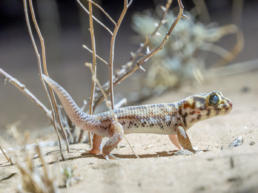
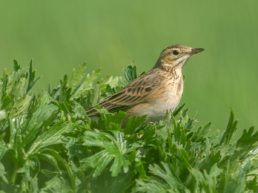
In Charyn Canyon, we were thrilled to discover a nesting site of the majestic Eurasian Eagle Owl—a truly magical encounter. Near Kegen, we documented a Richard’s Pipit nesting site, notably in the same area where a Siberian Crane had been recorded the previous year.
Karakol Kyrgyzstan
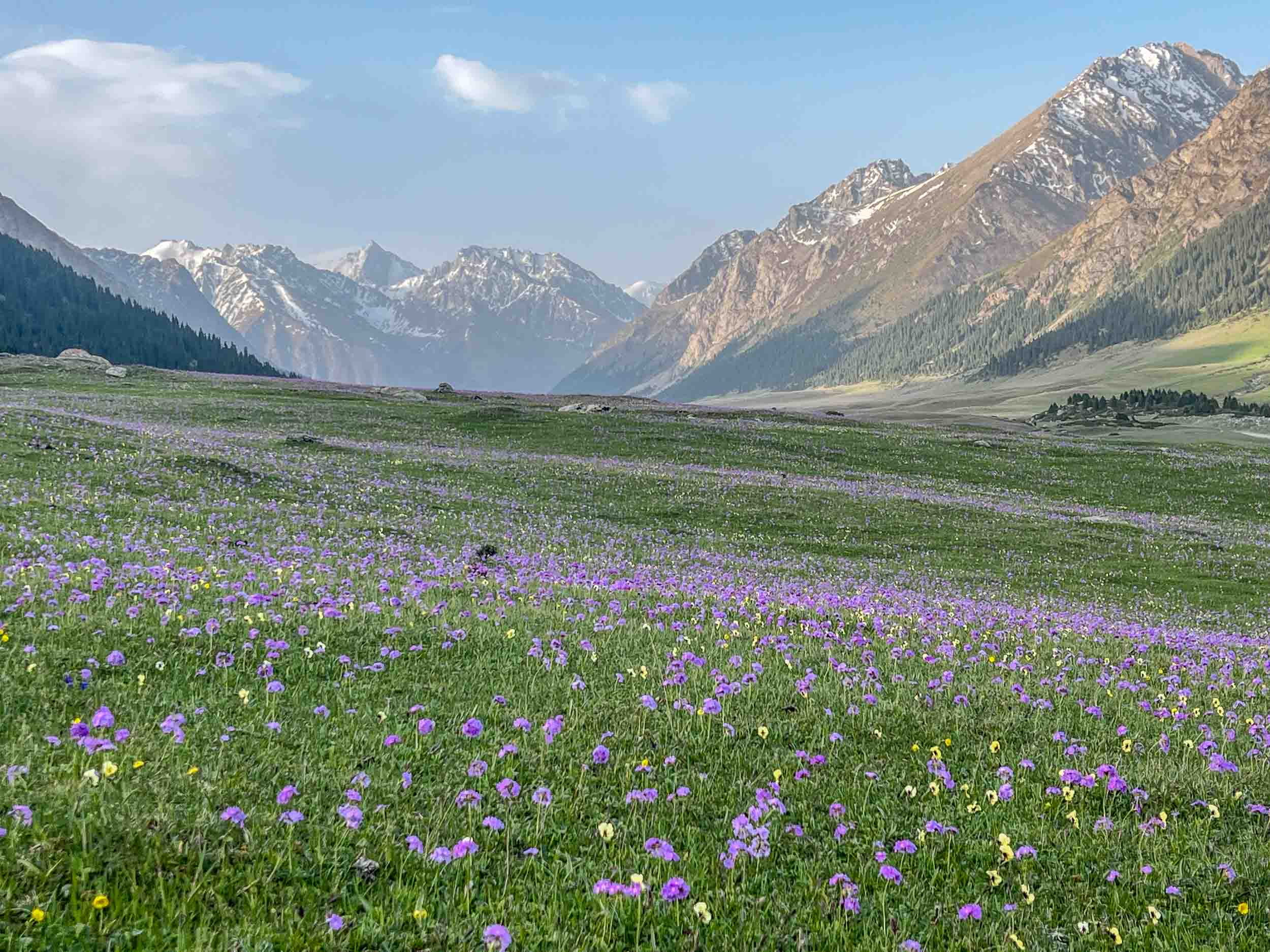
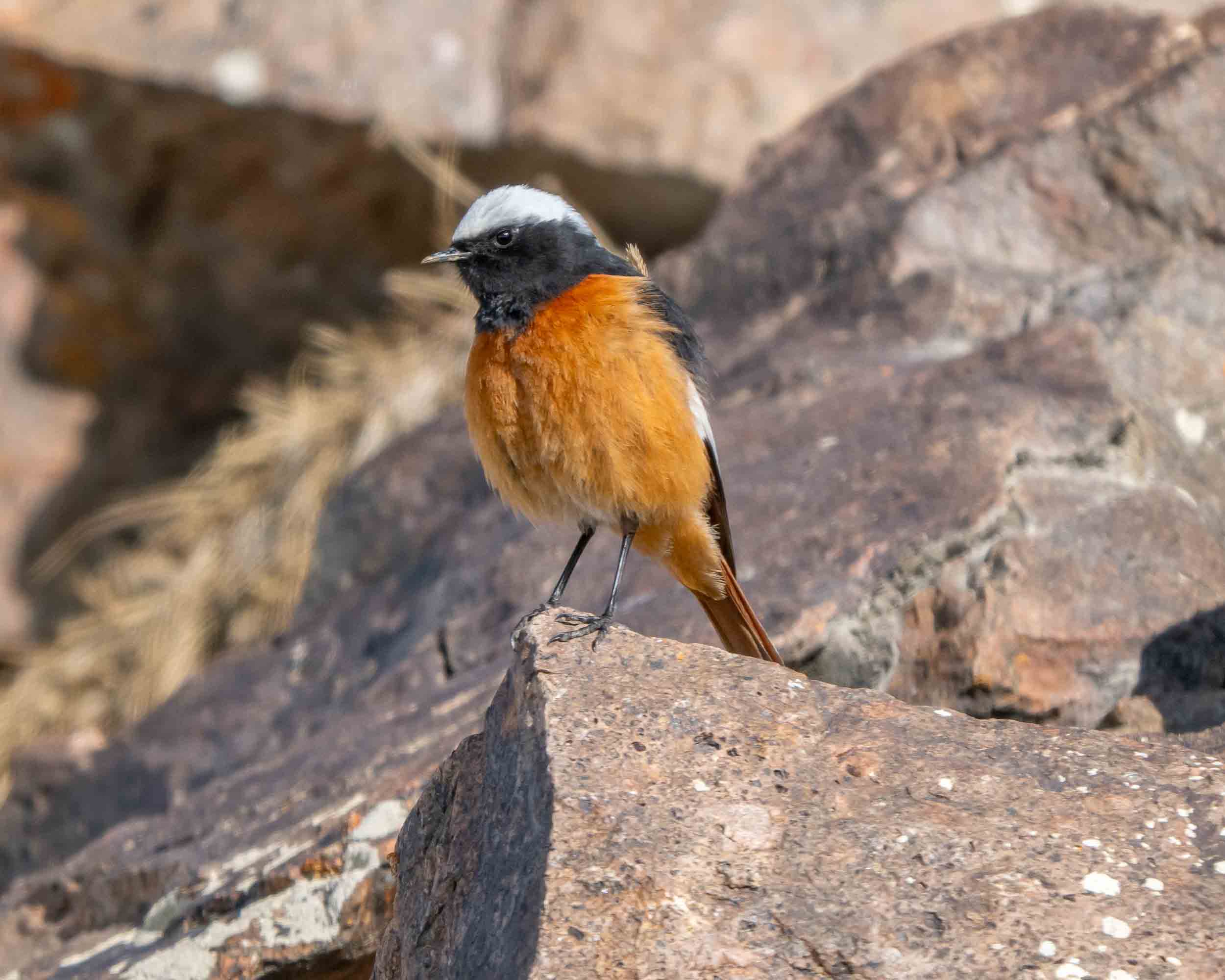
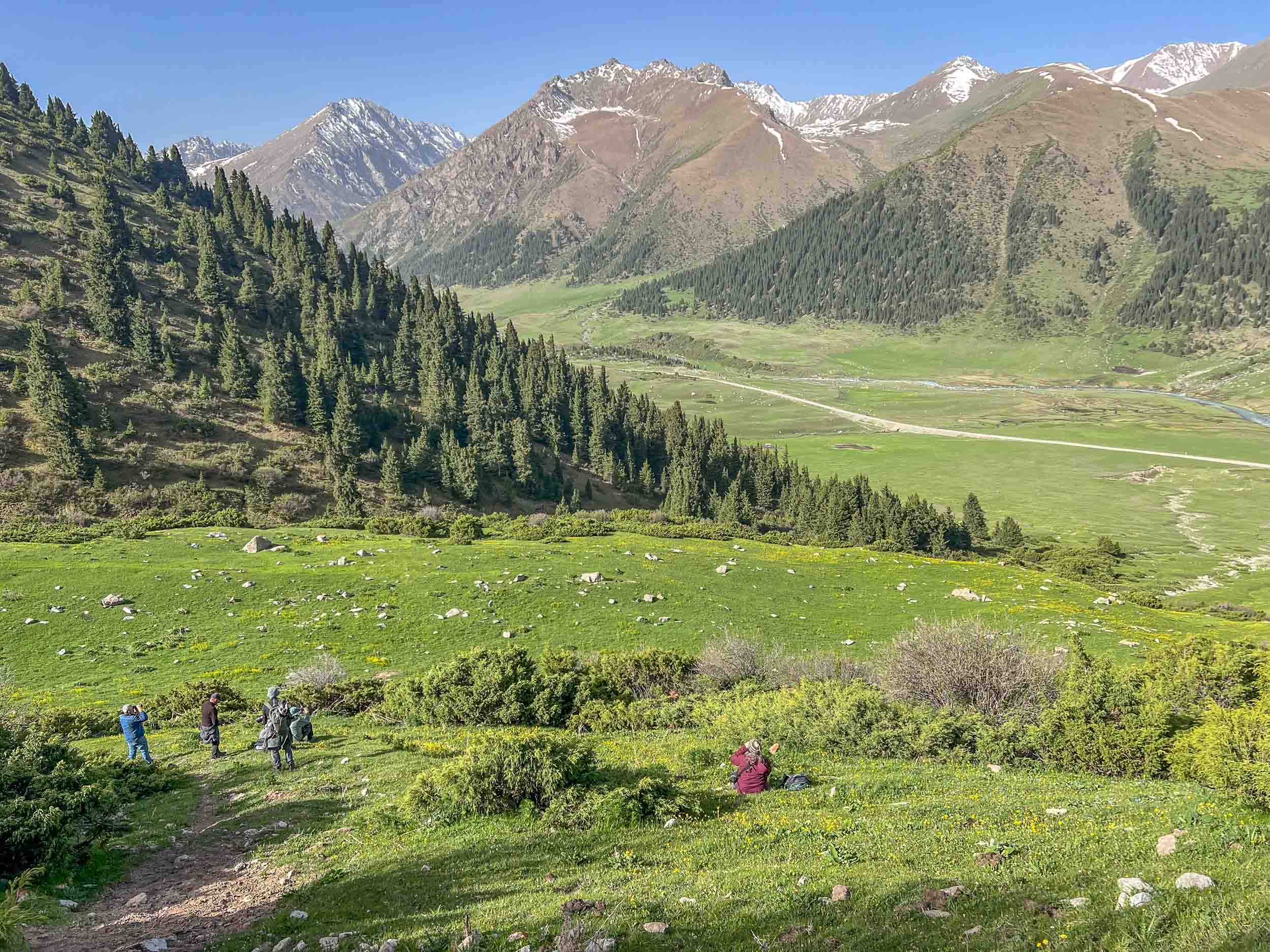
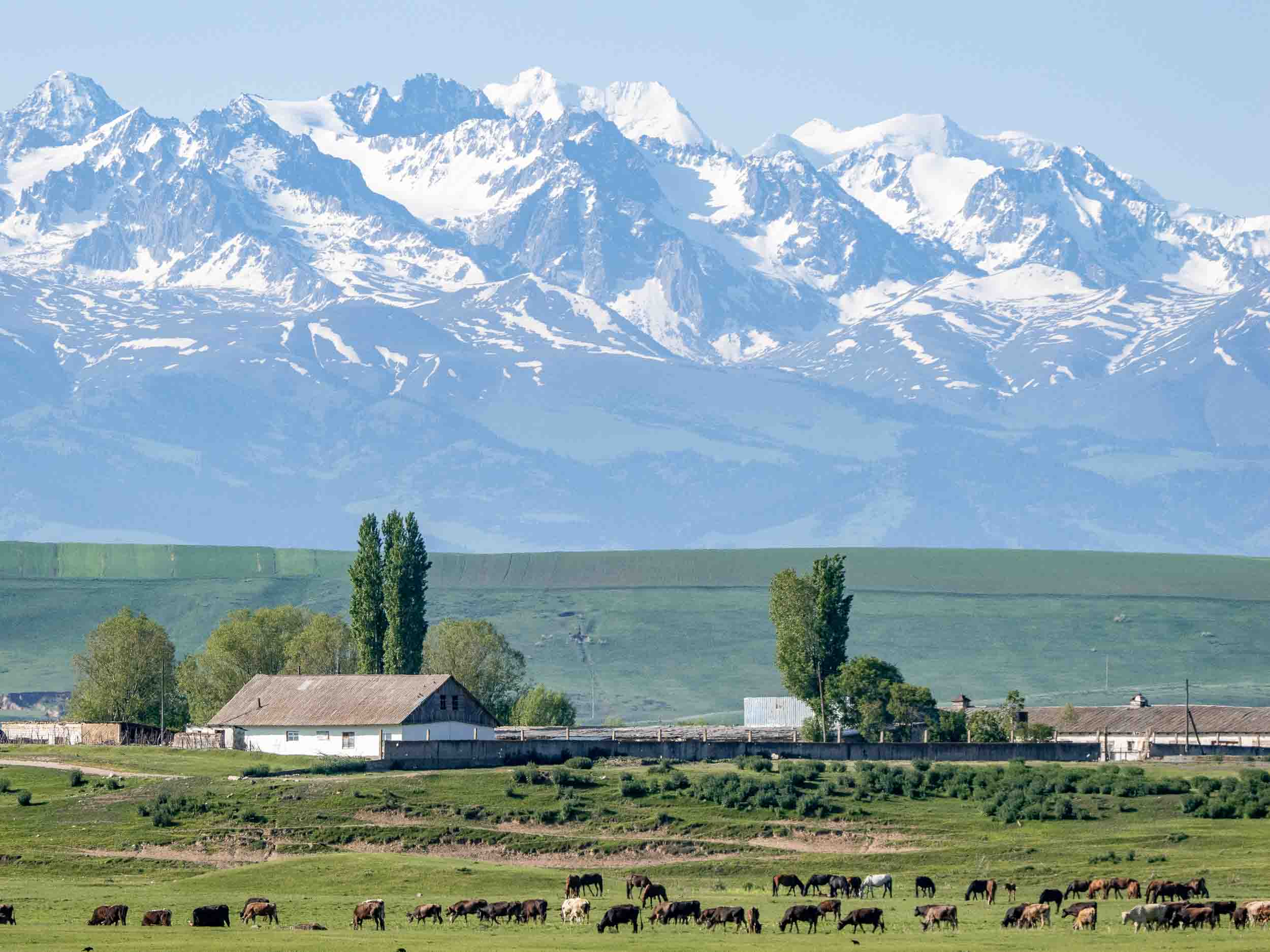
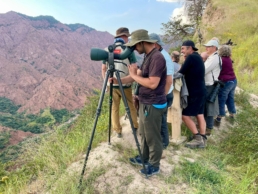
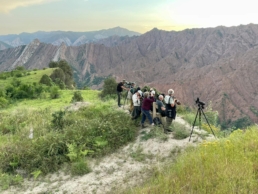
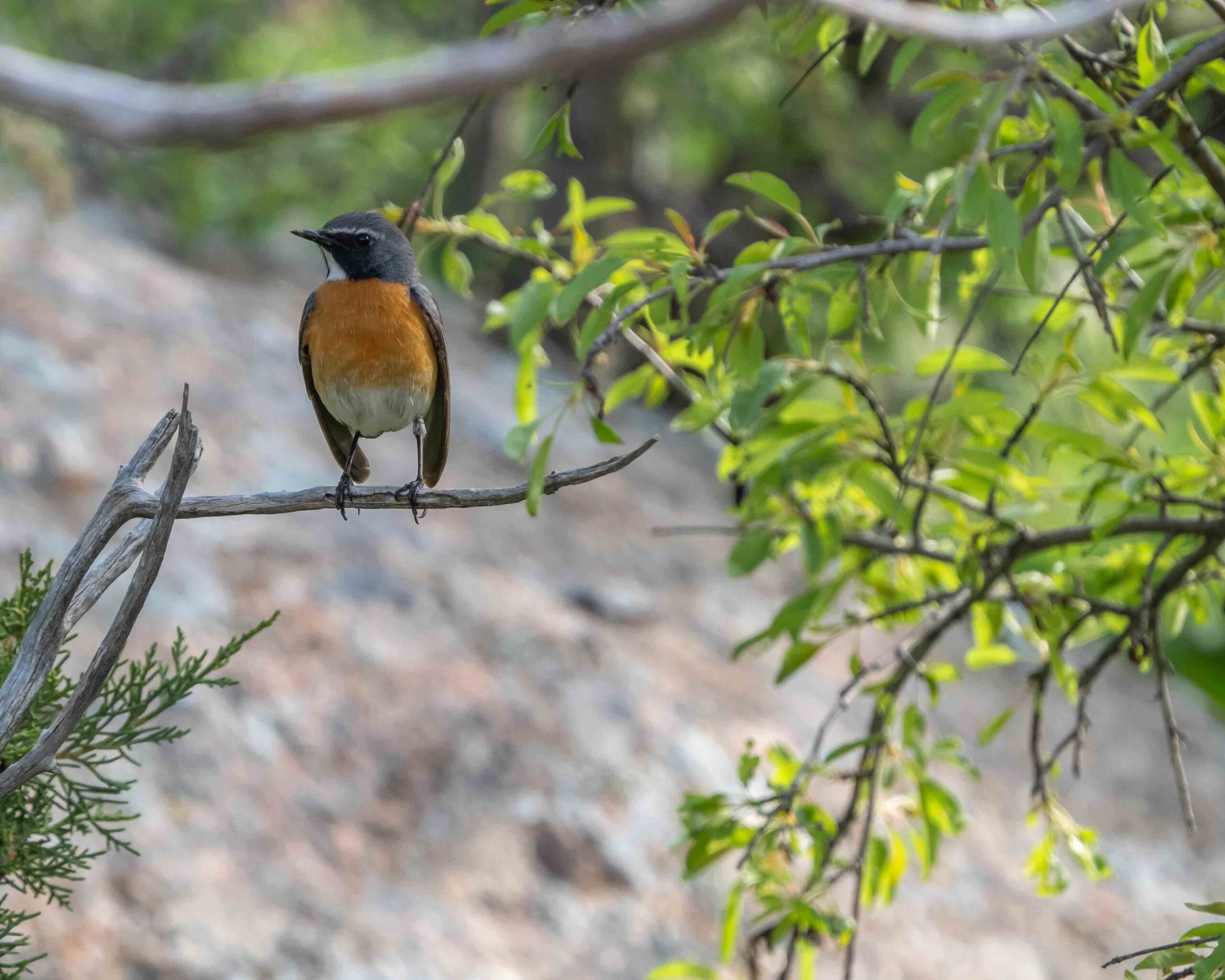
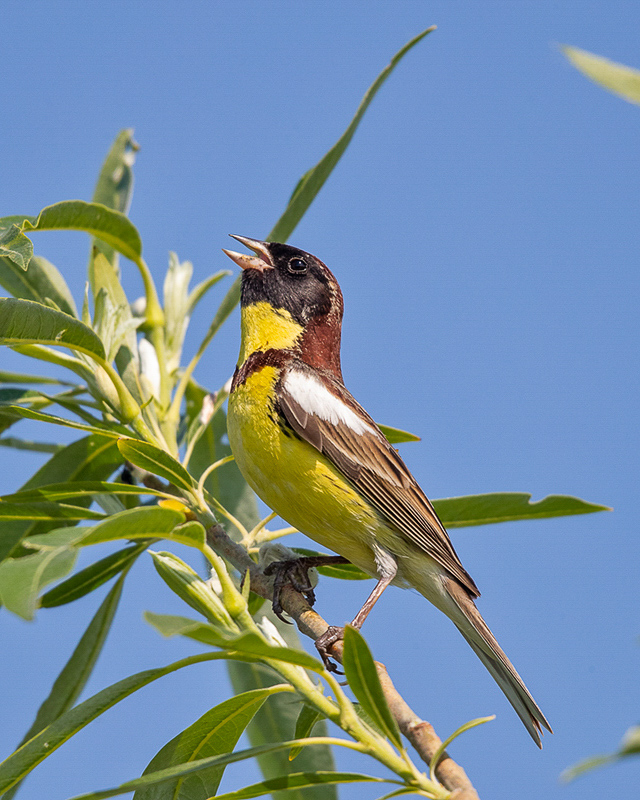
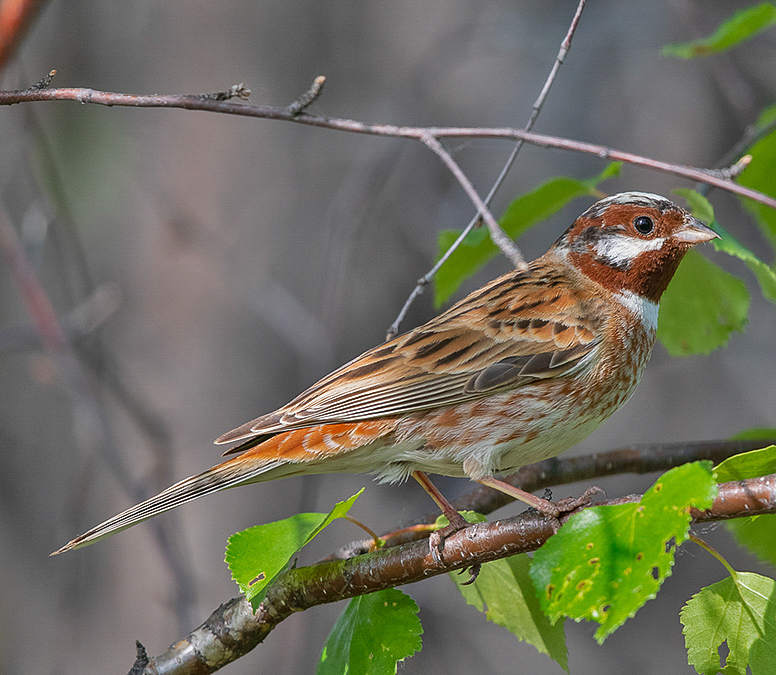
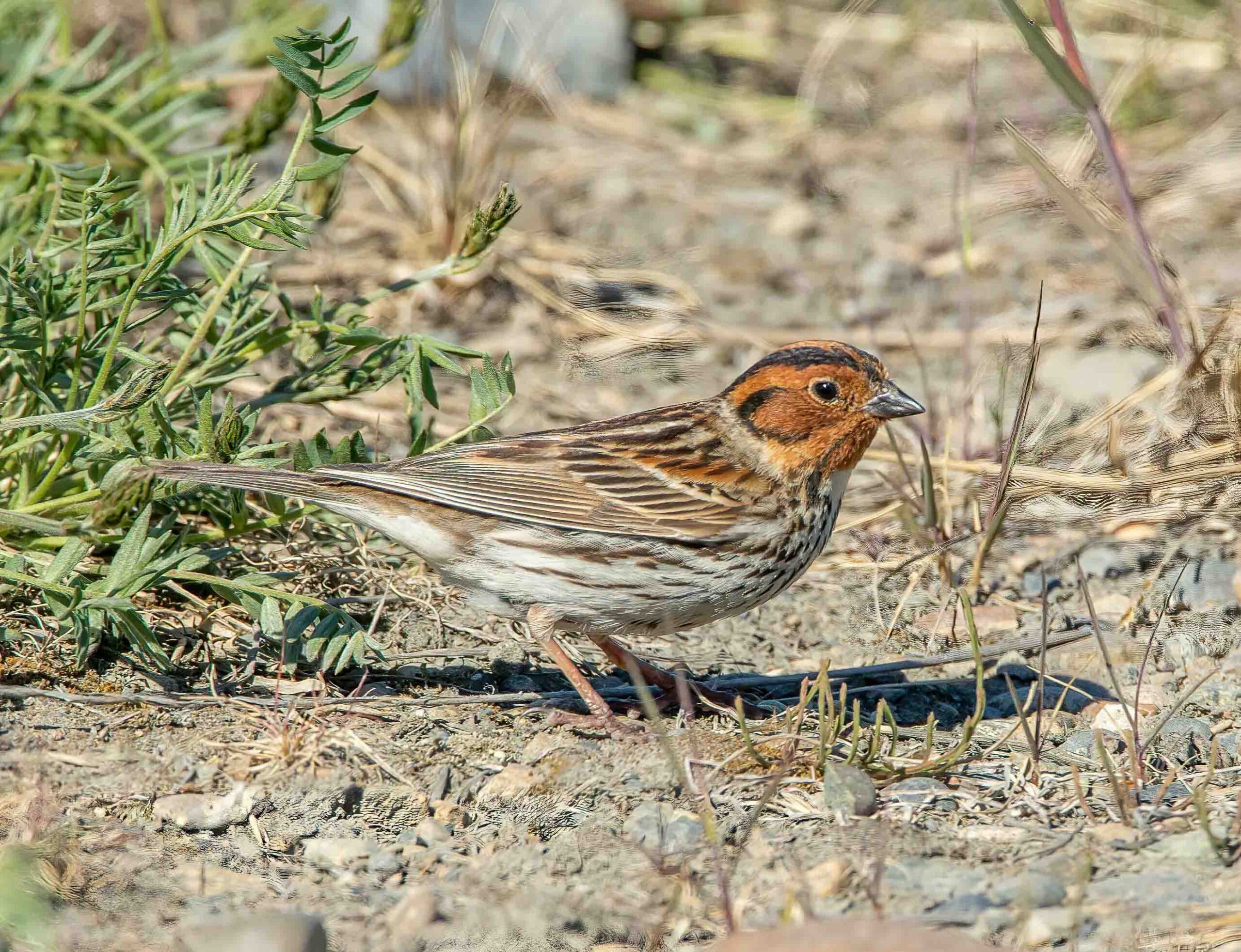
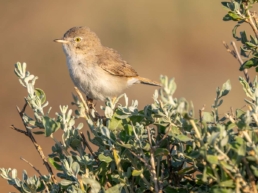
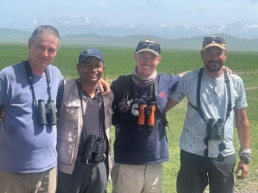
At the end of April, Machiel and Erik carried out a pre-tour reconnaissance in Barskoon Gorge. While the expected highlights such as Himalayan Snowcock, Brown Accentor, and Güldenstädt’s Redstart were all present, the real surprise came in the form of three Godlewski’s Buntings foraging on the upper slopes—an uncommon record for this area.
We enjoyed excellent views and secured photographs to document the sighting. A breeding site of Black-headed Mountain Finches was also discovered, with the birds showing well and offering good photographic opportunities. Additional highlights included a pair of Wallcreepers alongside several Hill Pigeons at the same site. Spotted Great Rosefinch was seen on multiple occasions by two groups. Adding to the sense of wilderness, fresh tracks of Tien Shan Brown Bear were found—almost exactly where Snow Leopard tracks had been recorded the year before.
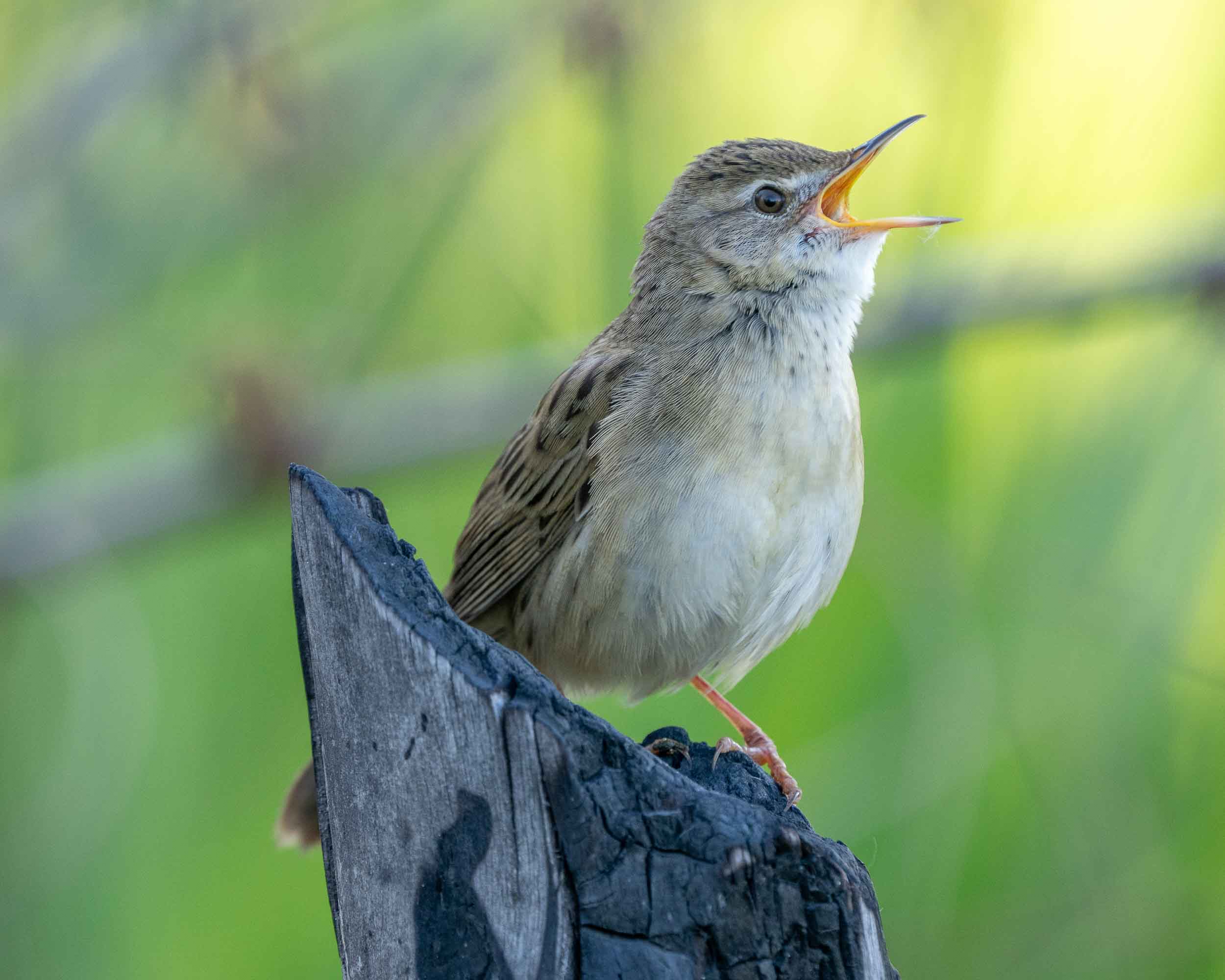
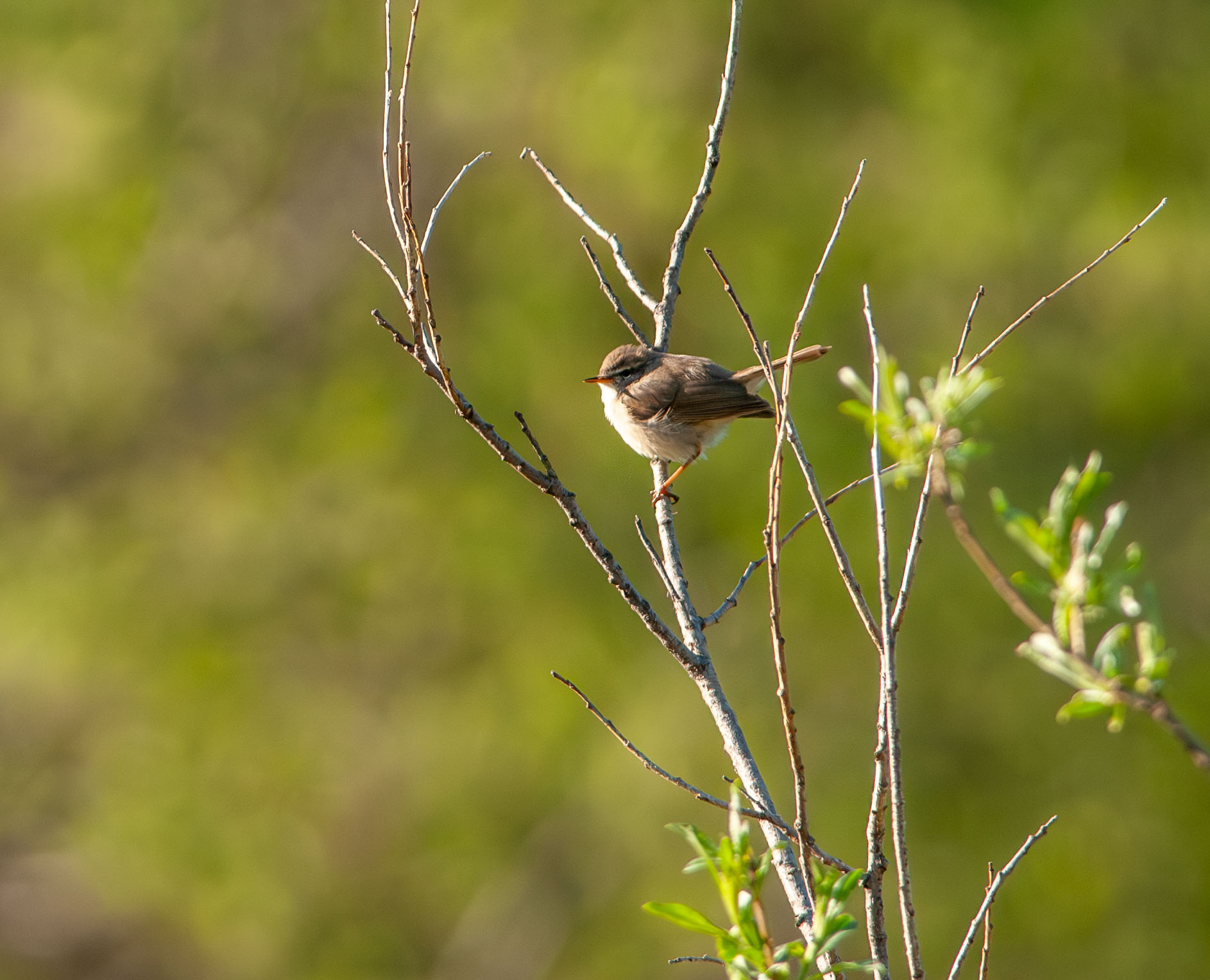
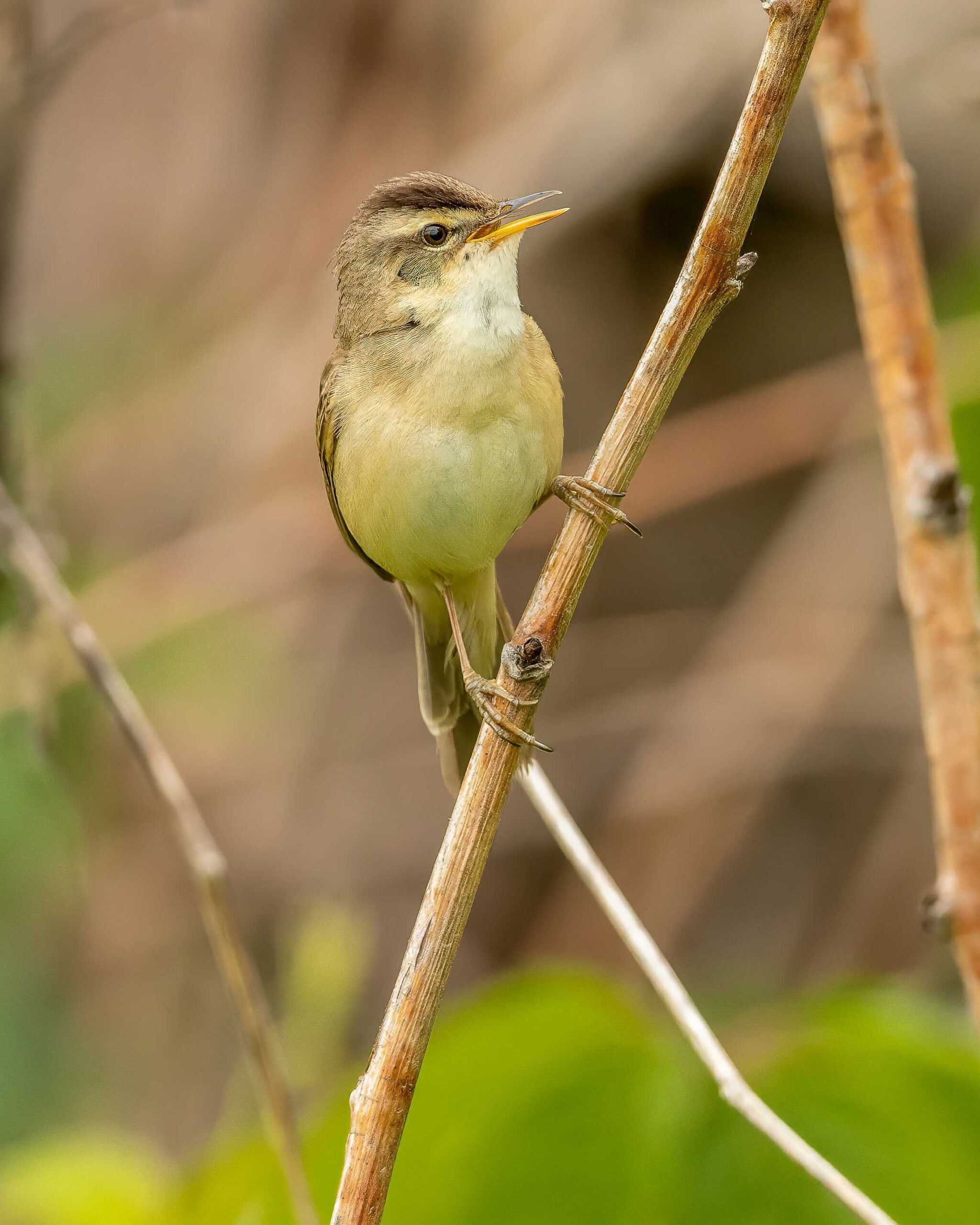
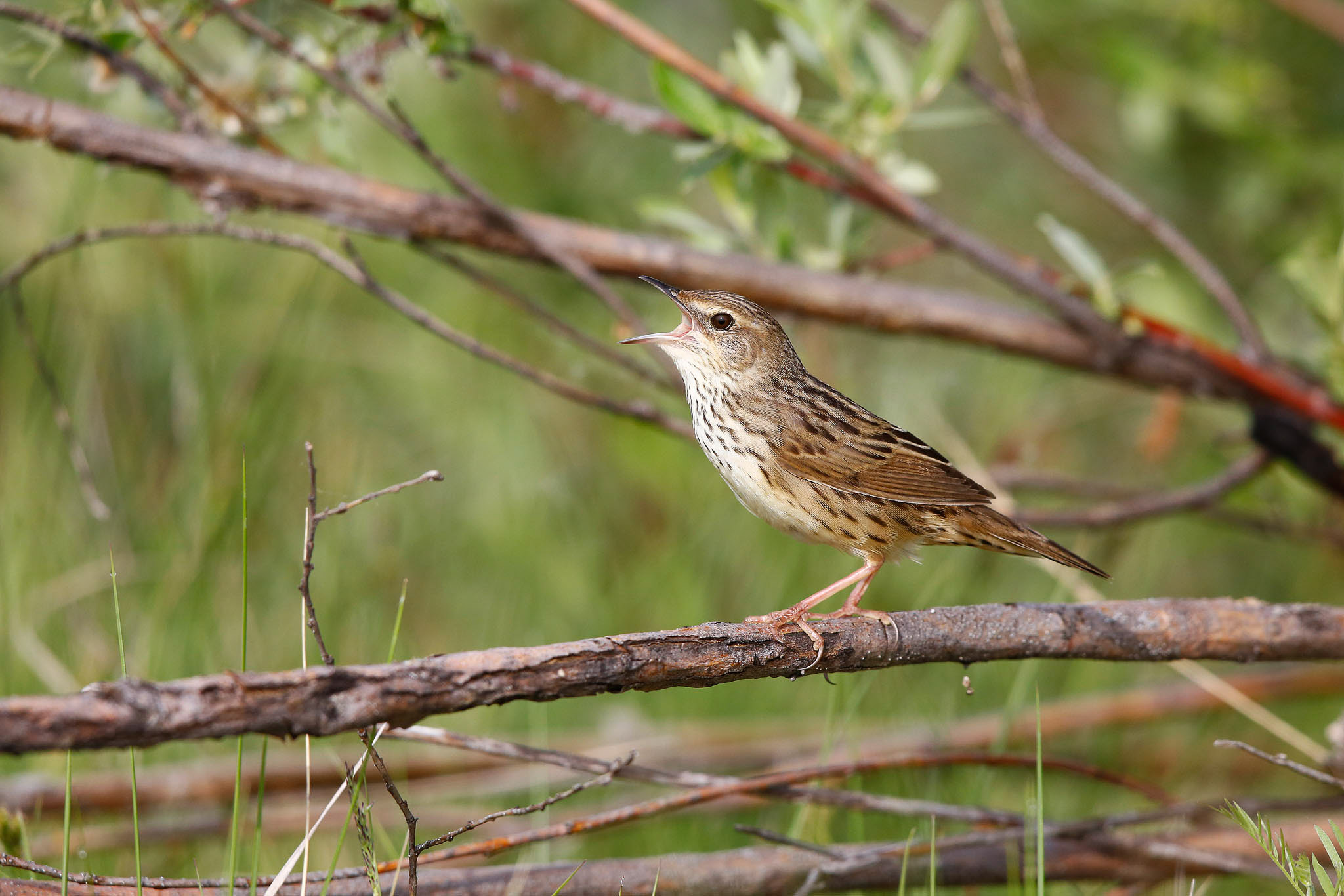
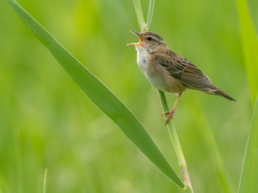
Later in the season, at the Kazakhstan border, we again located handsome Pallas’s Grasshopper Warblers. True to form, these late arrivals began singing from the end of May onward, rounding off a rewarding series of observations.
Korgalzhyn
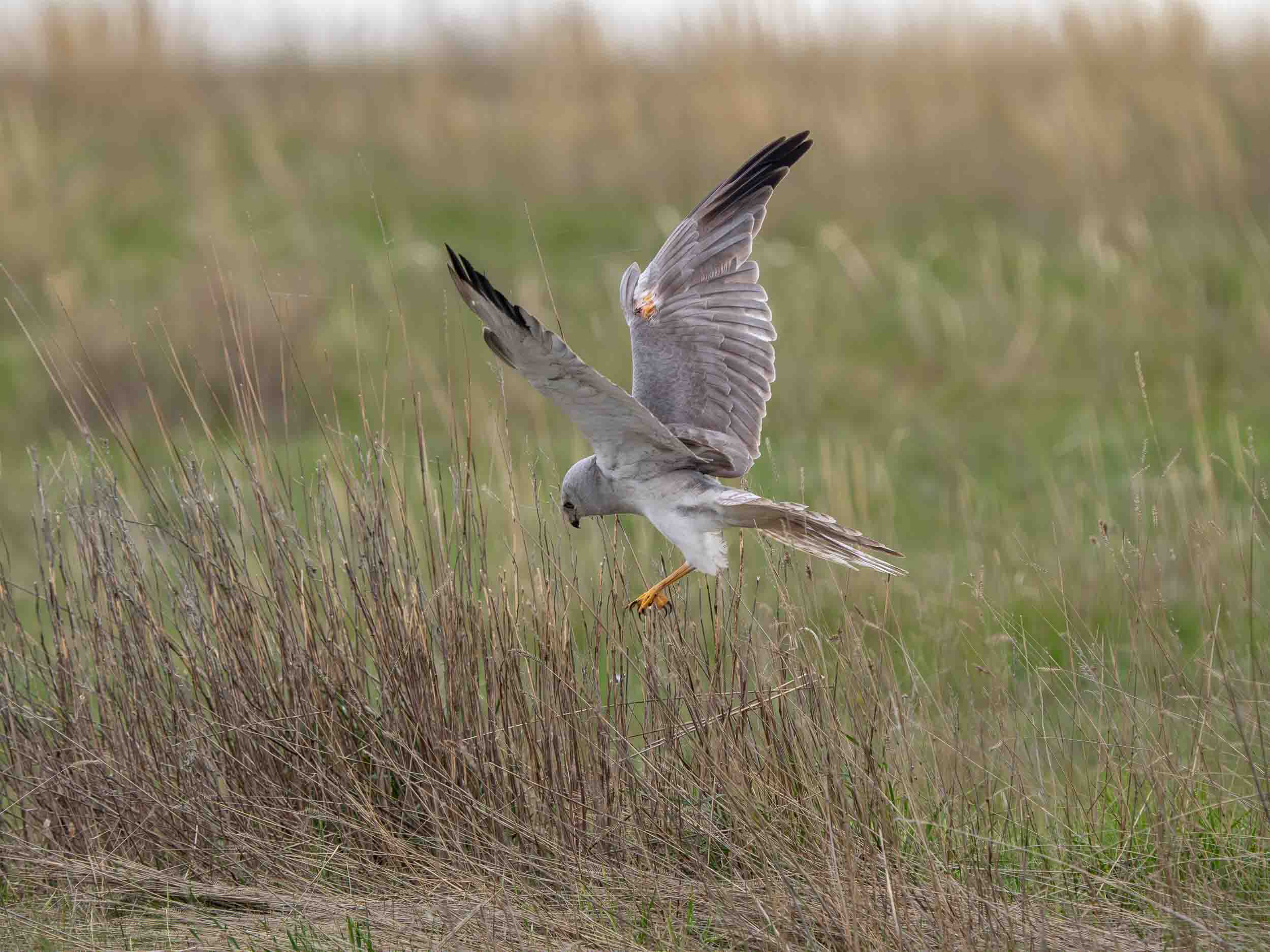
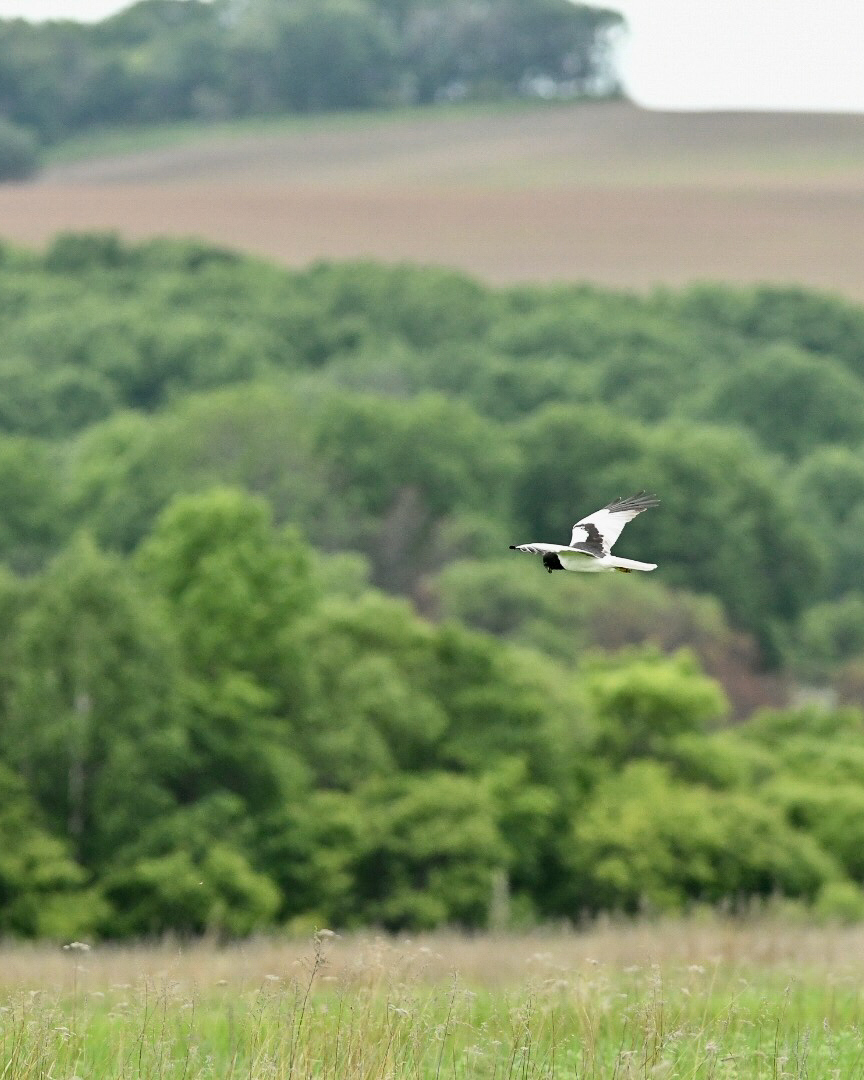
In Korgalzhyn, the vast open steppe produced an excellent year for voles, which in turn brought remarkable numbers of raptors. Sightings of Pallid Harriers were outstanding, with daily counts of up to 70 birds being common. The abundance of voles also resulted in increased records of Short-eared Owls.
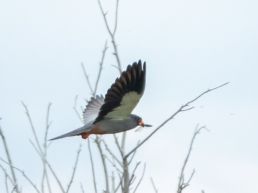
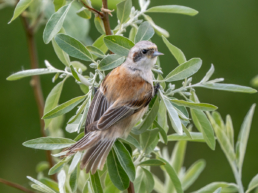
Closer to Astana, we discovered a nesting Eurasian Penduline Tit (Remiz pendulinus jaxarticus)—the first record of this subspecies in many years. At a nesting site of Red-footed Falcons, we were delighted to also observe an Amur Falcon.
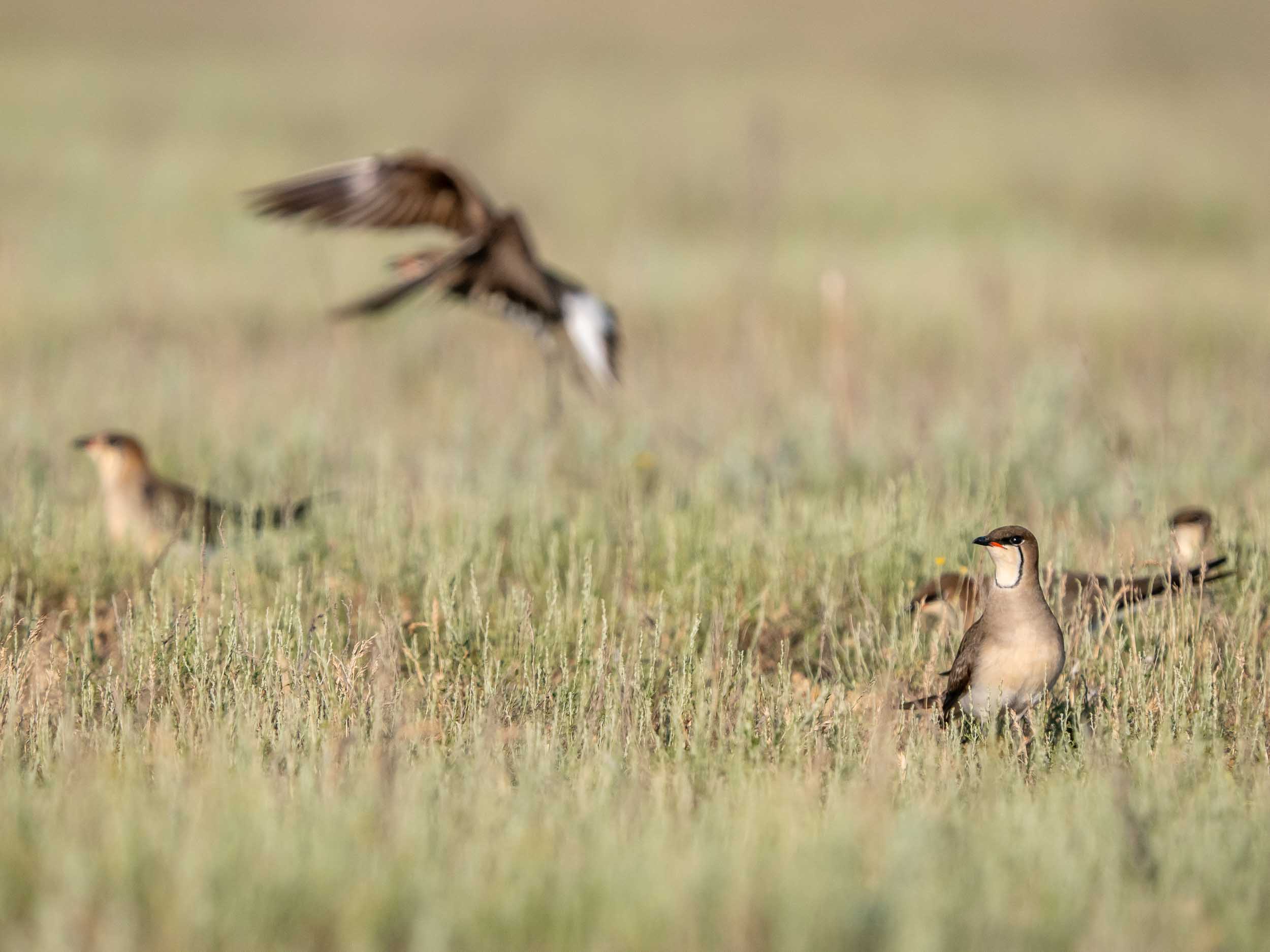
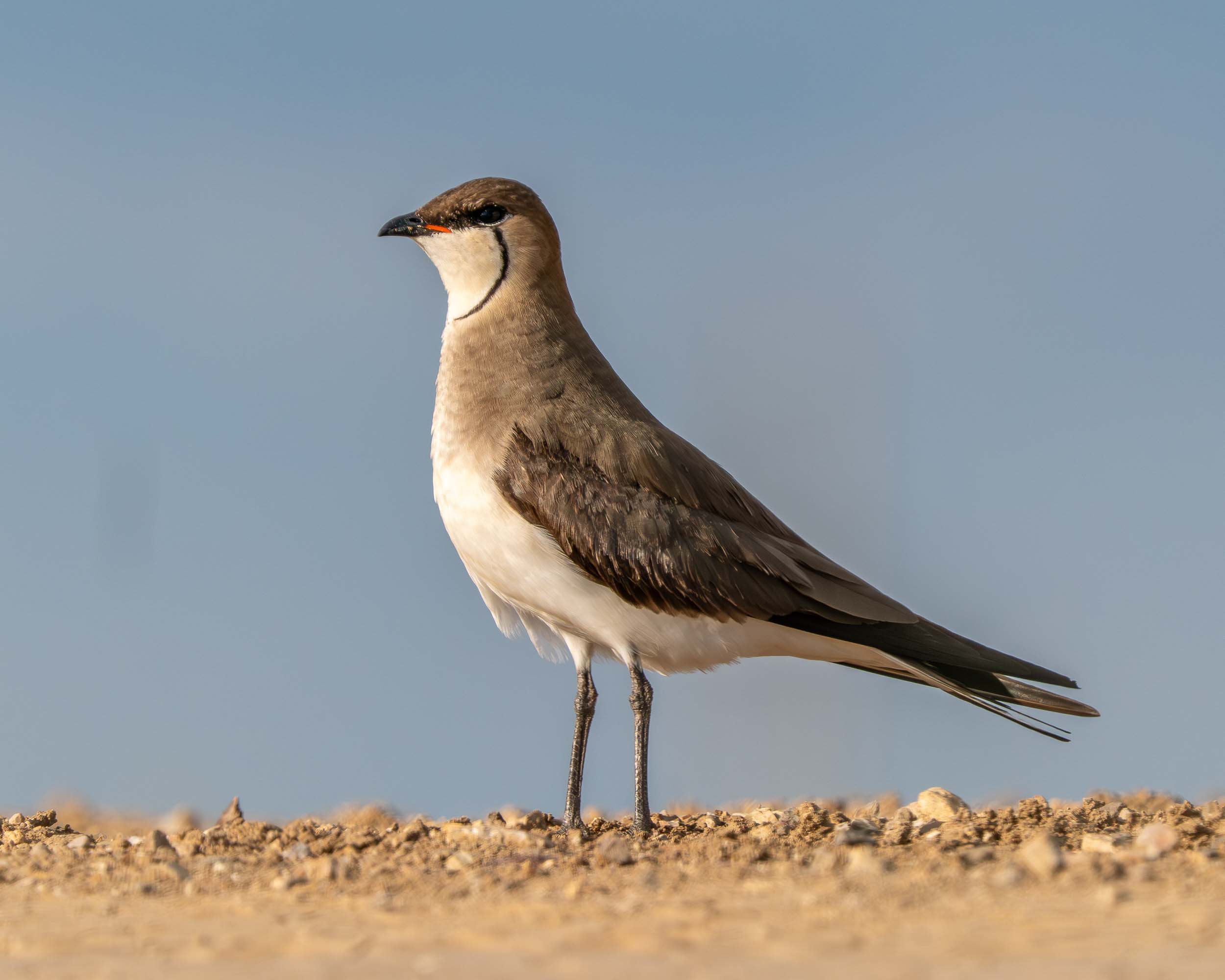
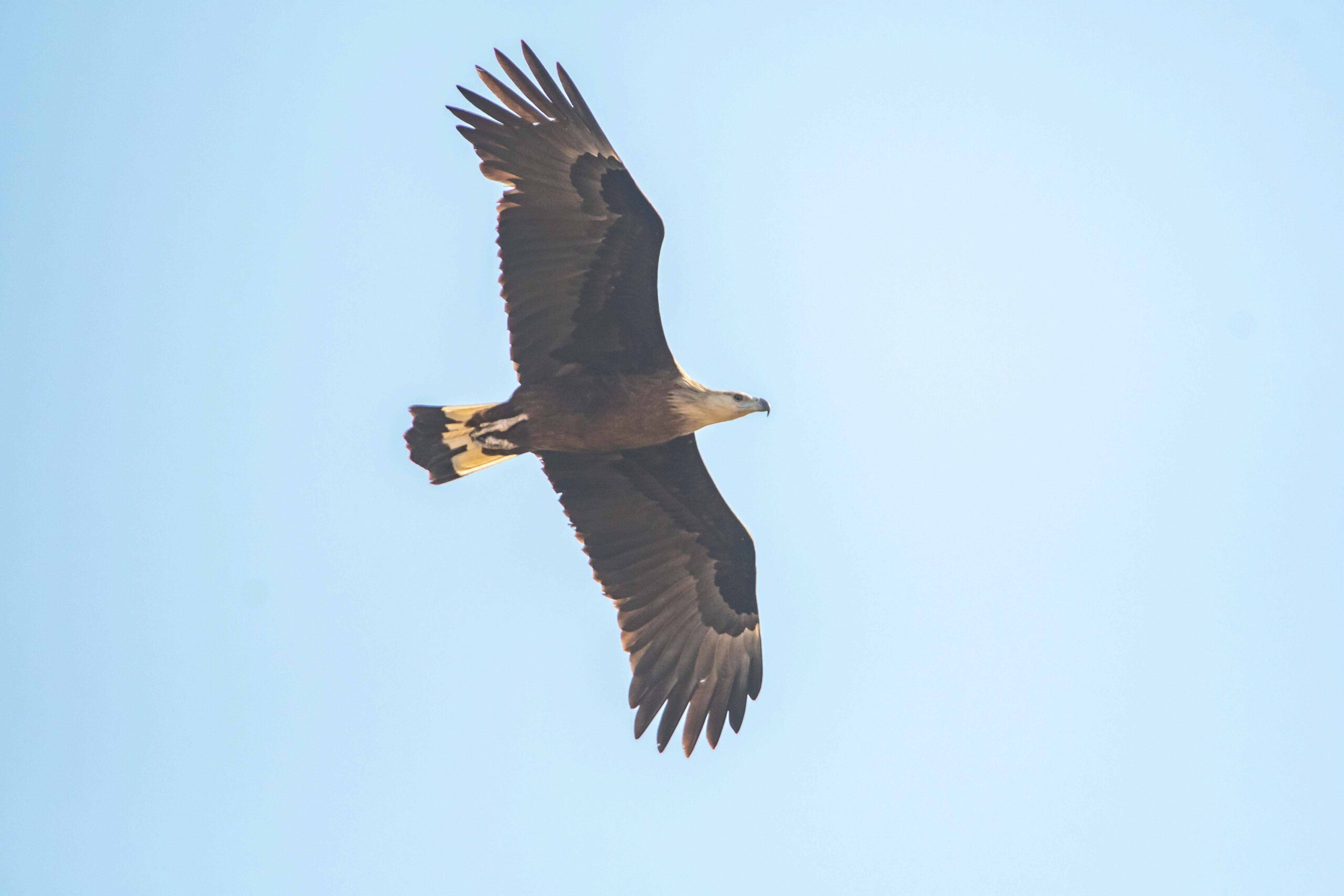
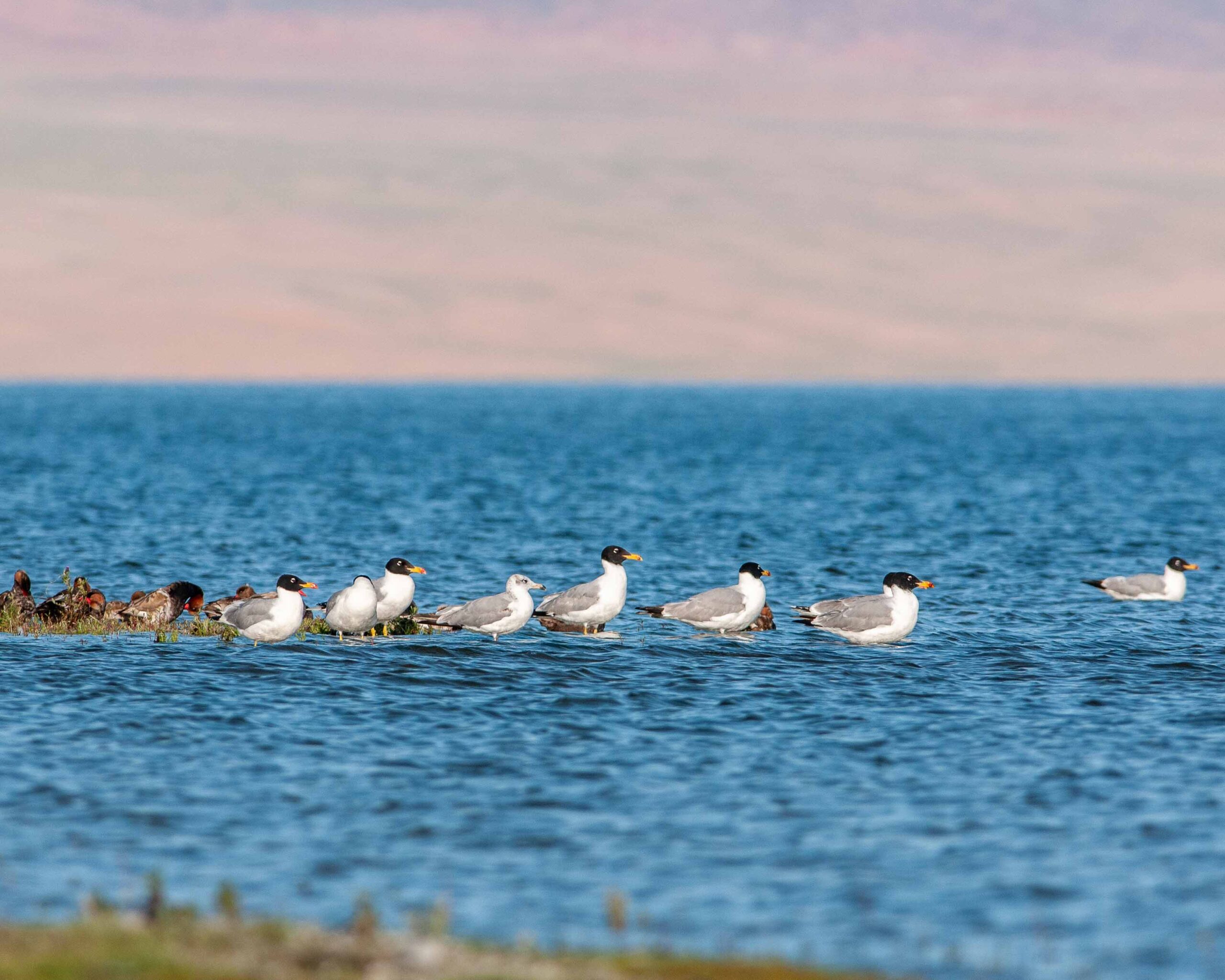
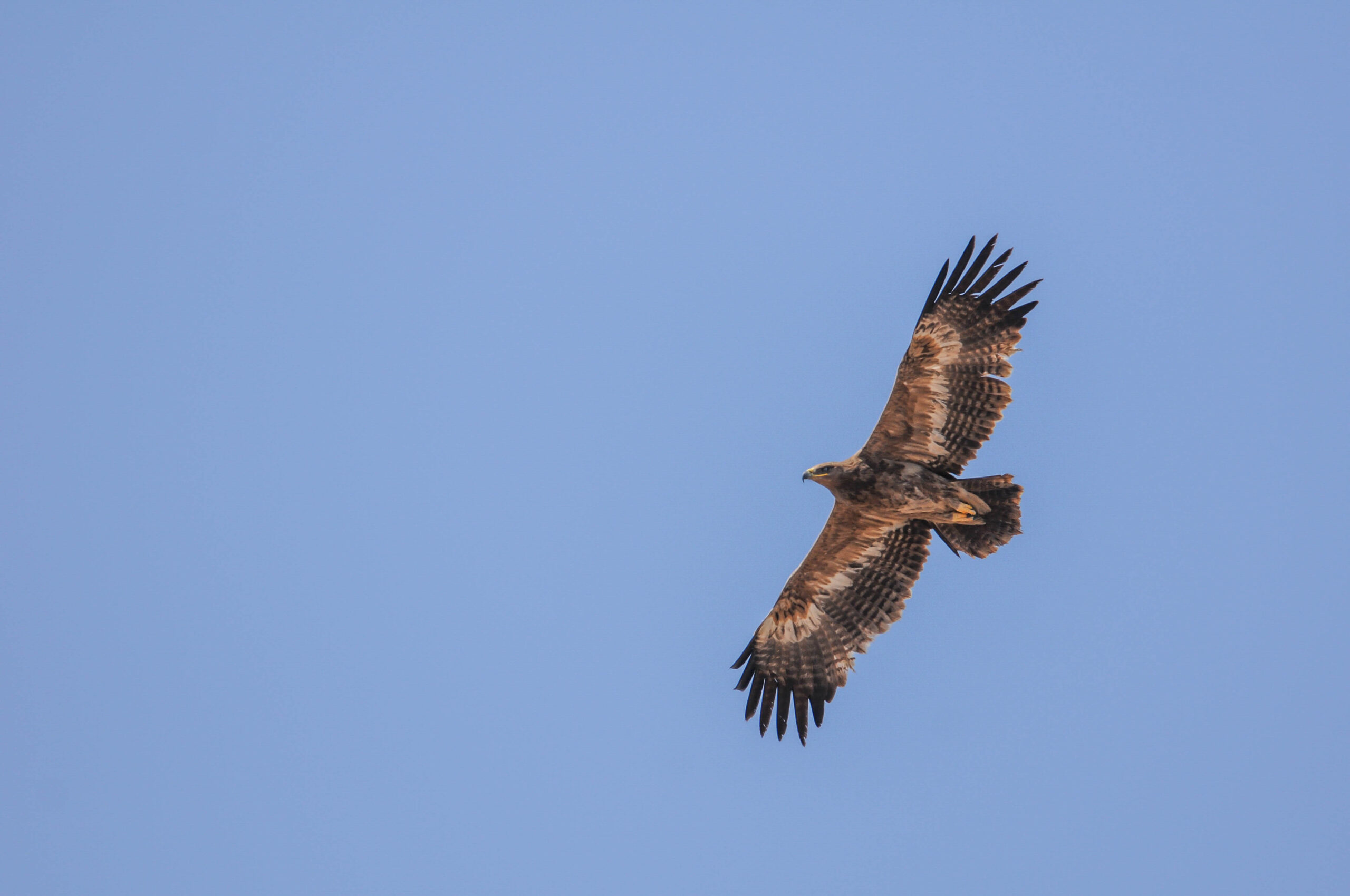
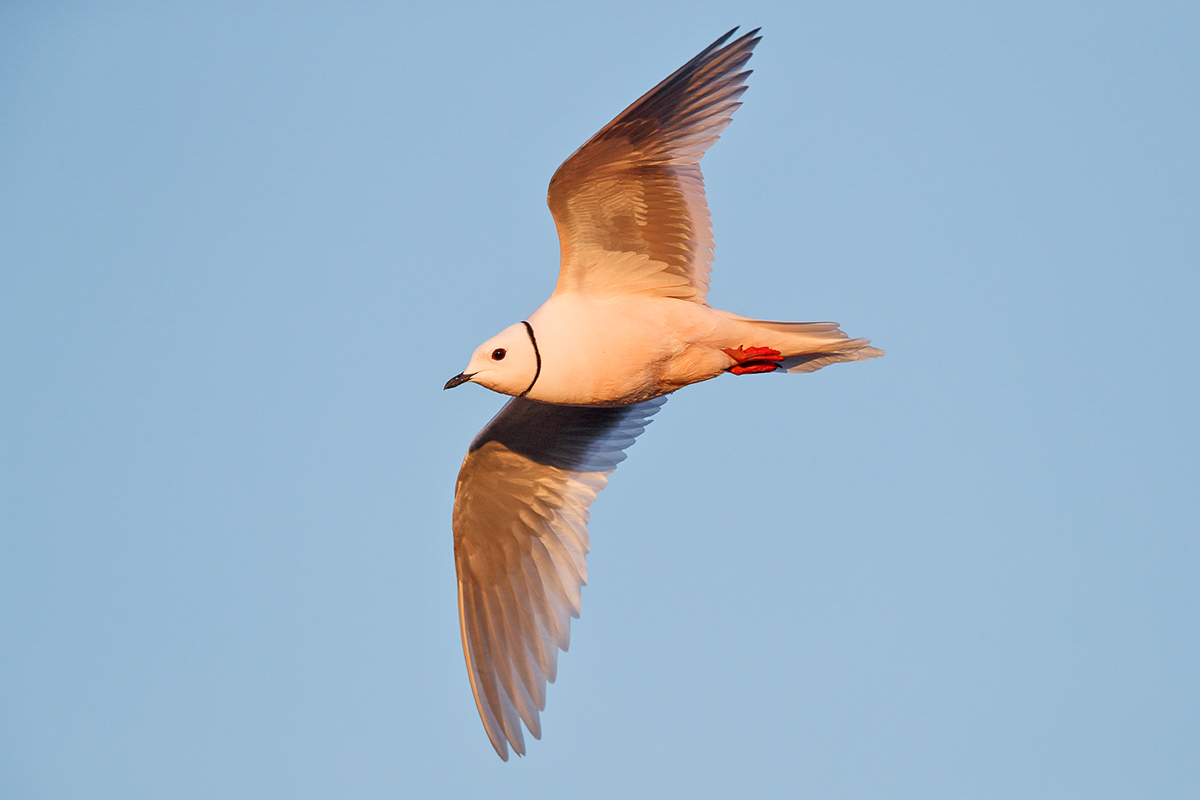
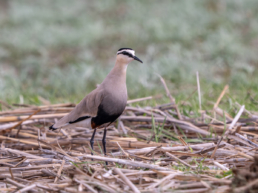
Throughout the park, Black-winged Pratincoles were widespread, providing excellent views. At a well-known site, larger groups of Sociable Lapwings were once again found foraging—always among the most sought-after species for our groups. Near a colony of Pallas’s Gulls, a few Steppe Twites were also noted. Later in the month, a pair of Greater Spotted Eagles migrating north added to the list of notable sightings.
Altai
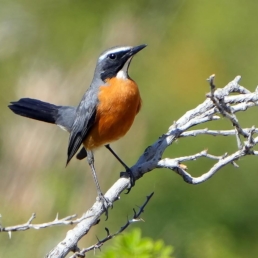
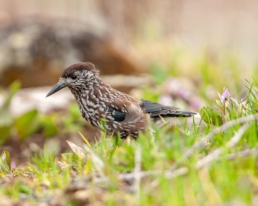
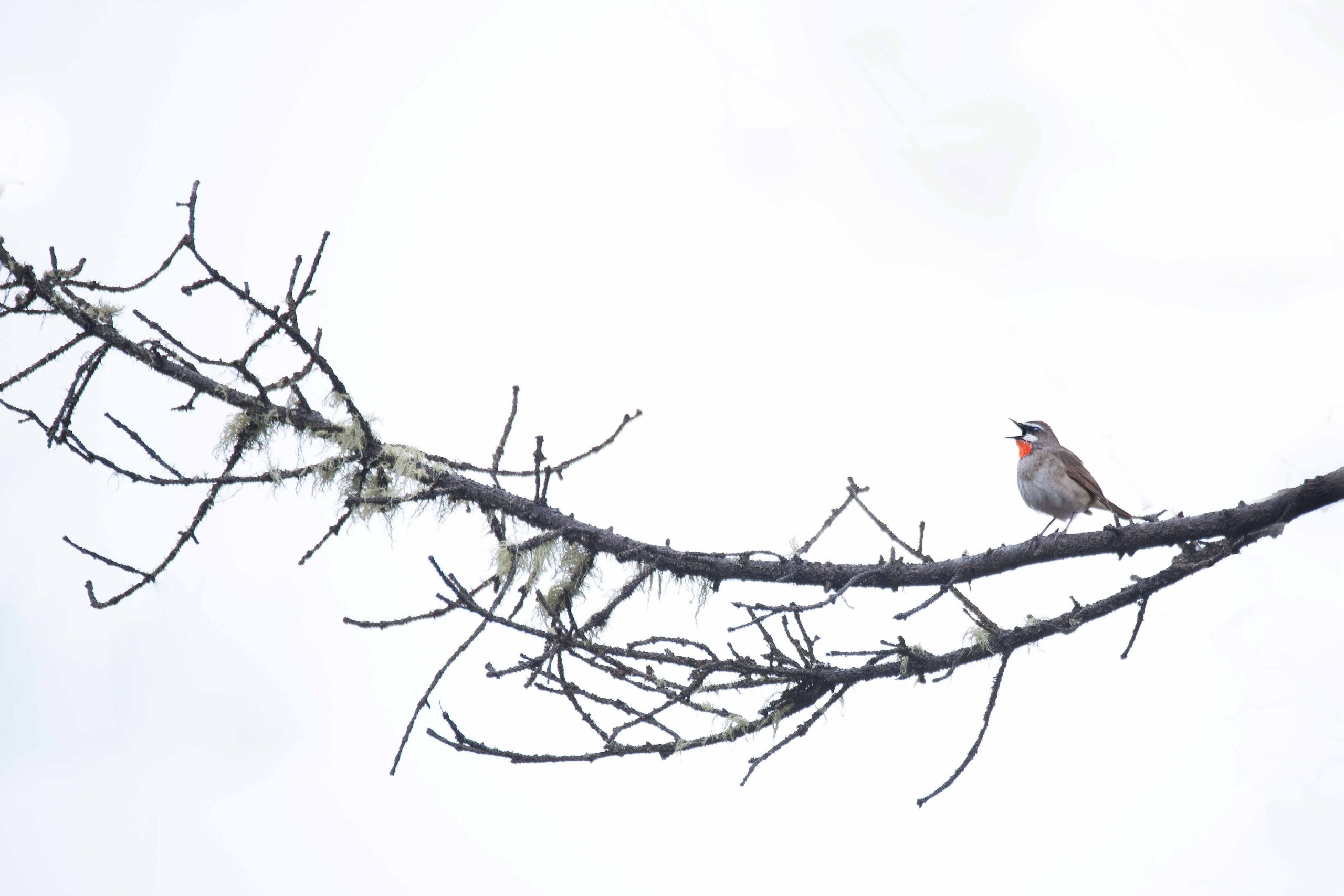
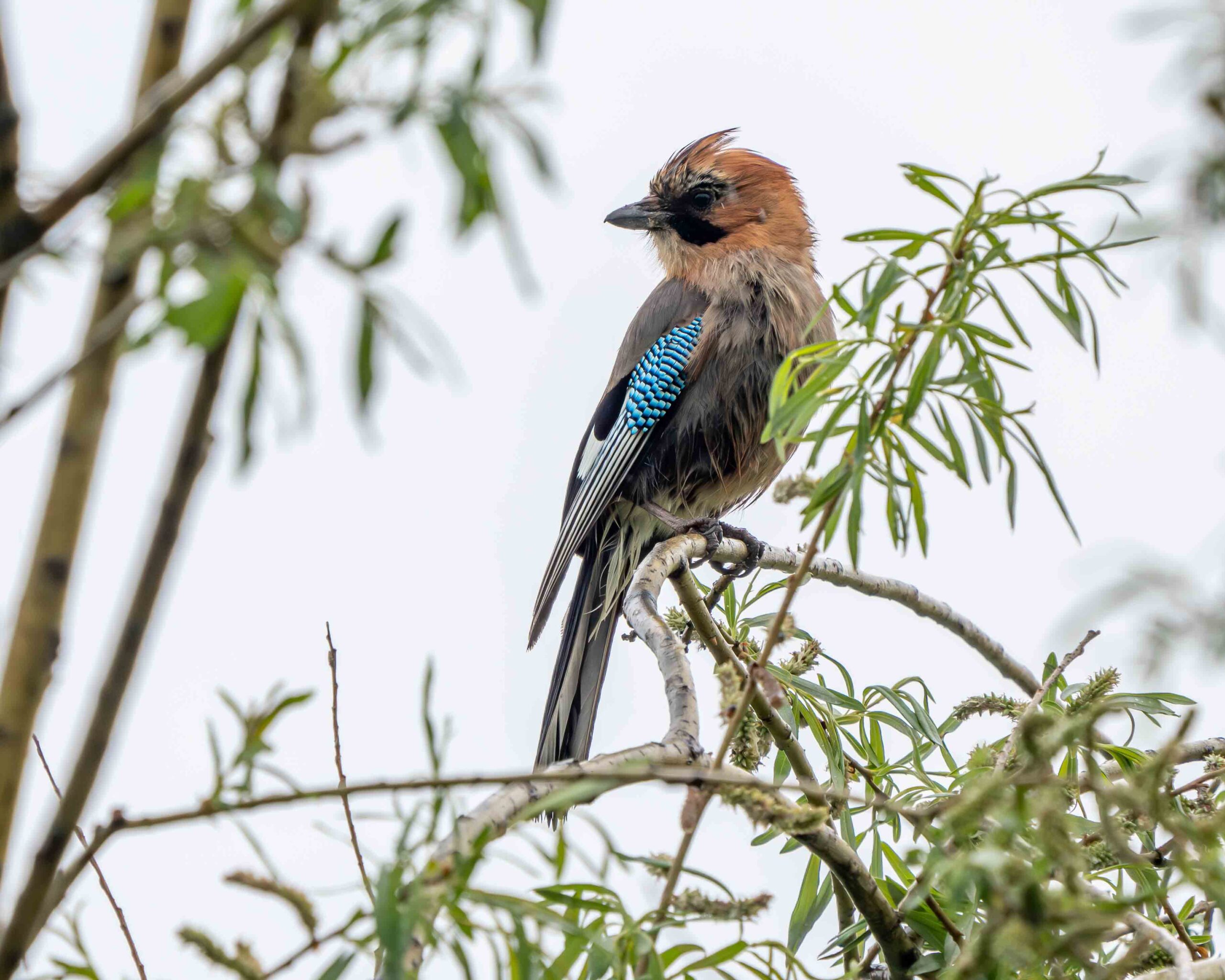
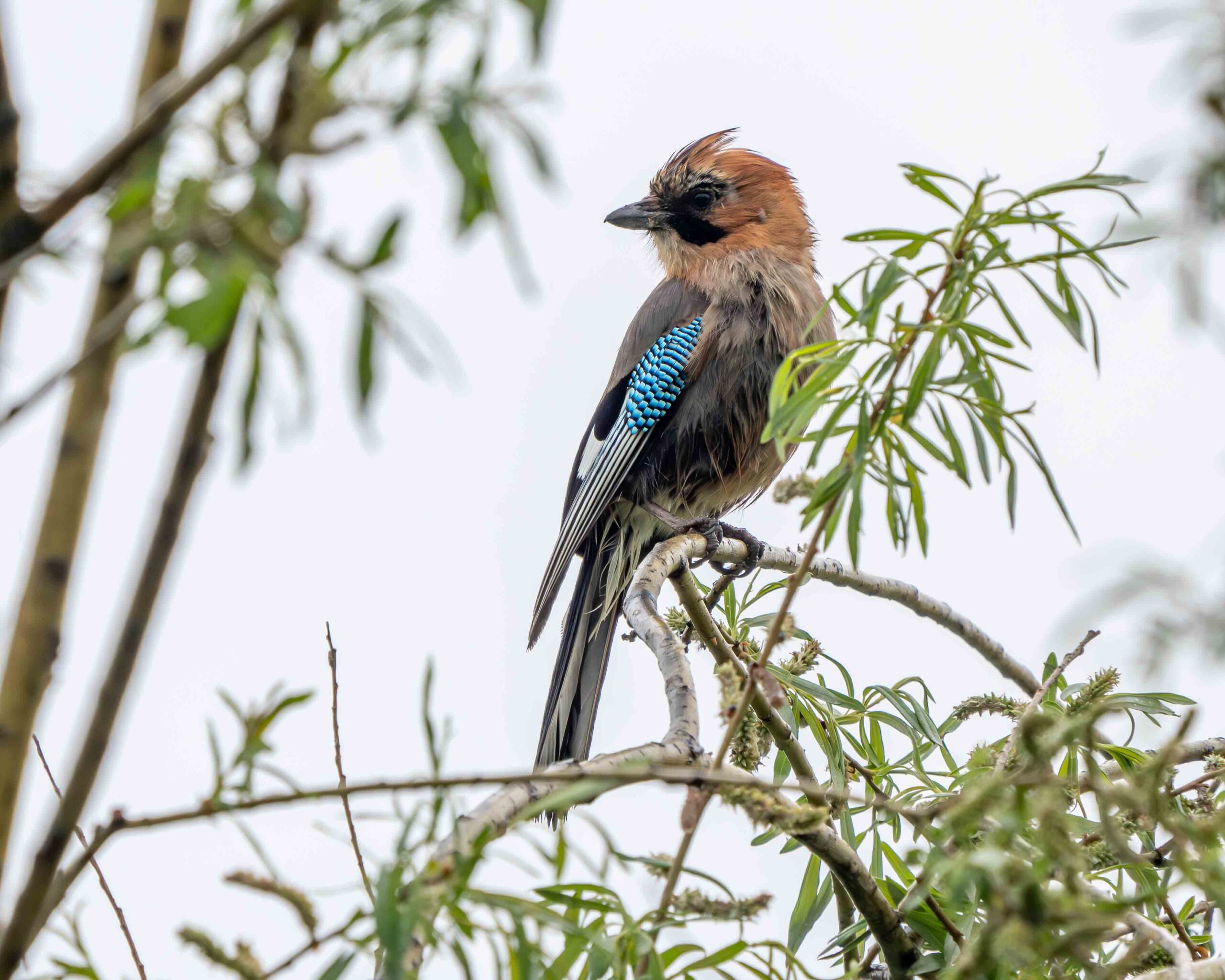
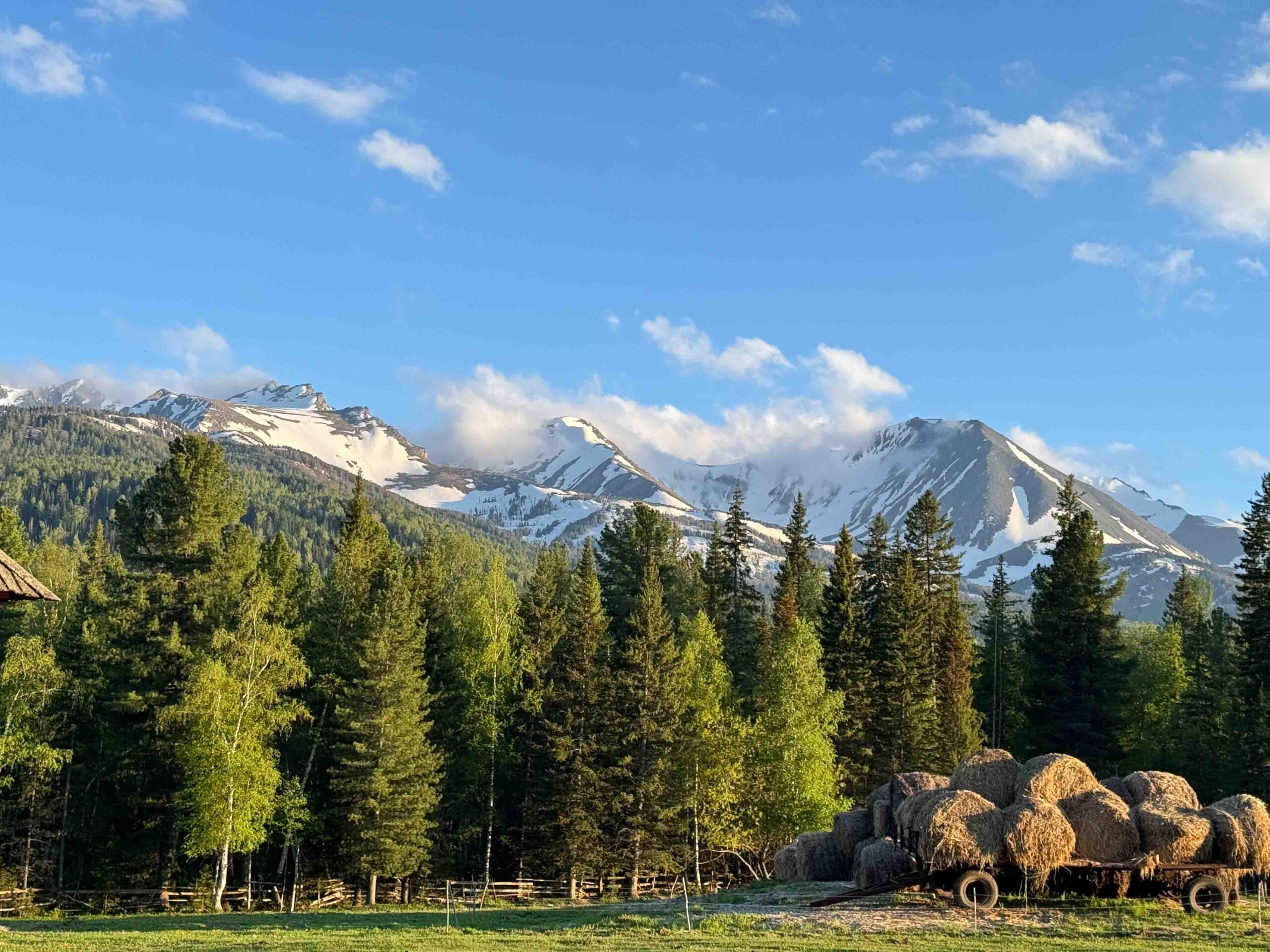
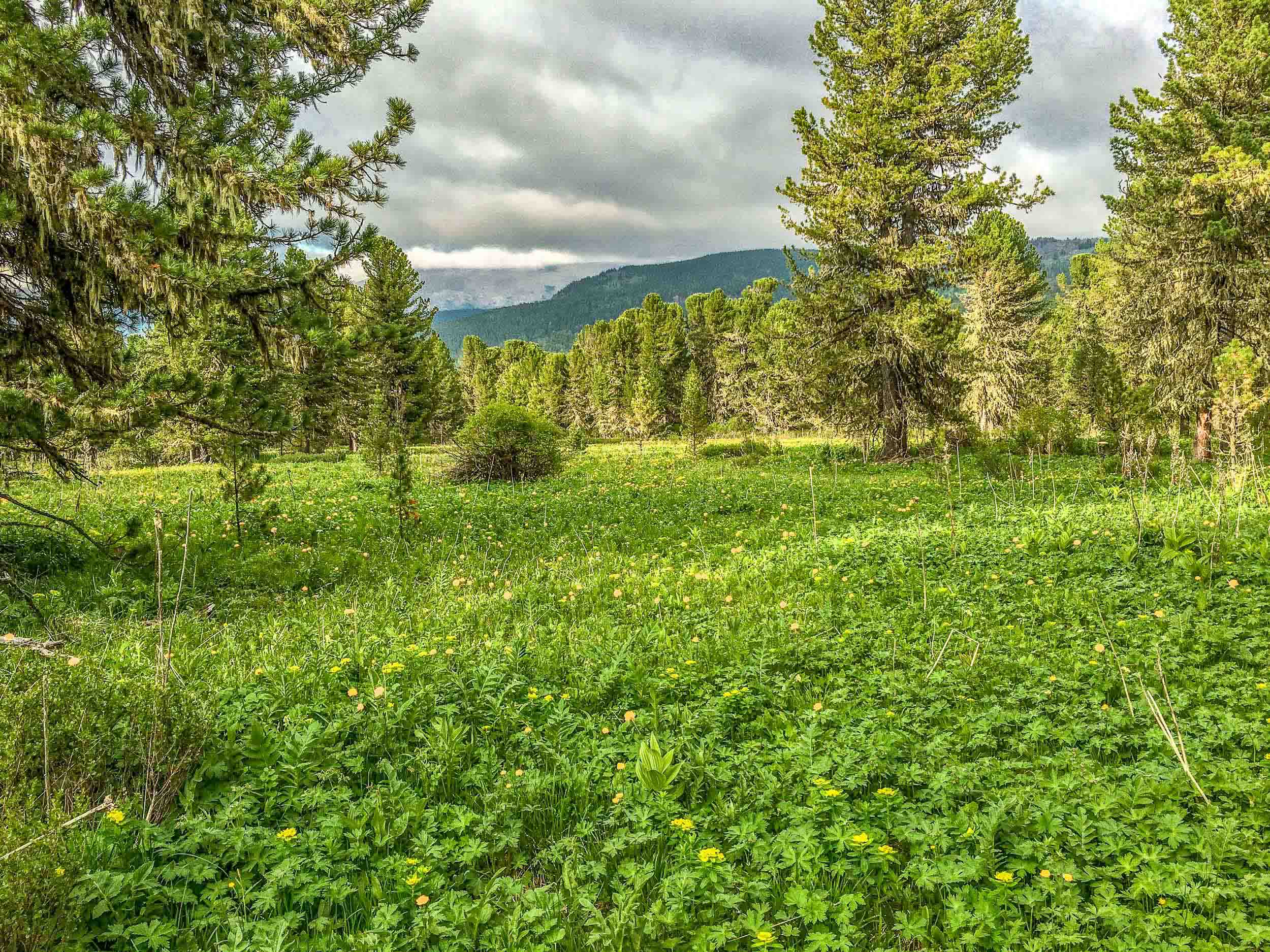
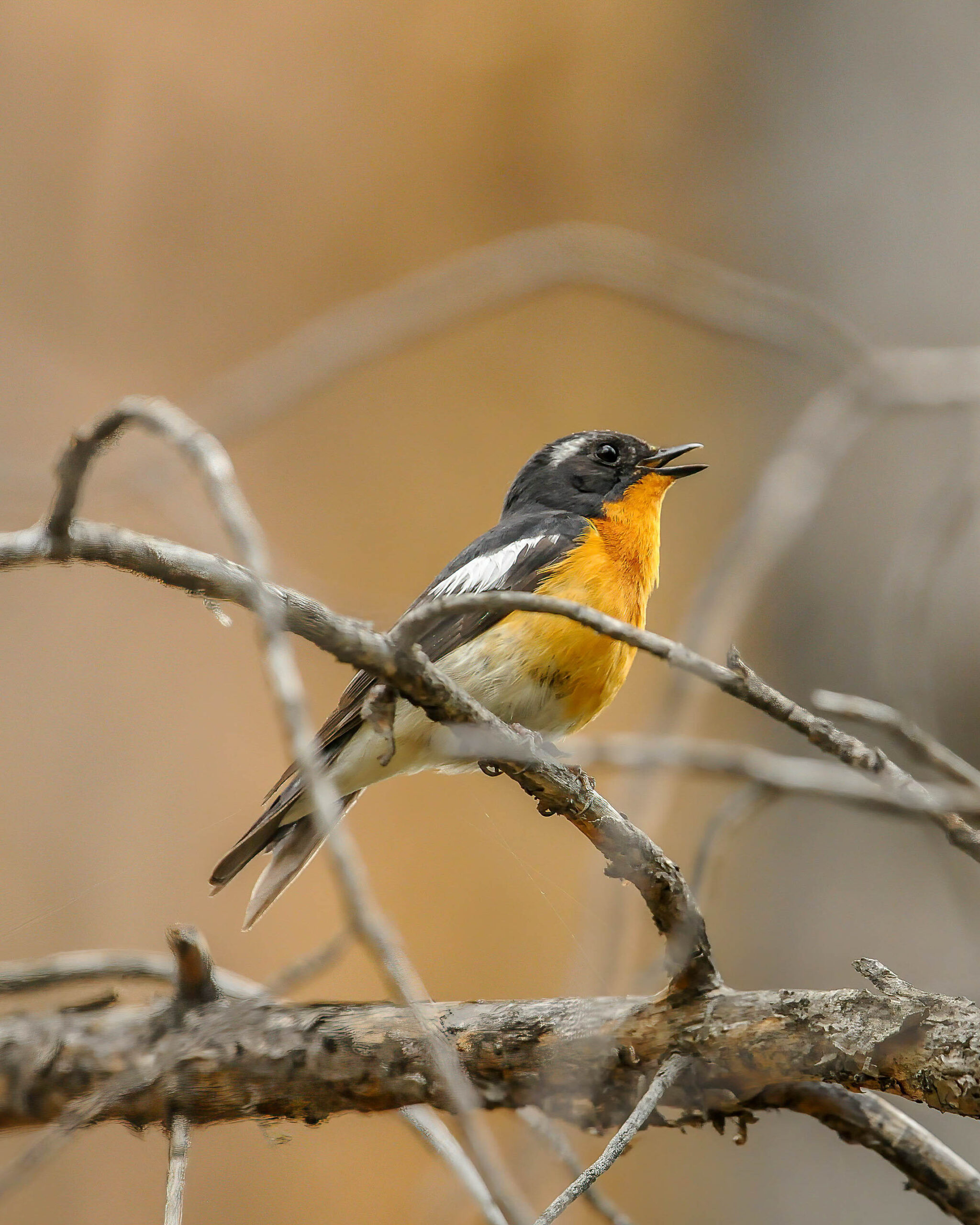
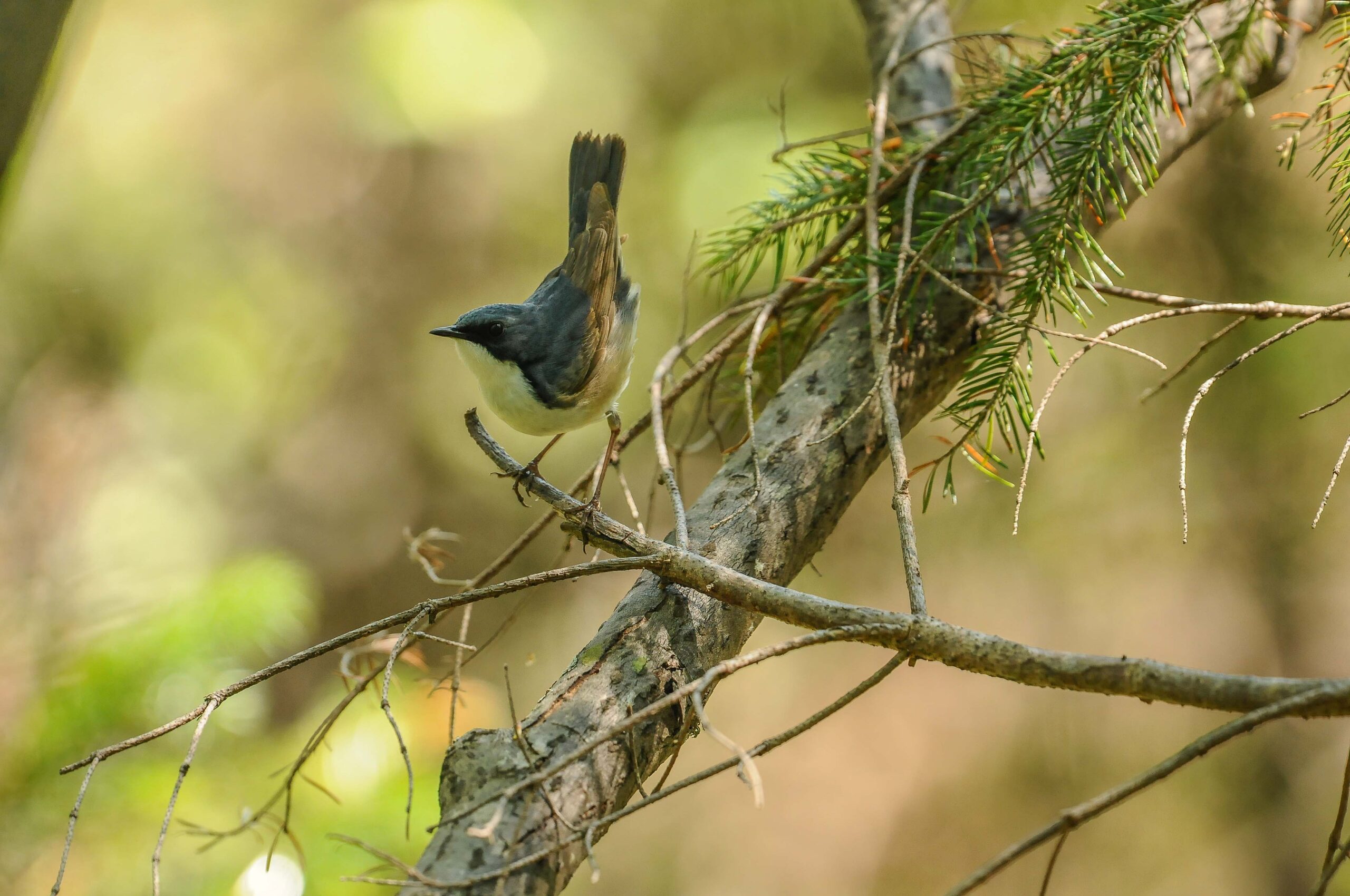
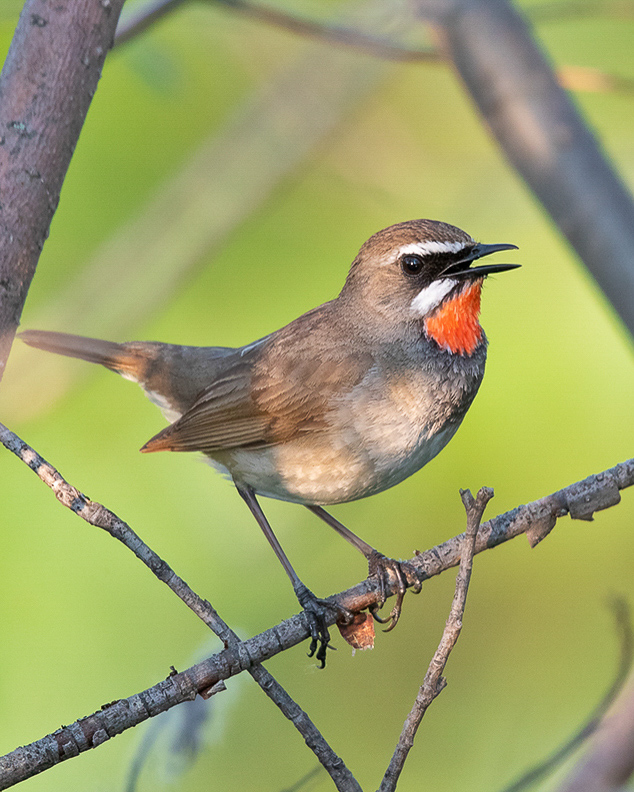
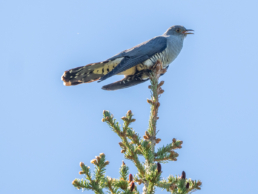
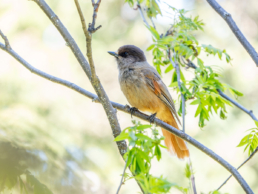
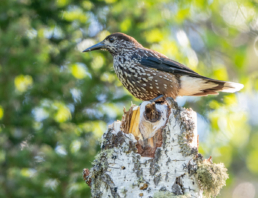
A short extension to the West Altai Nature Reserve rewarded us with a selection of truly special species, including Siberian Rubythroat, Taiga Flycatcher, and the charismatic Siberian Jay. These areas remain largely unexplored by Western birders, and we look forward to expanding our discoveries here in the coming years.
Uzbekistan
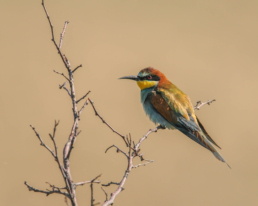
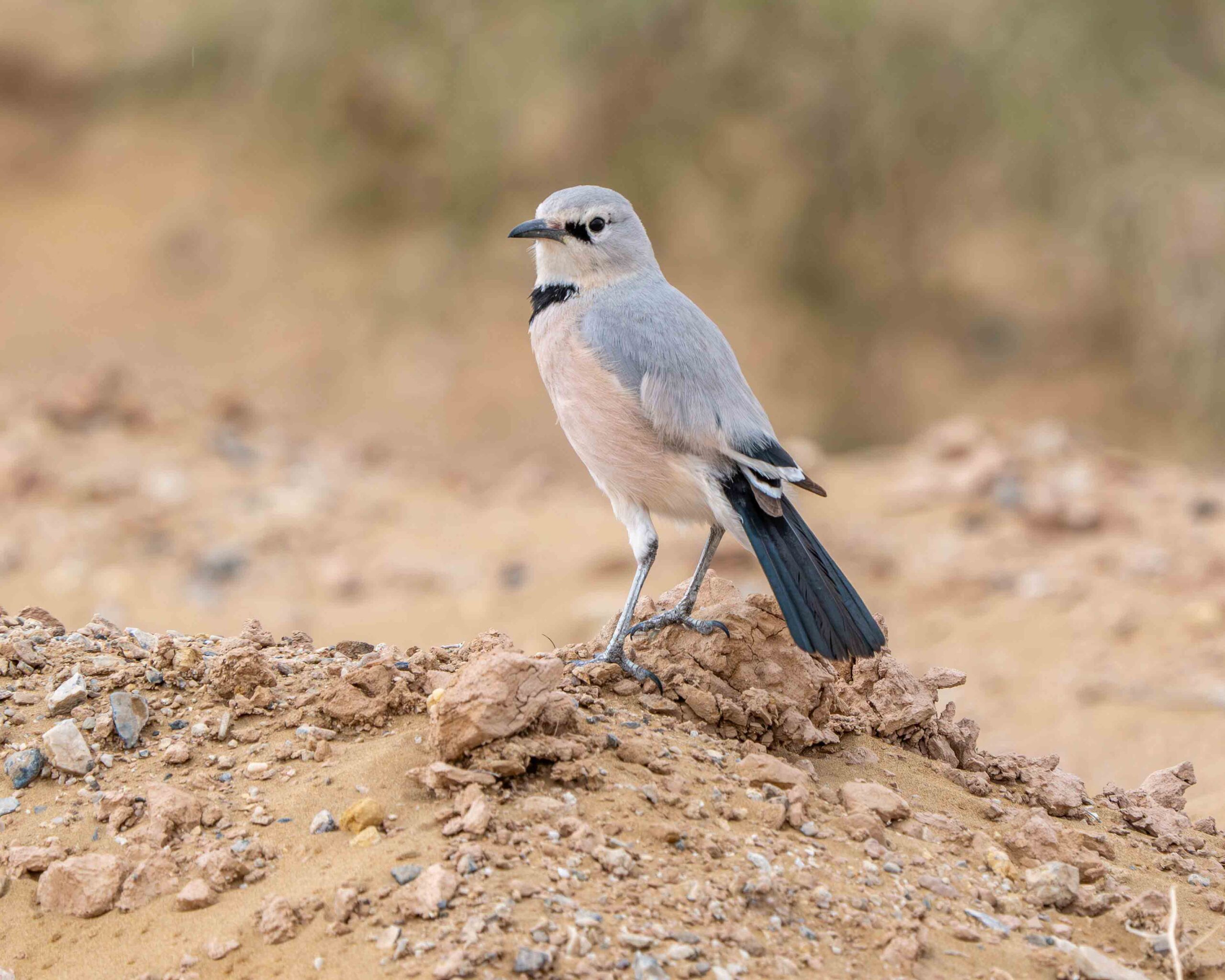
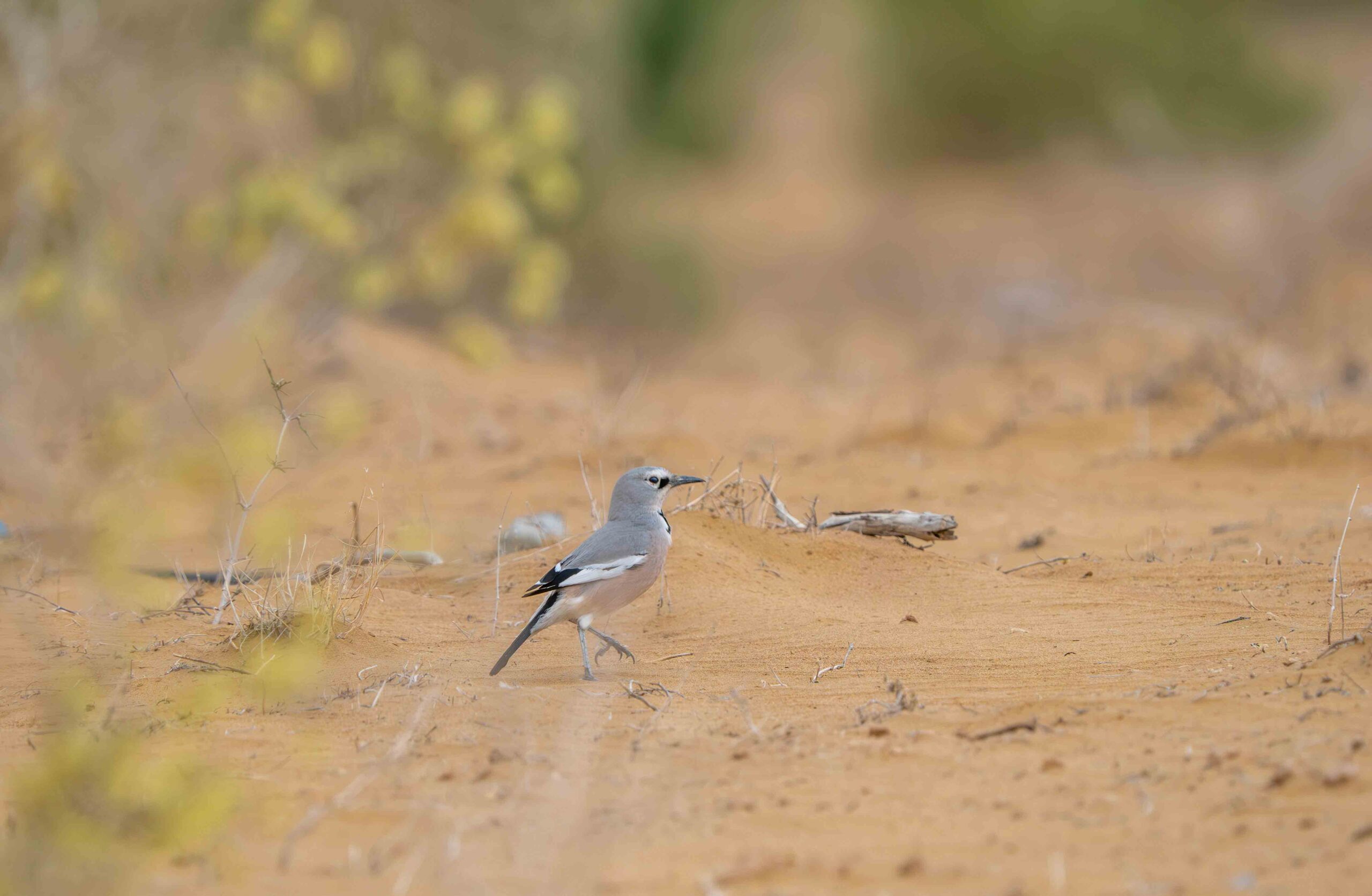
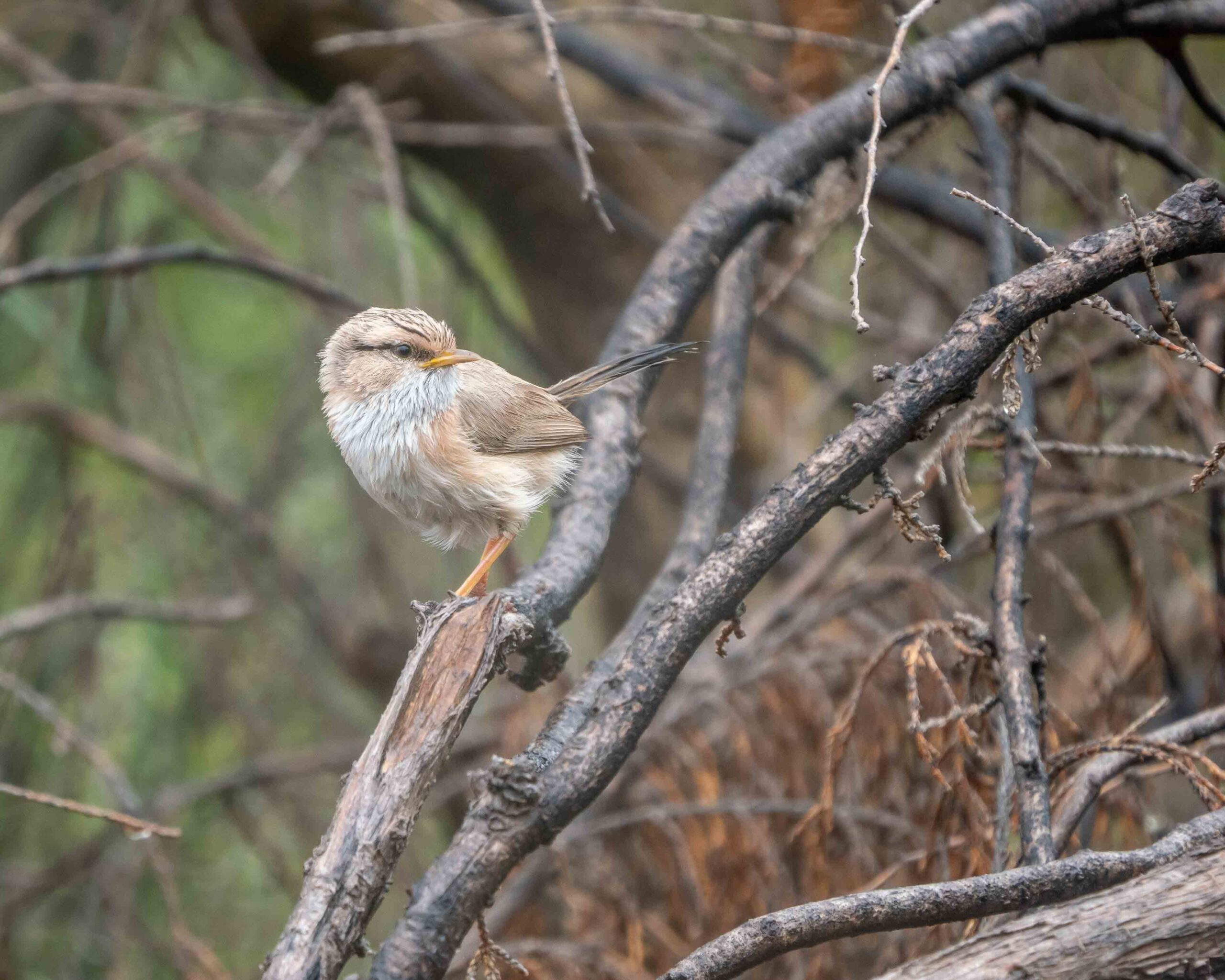
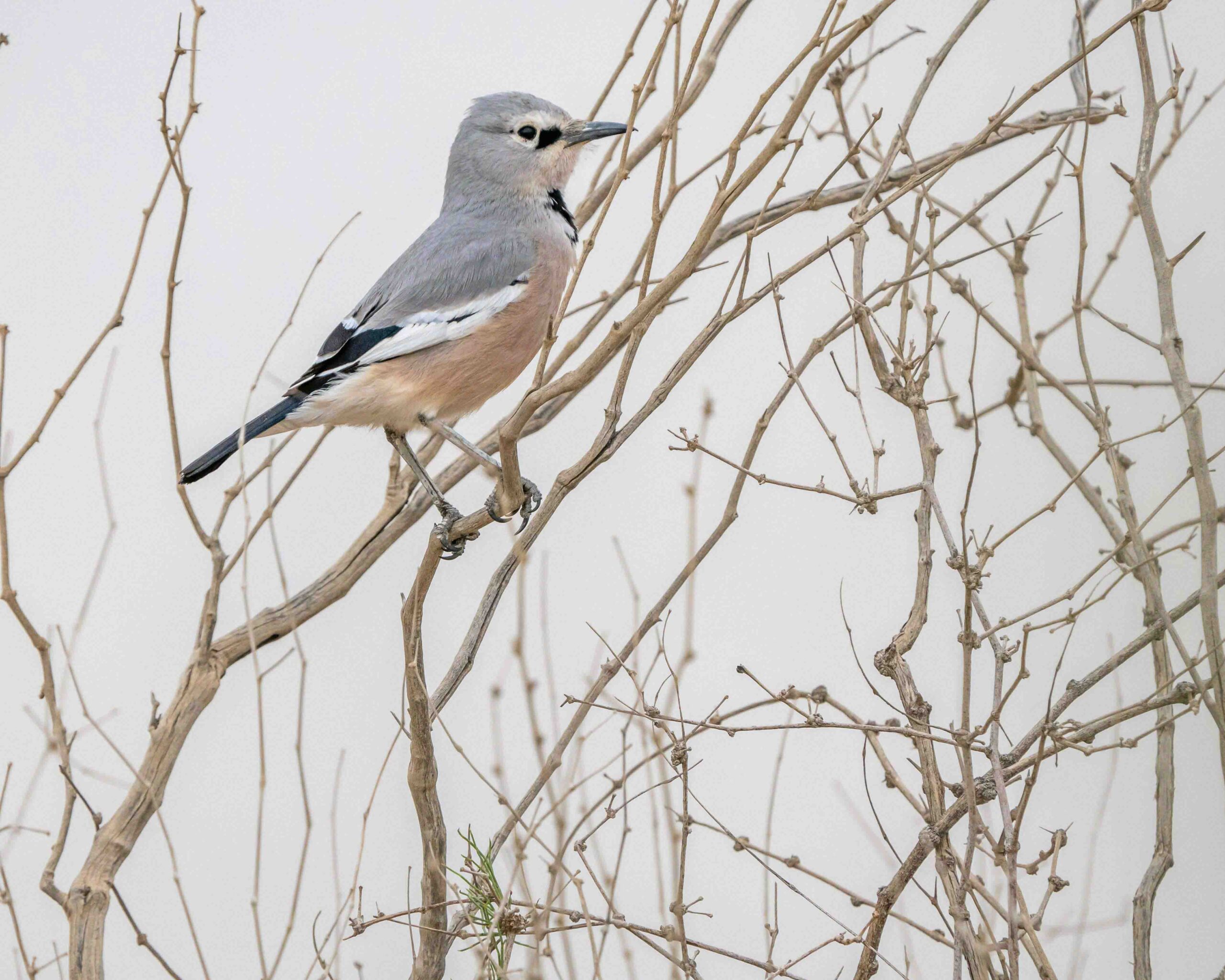
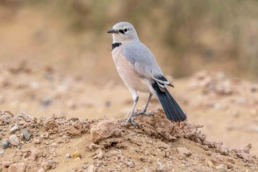
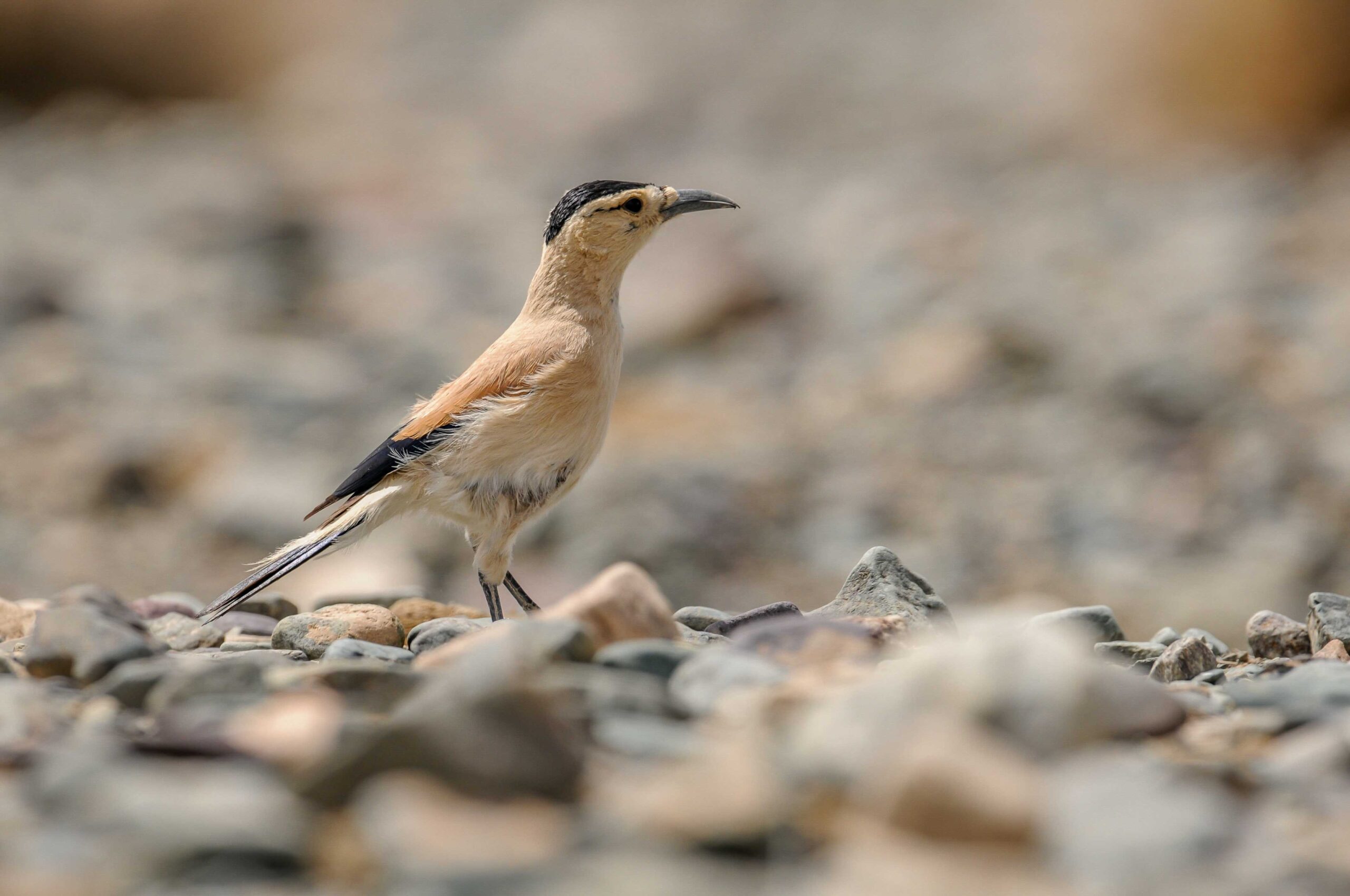
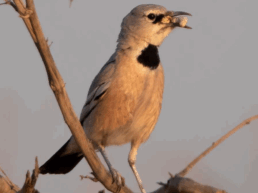
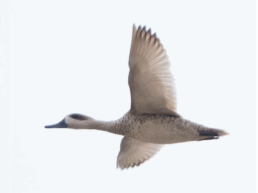
We visit the same key sites in Uzbekistan each year and have built up vast experience birding in the region. Around Bukhara, one of the undeniable highlights was the spectacular Turkestan Ground-Jay—arguably the best bird of this part of Central Asia. Other notable sightings included Streaked Scrub-Robin and Desert Finch, while Erik added further excitement with finds of Marbled Ducks and Blue-cheeked Bee-eaters.
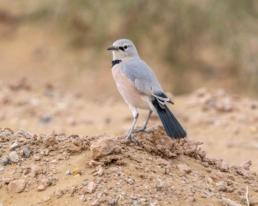
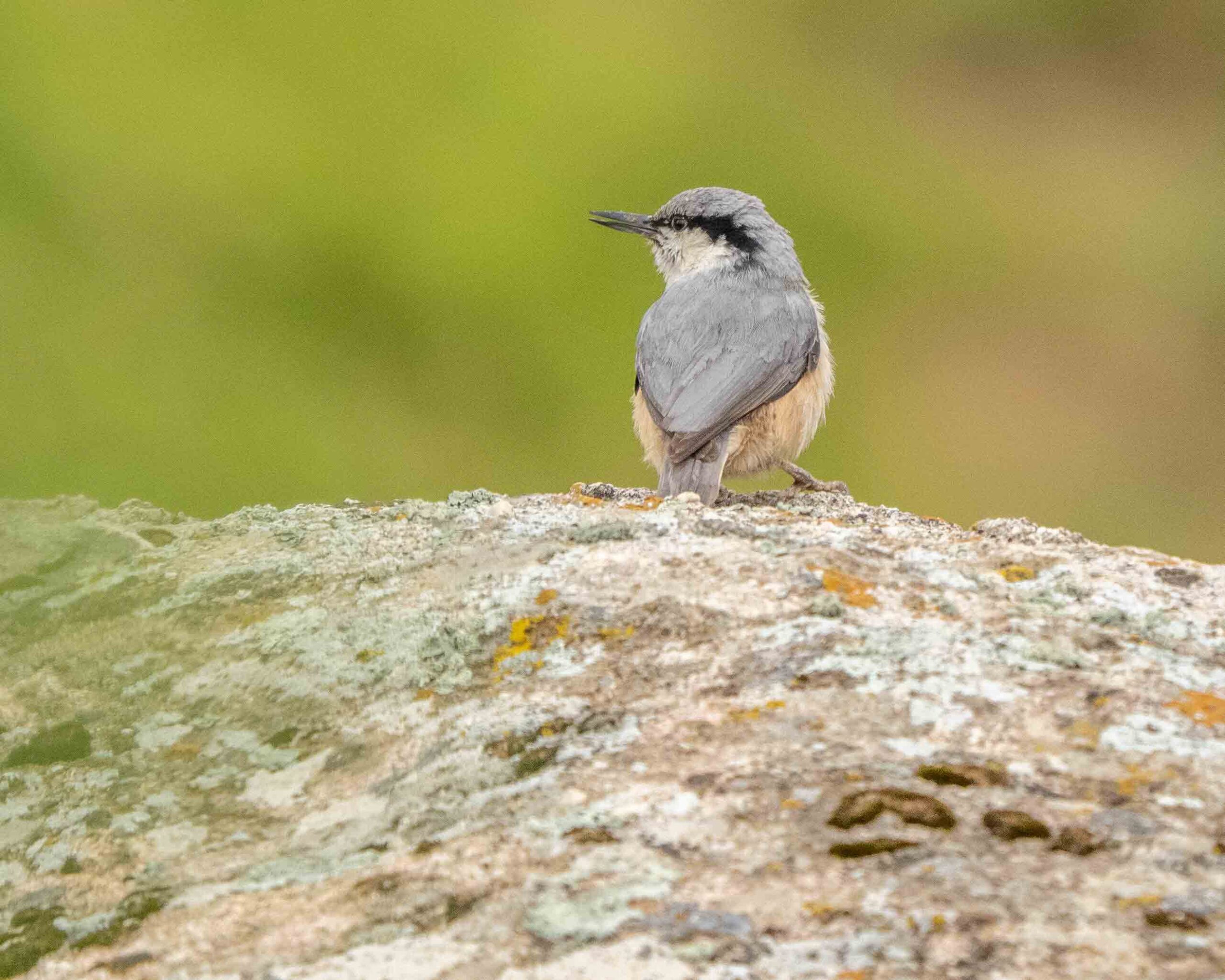
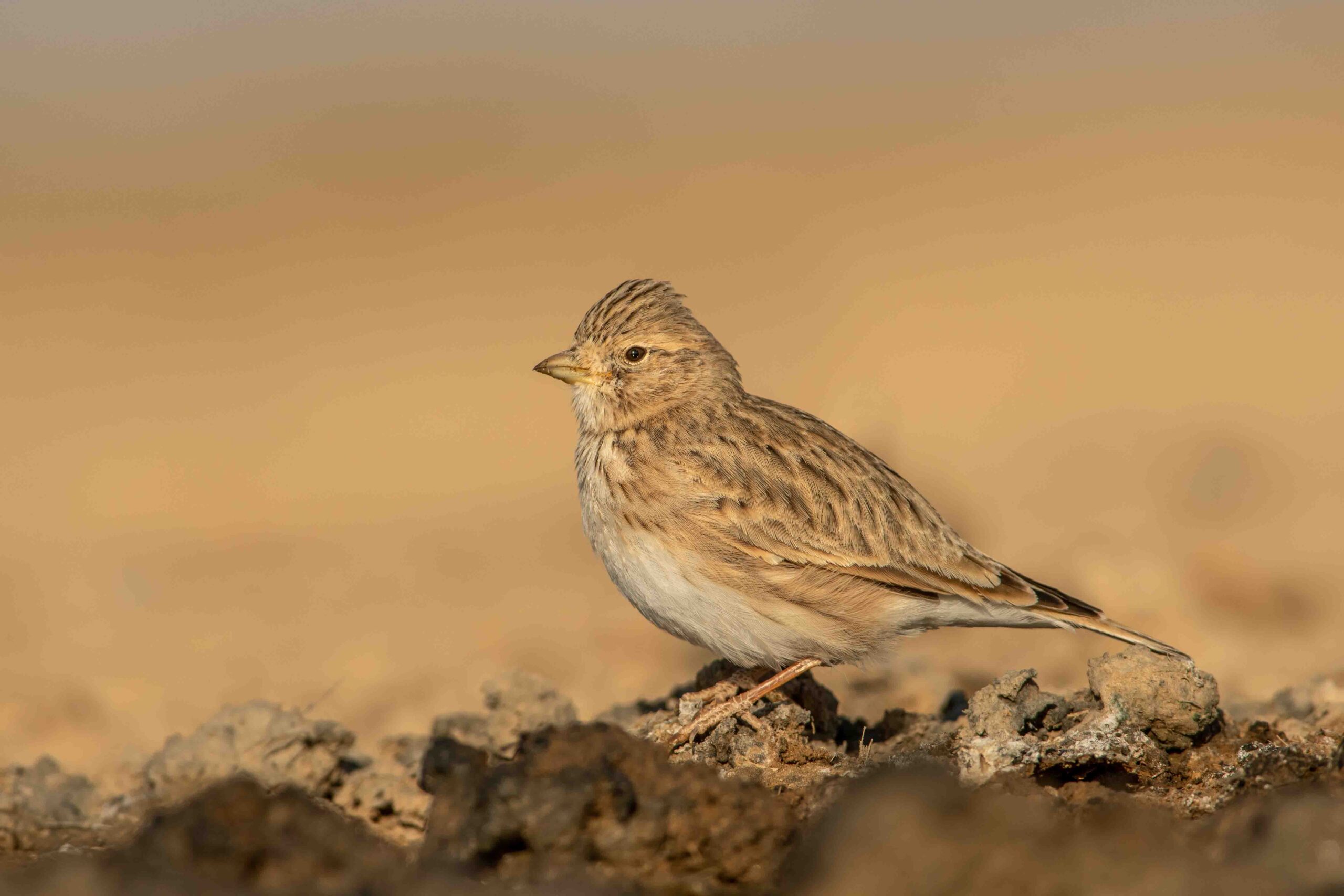
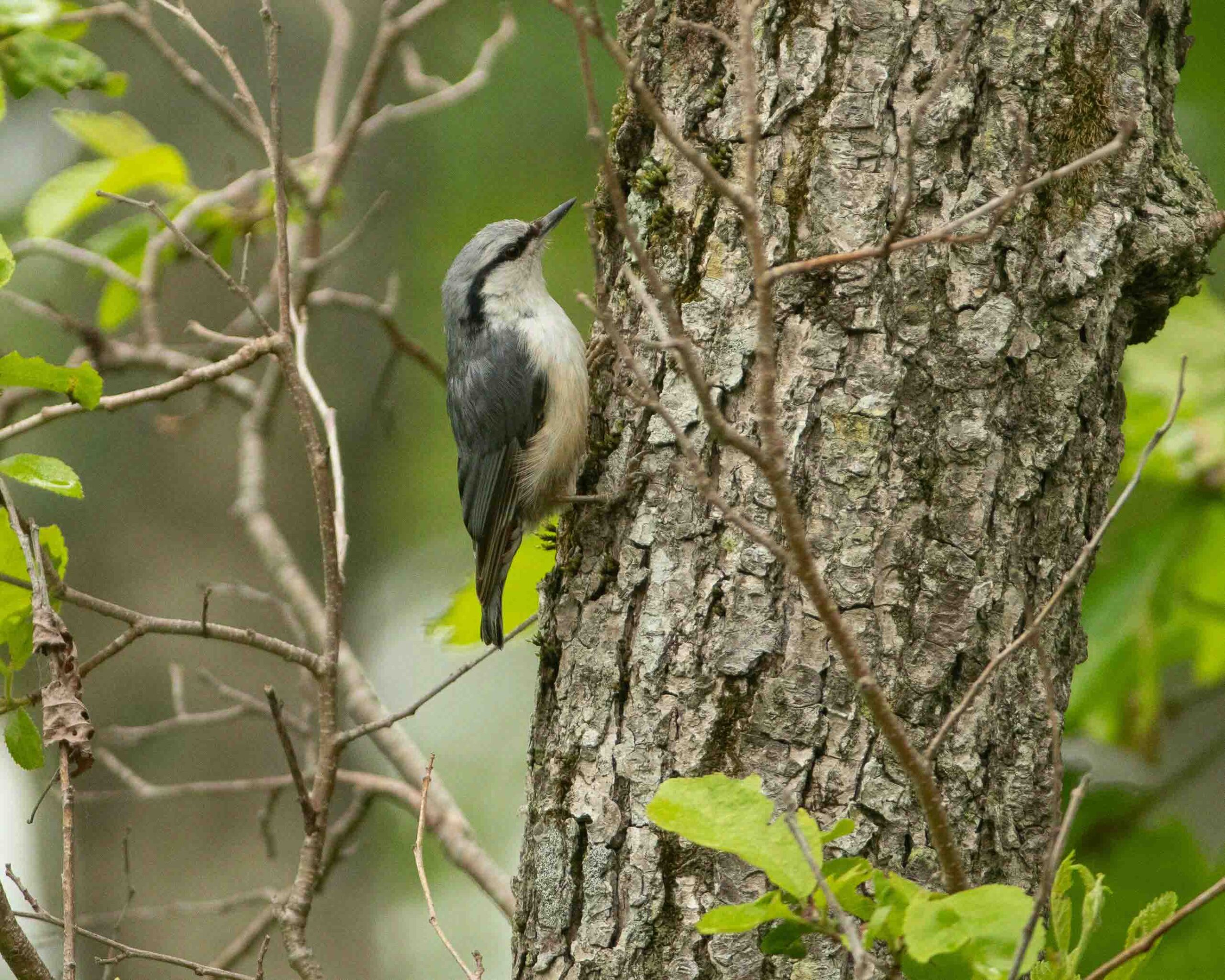
Near Samarkand, a group this year had Hume’s Lark as their top target, and Erik delivered excellent views of this wonderful and localised species. The area also produced the usual highlights, with White-throated Robin, Eastern Rock Nuthatch, and Finsch’s Wheatear standing out.
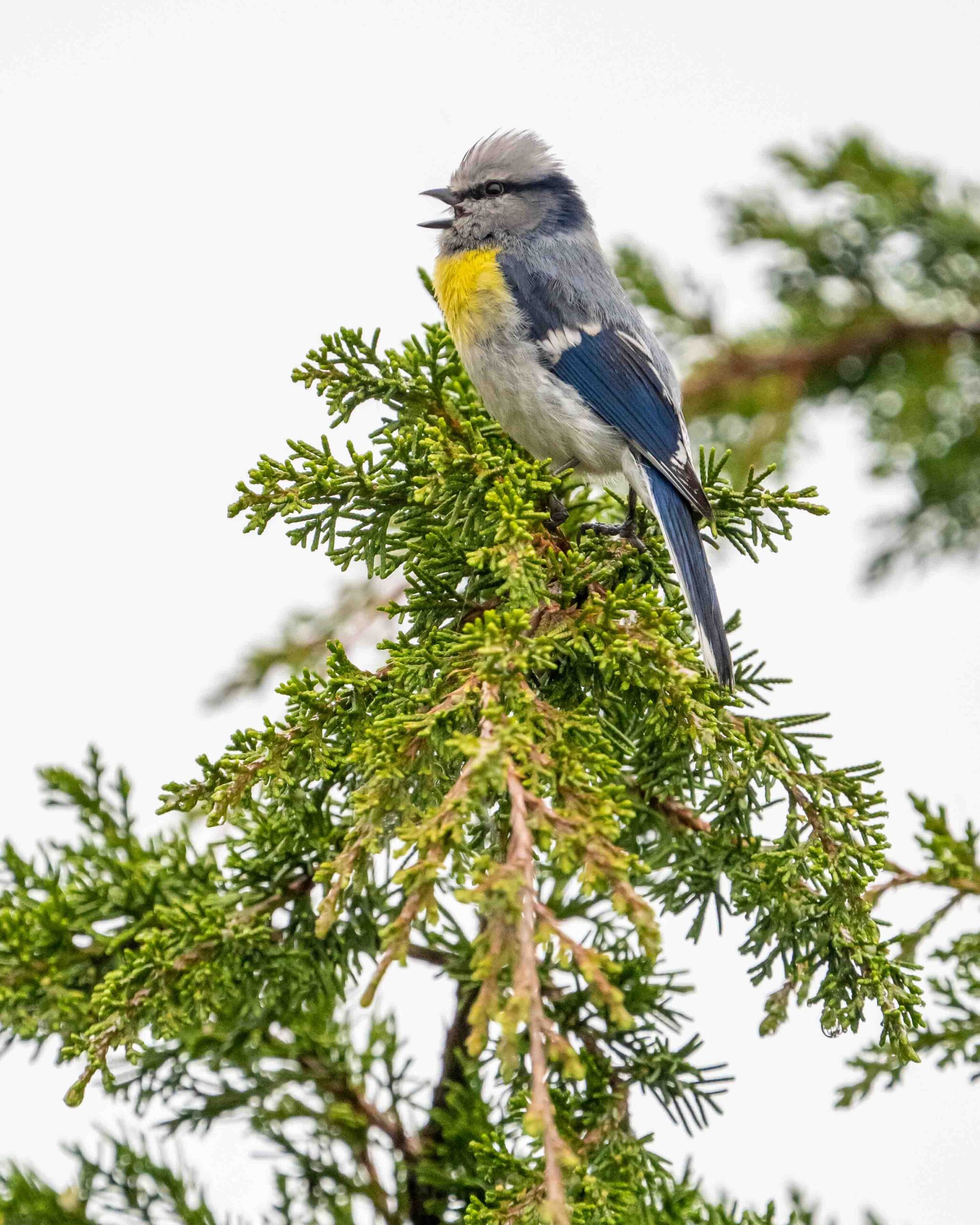
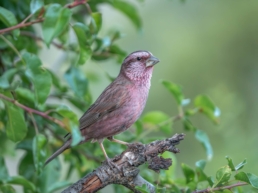
In Zaamin, there is always one star attraction—and once again we succeeded with superb close views of the splendid Blyth’s Rosefinch, a fitting finale to an outstanding stretch of birding.
This season once again highlighted why Central Asia stands among the most exciting and rewarding birding destinations in the entire Palearctic. From desert breeders to alpine specialities, the spring of 2025 delivered unforgettable encounters for all who joined.
We look forward to sharing more trip reports soon—and invite you to be part of the adventure in 2026, as we return to these breathtaking landscapes.
Uncover the immense natural diversity of Tajikistan
I’m thrilled to share an exciting update regarding our inaugural expedition to Tajikistan. In June, we embarked on a remarkable journey with an enthusiastic group from Belgium, venturing into the stunning Pamirs. Our expedition took us along the Afghan border, leading us to the awe-inspiring snow-capped peaks and the sprawling highland plateau.
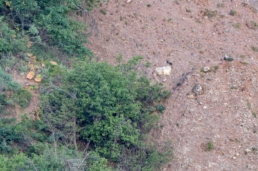
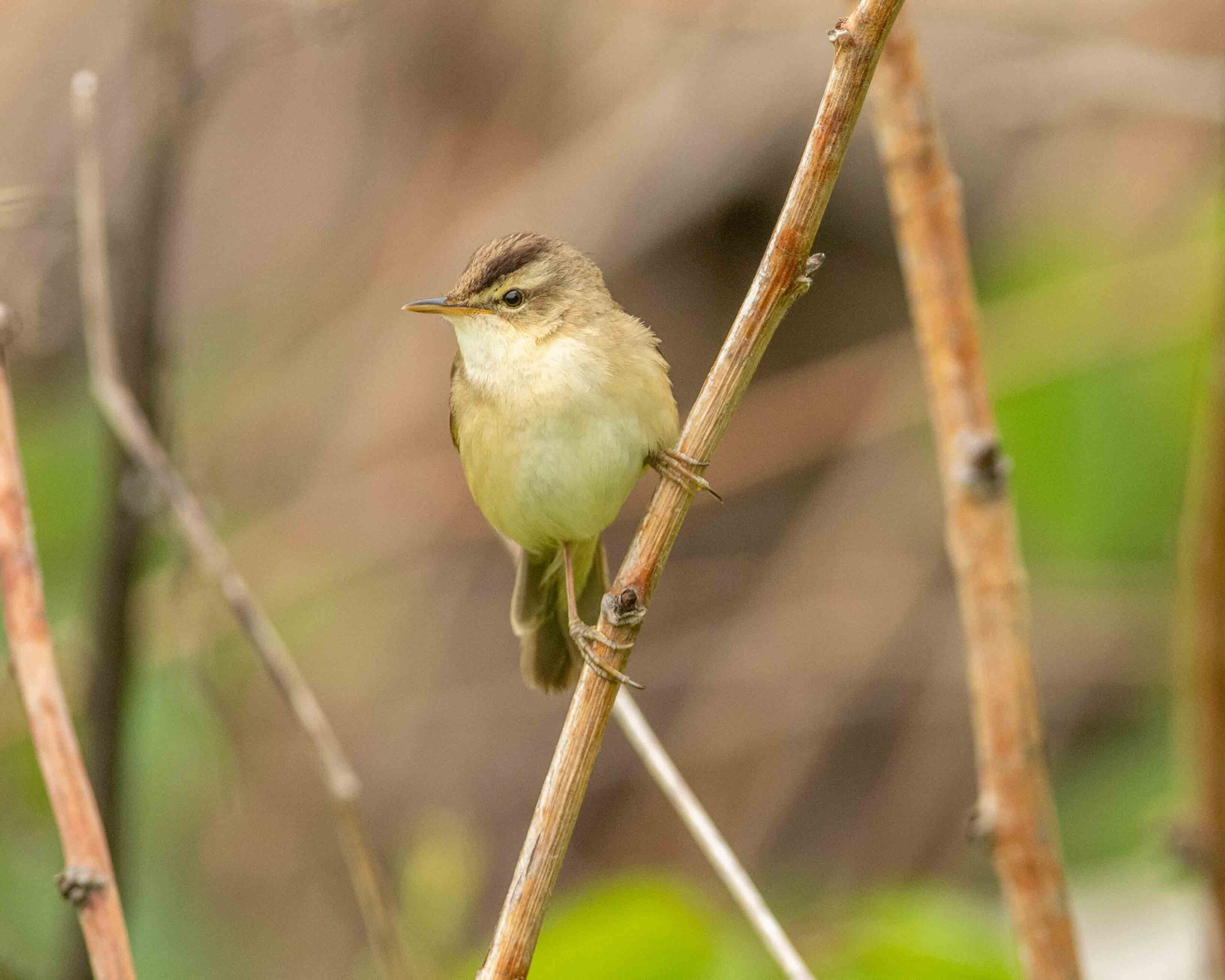
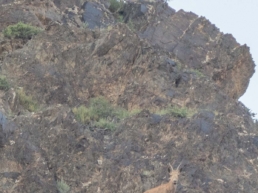
During this expedition, we had the privilege of encountering an array of exceptional bird species and captivating wildlife. From the elusive Markhor sheep to the majestic Lammergeier, and from the charming Eastern Rock Nuthatch to the rarely spotted Large-billed Reed Warbler – often referred to as the world’s least-known bird – the diversity of wildlife left us in awe.
Tajikistan’s landscapes are a testament to nature’s artistry, spanning from towering mountain ranges to lush valleys. This wide range of habitats provides a unique haven for an incredible variety of bird species and exceptional mammals.
For avid birders and wildlife enthusiasts seeking an unparalleled and rewarding adventure, our birding and wildlife tours in Tajikistan offer an unforgettable experience. We’re thrilled to provide you with more details and extend our assistance in planning your upcoming expedition into the captivating wilderness of Tajikistan.
To explore our diverse range of tours to Tajikistan, please visit our website. Your next extraordinary adventure awaits!


Our Tajikistan tours
A birding expedition into the Pamir Mountains

Photo Gallery
Uzbekistan birding and culture
Birding the Silk Road
Uzbekistan birding and culture
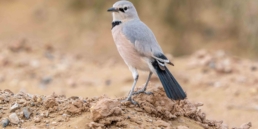
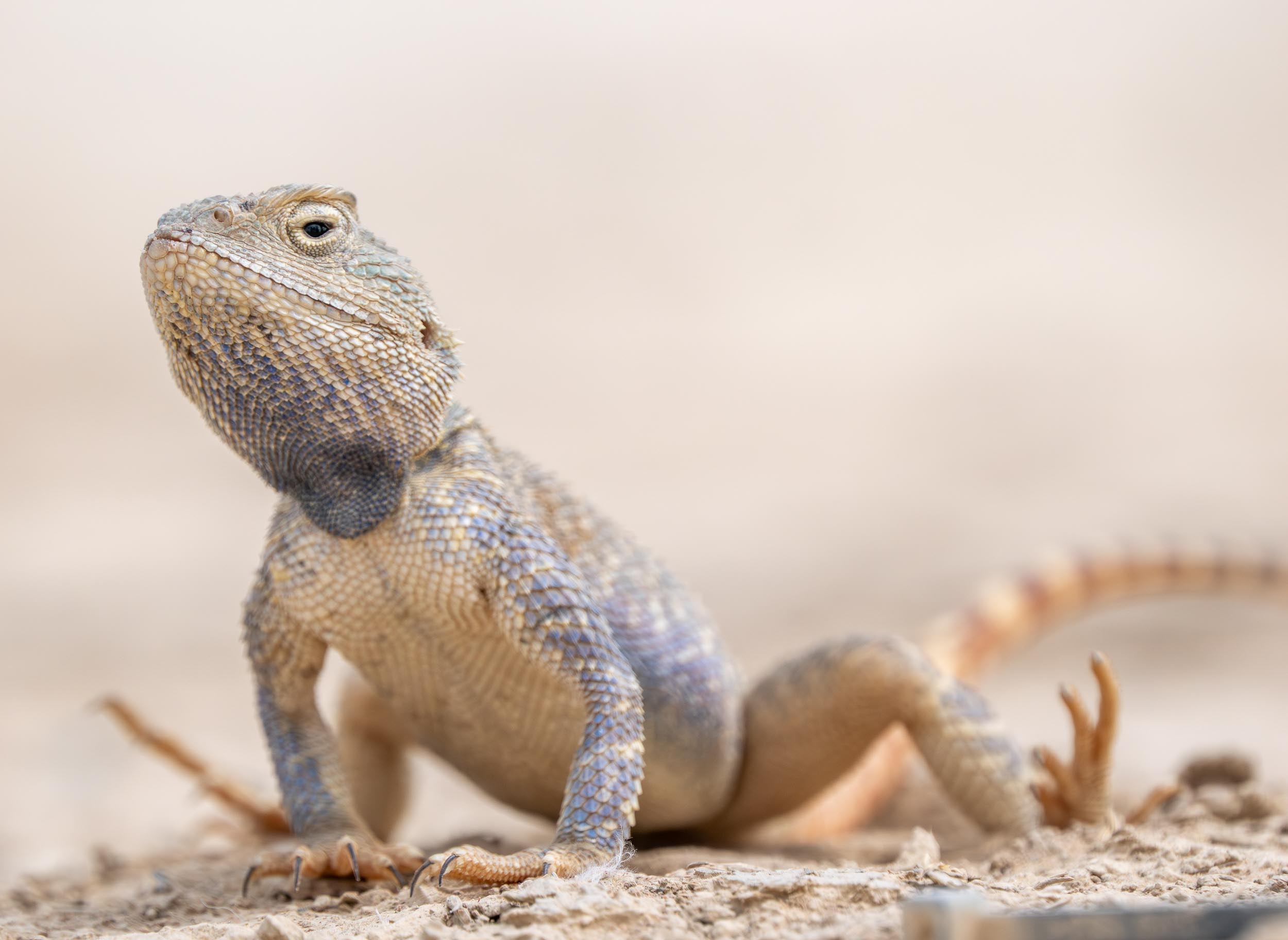
This pre-tour is designed to bird the remarkable country of Uzbekistan at a brisk pace, yet with ample time to take in its stunning sights and birdlife. Known for its legendary Silk Road cities, Bukhara and Samarkand stand out as true gems, brimming with magical cultural sites. In addition to the rich heritage, Uzbekistan boasts incredible wildlife. We will dedicate time to exploring the Kyzylkum Desert in search of key species like Turkestan Ground-Jays, Menetries’s Warblers, and Streaked Scrub Warblers. The desert also offers the chance to encounter prehistoric-looking reptiles, such as Lichtenstein’s Toad-headed Agamas and the impressive Caspian Monitor Lizard!
Next tour
18 - 23 May 2026
Cost: $2.800
Single supplement: $500
Deposit: $600
Group size: Min 6 – Max 10
Best time: May/June & September
Leader: Arend Wassink
Upcoming tour
Book your private tour here
- Click on the image to enlarge
Your Uzbekistan itinerary
Day 1: To Bukhara
Clients will depart from their home countries and head to Bukhara, once the most significant city along the Silk Road. We recommend flying with Turkish Airlines via Istanbul, as they offer convenient connections to both Bukhara and for your return from Tashkent or Astana. Please ensure you arrive in Bukharabefore 4:00 AM on May 9th. If you wish to arrive earlier, feel free to reach out to the RBT office; we are happy to assist with additional hotel bookings.
Night: Comfortable Tourist Hotel in Bukhara
Day 2 - 3: Bukhara & Kyzylkum Desert
“So much to do – so little time!” Over the course of two days, we visit several nearby wetlands, which surround the oasis city of Bukhara and visit the Kyzylkum Desert.
The nearby oases can be extremely attractive to a wealth of water and marsh-loving species and we hope for plenty of Pygmy Cormorants, Dalmatian Pelicans, Glossy Ibis, an abundance of herons and egrets, Blue-cheeked Bee-eater, plus perhaps scarcer finds such as Marbled Duck. Elegant White-tailed Lapwings are easily found. The extensive reed beds, and marshy and dry scrub cover here is home to many additional smaller species of interest: Menetries’s Warbler, Clamorous and Eurasian reed warblers, Rufous-tailed Bush-Robin, and Pied Bushchat and Long-tailed Shrike (the latter two at the furthest west of their Asiatic range).
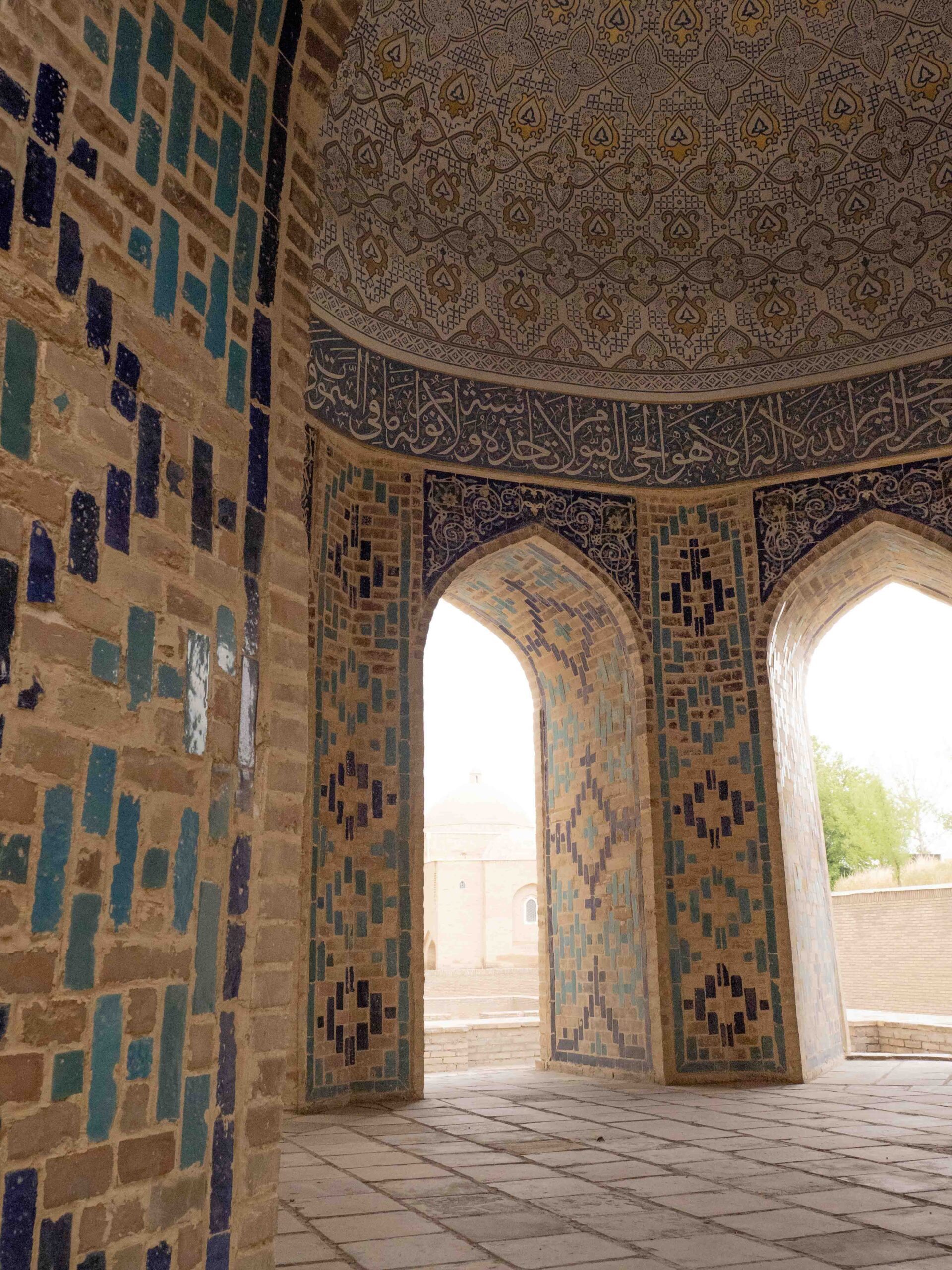
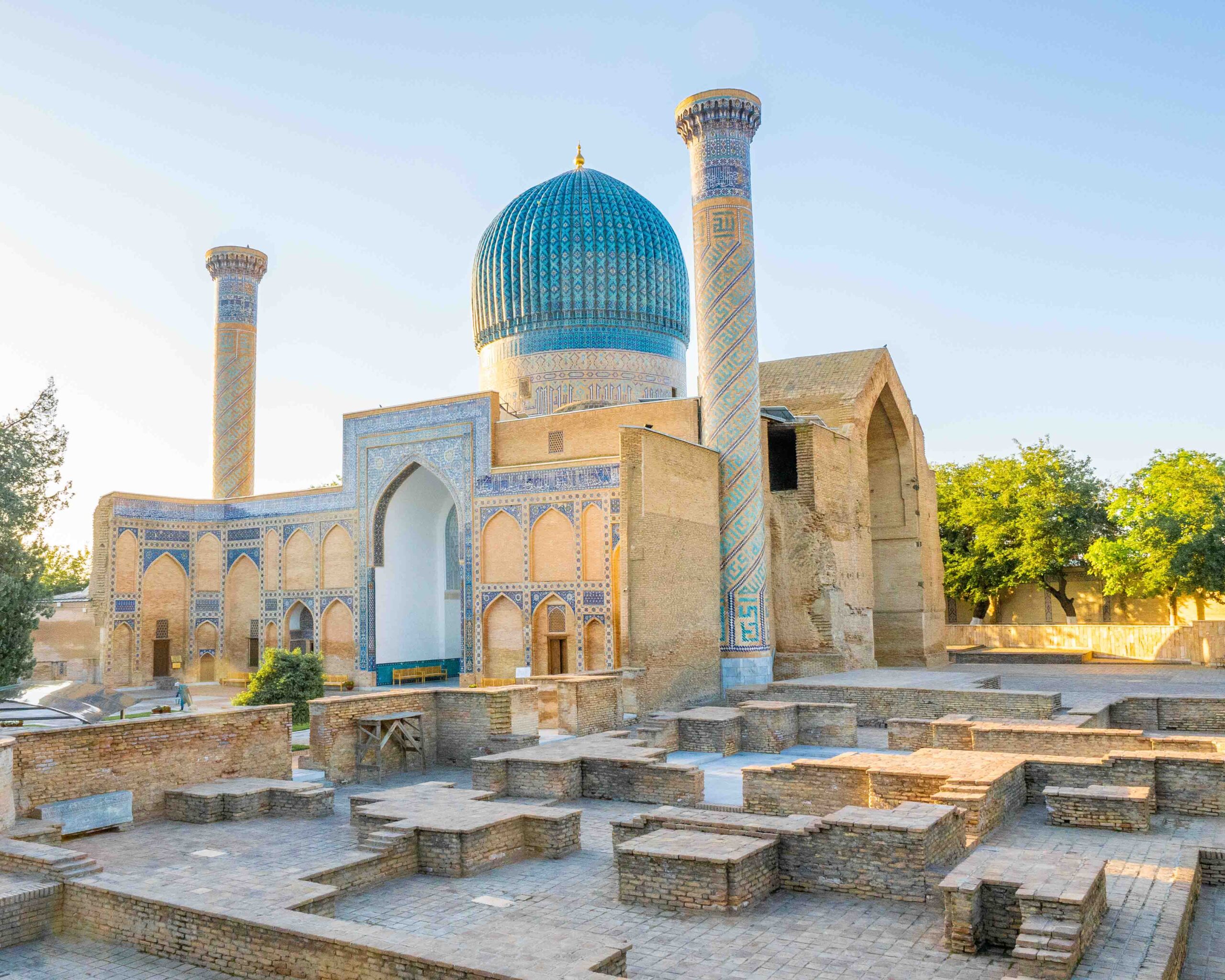
A very early start must be made into the Kyzyl Kum Desert, where we expect to arrive just after dawn. This very special region is home to one of the most sought-after of all the birds that occur in Central Asia—the legendary Turkestan (Pander’s) Ground Jay. They are best located in the cool of the early morning when they can often be found along the roadside. We will return to Bukhara for lunch followed by some relaxing and more opportunities to take in some further/last sights of Bukhara, including the historic town centre with its surrounding old madrassahs, the Kalyan Minaret—a 150-foot-tall tower built in the 12th century, and also the Miri-Arab Madrasa and Trade Domes. The Ark (the fortified citadel of the Emir within the immense city walls), the Bolo-Hauz Mosque, the 10th century Ismail Samani Mausoleum and the Char Minar with its four elaborately tiled minarets.
On the second day, we will drive to Samarkand in the afternoon.
Night day 2: Comfortable Tourist Hotel in Bukhara
Night day 3: Comfortable Tourist Hotel in Samarkand
Day 4: Samarkand
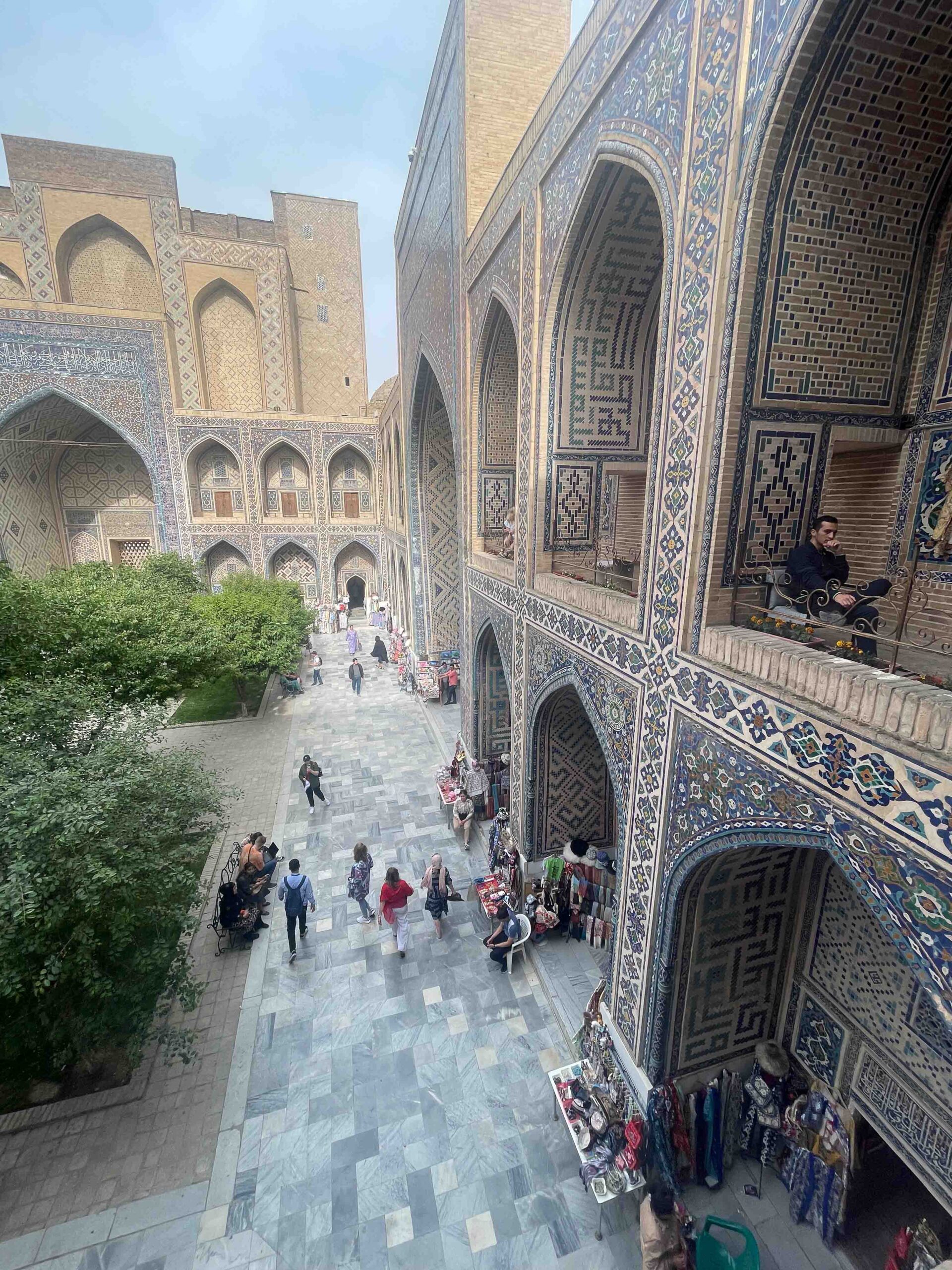
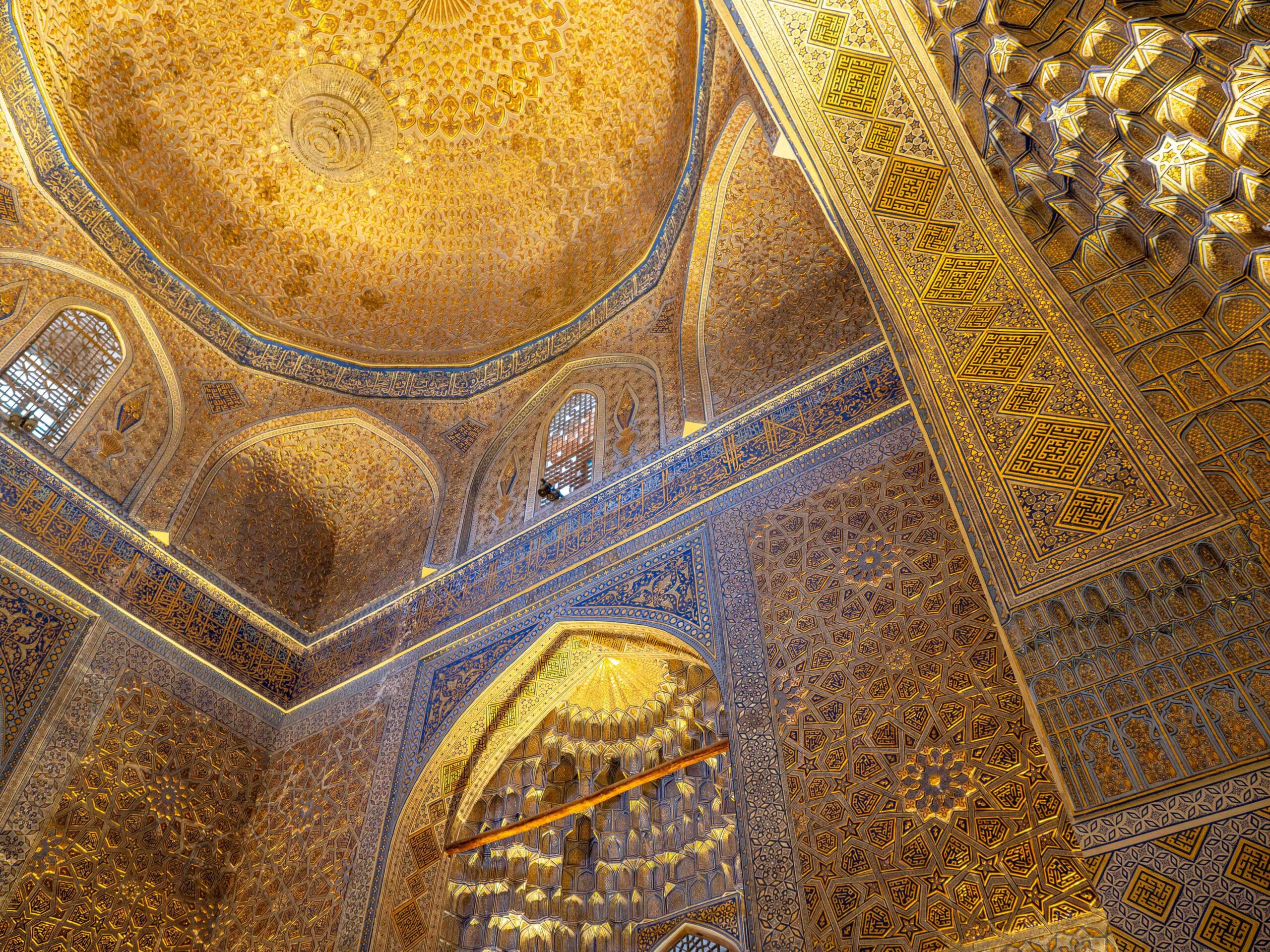
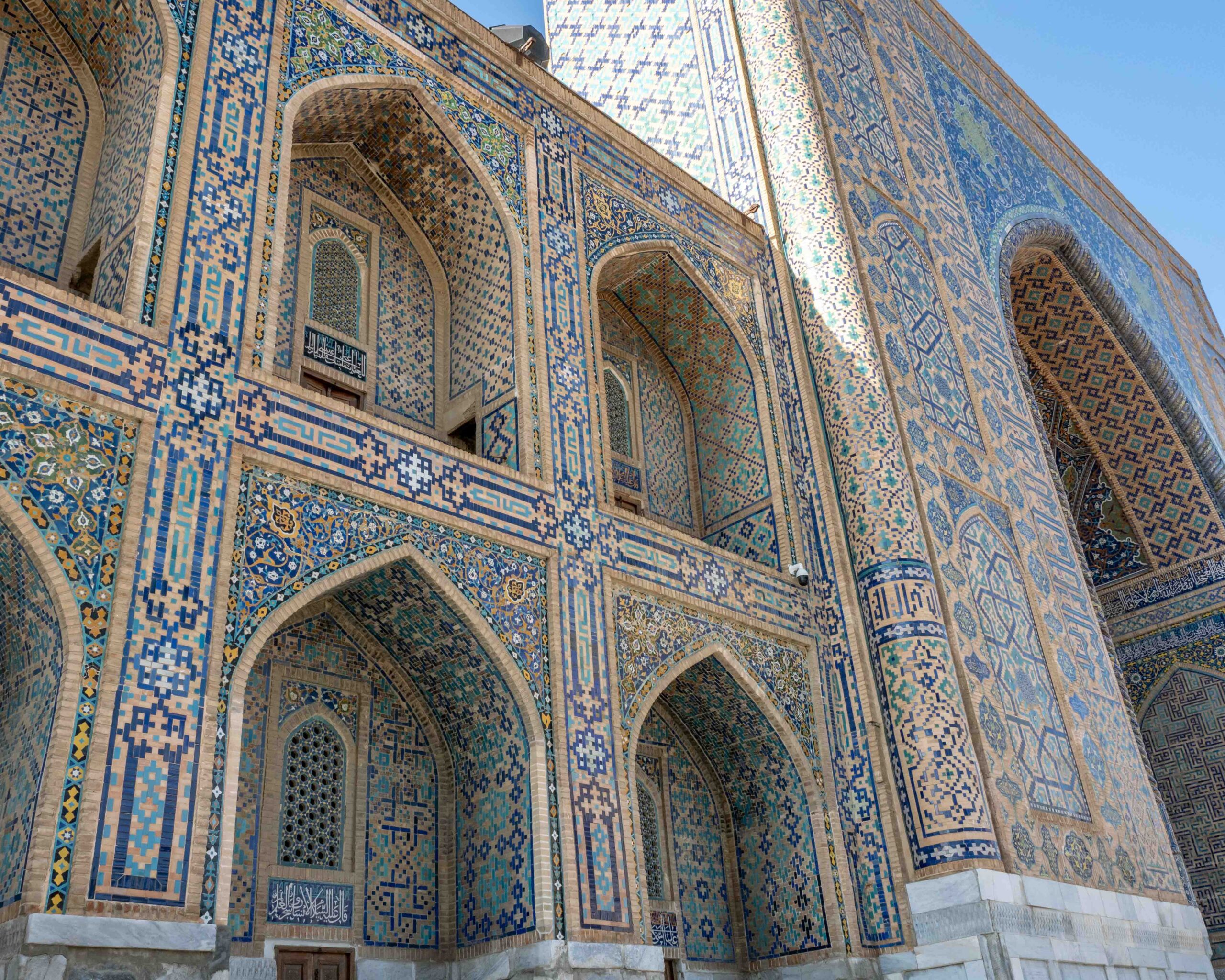
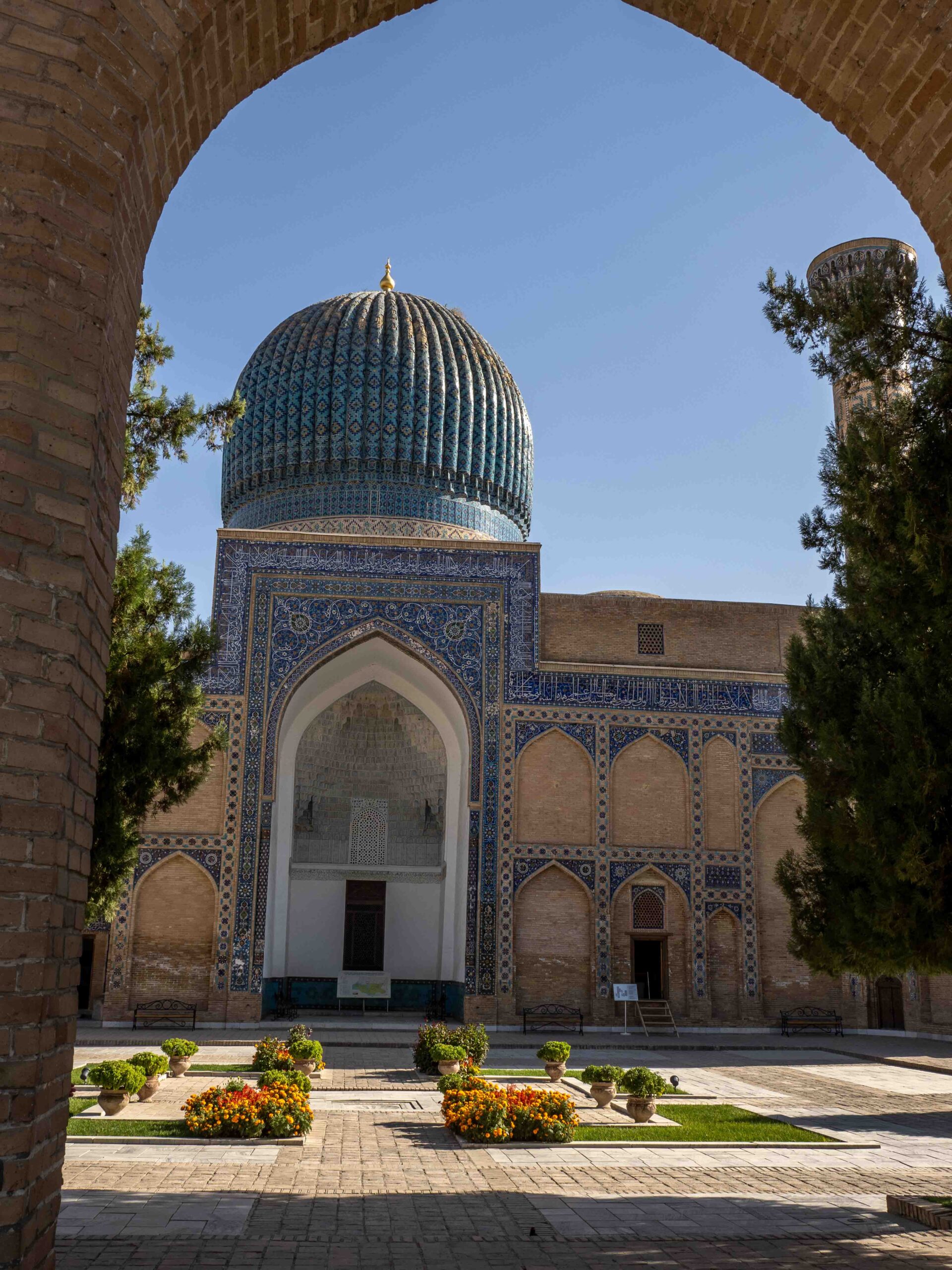
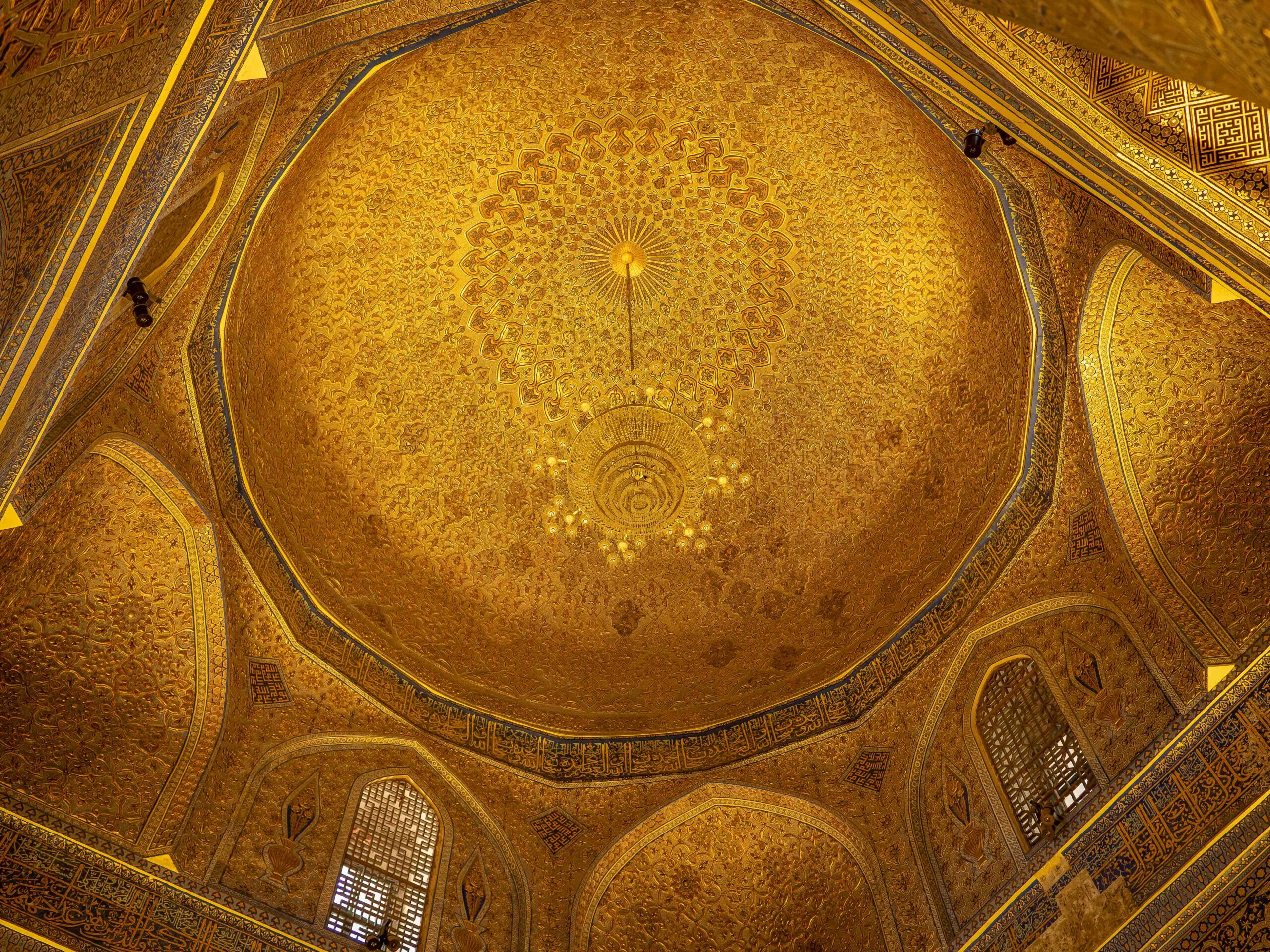
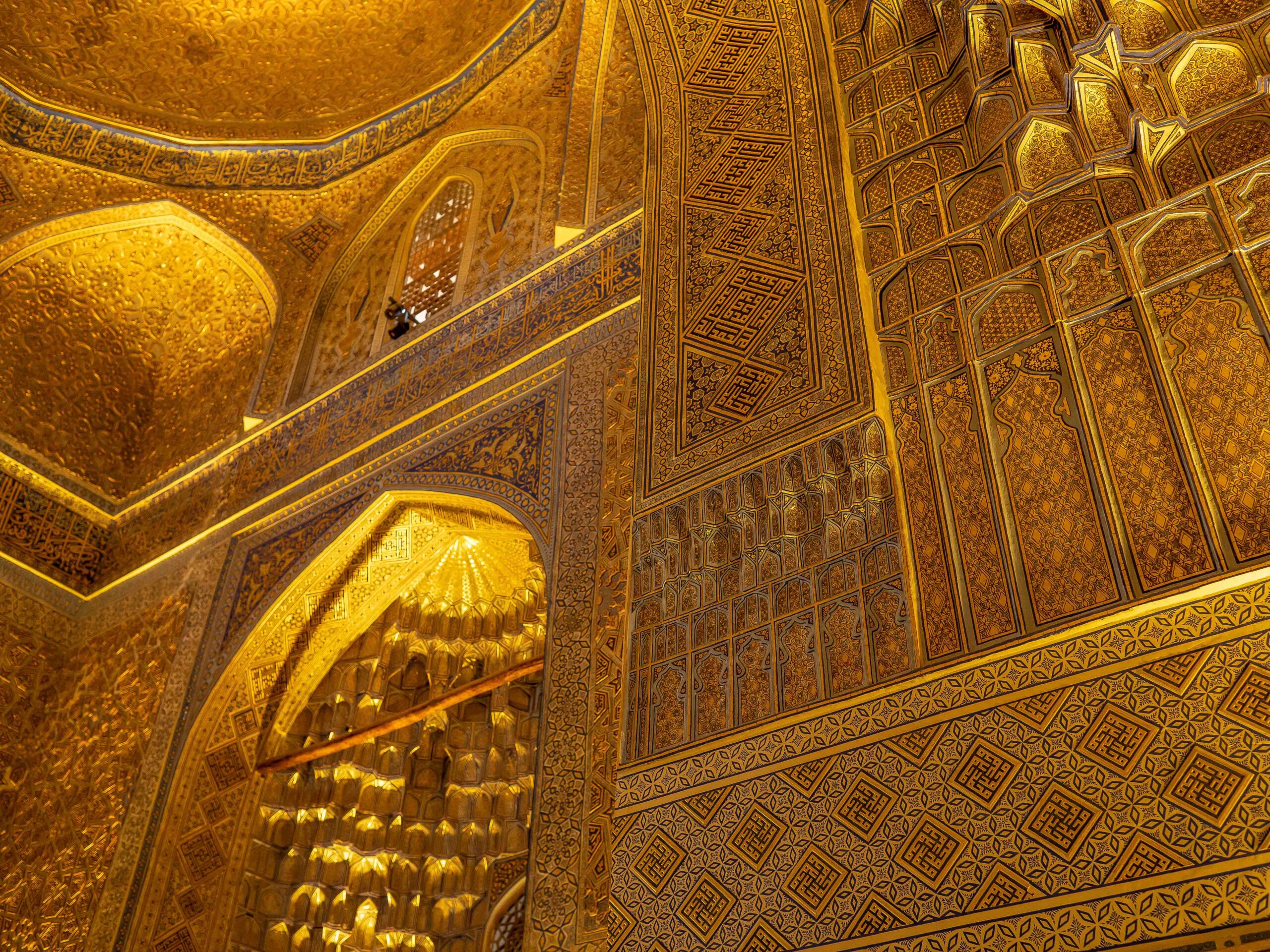
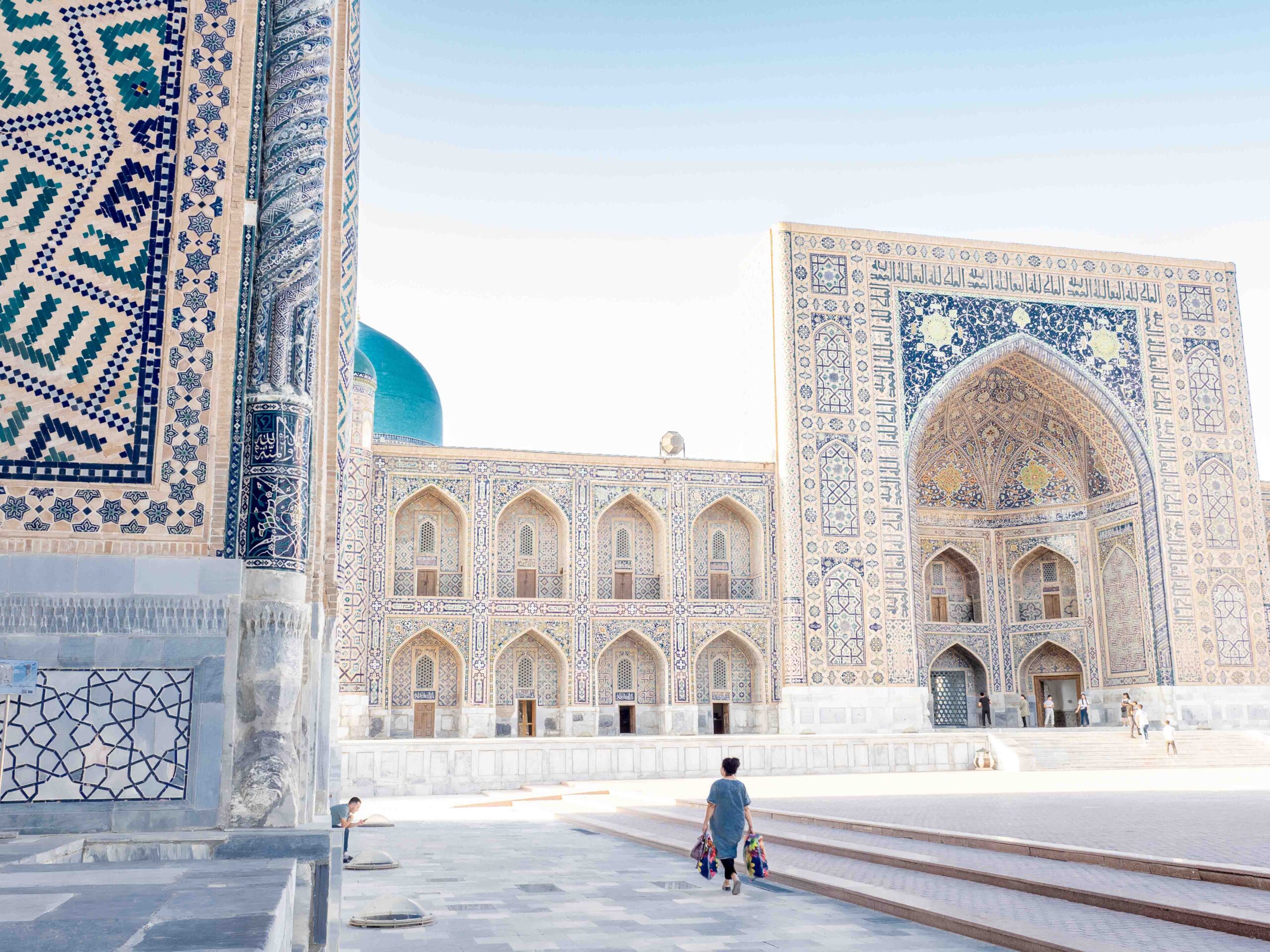
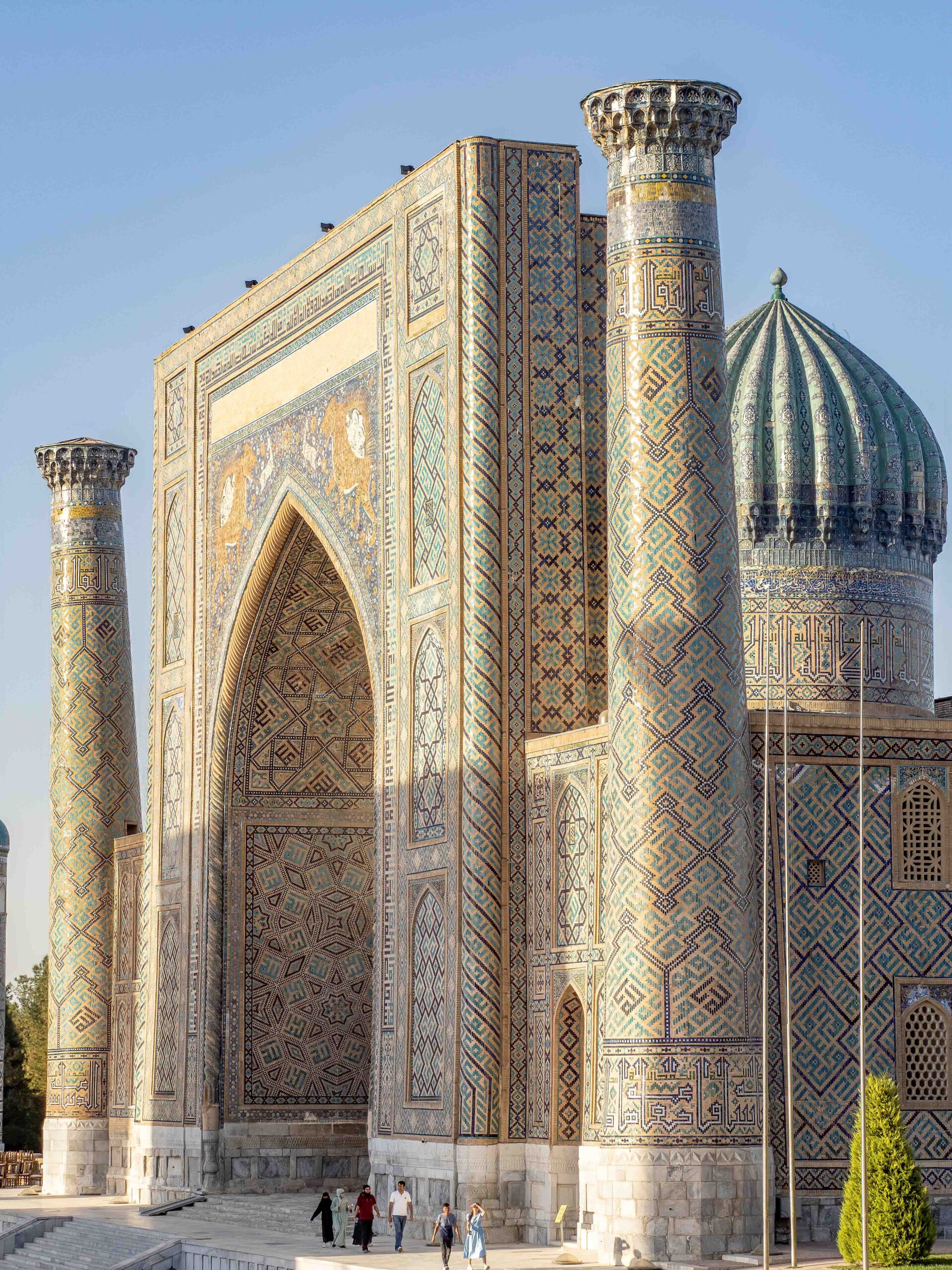
Today there are many wonders in store with a day based in and around the ancient city of Samarkand. We will commence with an early morning start, driving out of the city to rocky, scrub and bush-covered hills of the Takhtakaracha Pass lying between Samarkand and Zarafshan, where Tamerlane roamed in centuries past. (Tamerlane was a Turco-Mongol conqueror who founded the Timurid Empire in and around modern-day Afghanistan, Iran and Central Asia, becoming the first ruler of the Timurid dynasty.) High on the wanted list will be the White-throated Robin along with Eastern Orphean Warbler and the obscure Hume’s Lark. Also here are Eastern Rock Nuthatch, Turkestan and Yellow-breasted tits, Indian Paradise-Flycatcher and White-capped Bunting. Back in time for lunch, we will wander from our hotel into the quiet, small ancient city area to explore its historical treasures. The massive Bibi Khanum mosque (once the largest in Central Asia), The Registan, Timur’s Mausoleum, the Street of Tombs and the local bazaar present a stunning and memorable “visual overload” of exquisitely elaborate tiled, painted and carved buildings.
In the late afternoon, we drive to our guesthouse at the foot of Zaamin National Park.
Night: Basic hotel in Zaamin
Day 5: Zaamin National Park
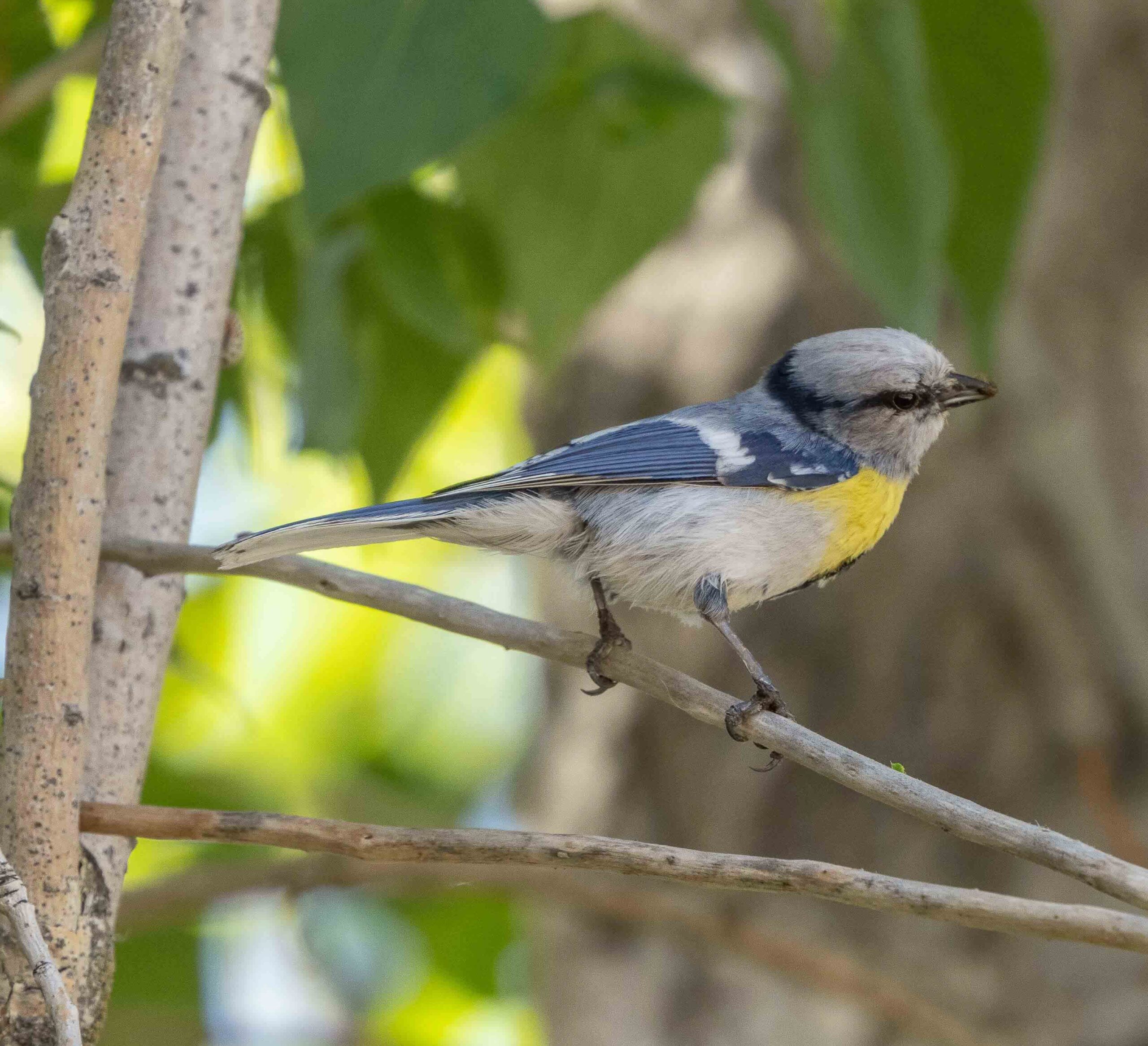
Today, we dedicate the day to exploring Zaamin National Park, located near the Tajikistan border. We’ll ascend into the park’s juniper habitat, marking our first visit to this unique ecosystem on the tour. Above the treeline, we’ll focus on finding the highly range-restricted Blyth’s Rosefinch. While this species is usually seen on our Tajikistan tour, this is our only opportunity to spot it in Uzbekistan, making Zaamin a critical stop.
Other notable species we hope to encounter include Rufous-naped Tits, the striking Yellow-breasted Tit, and the elusive Hume’s Whitethroat.
Night: Basic hotel in Zaamin
Day 6: Tashkent or onwards to Almaty
After breakfast, we depart from Zaamin and begin our drive towards Tashkent, where we will connect with a flight to Almaty, marking the start of the main tour of our Central Asia adventure. For those who have chosen to join only the pre-tour, will remain in Tashkent and take an evening flight back home to Europe or the USA.
Night: Comfortable tourist hotel in Almaty
Tour information
Focus
- Birds
- Deserts
- Unique Culture
Group size
Min 6 - Max 10
The group will be always led by one birding leader and one culture guide.
What's included in the Price?
All transport. All accommodations in twin rooming. All meals. All permits and national park entrances. Please note: Drinks, tips, possible visas and items of a personal nature including travel insurance, are not included.
Accomodation
During this short expedition, we stay in comfortable tourist hotels in Bukhara and Samarkand, while in Zaamin, the accommodation will be basic but clean. All accommodations provide en-suite facilities, ensuring a comfortable stay throughout the journey.
Difficulty
We have a few longer days planned to fully explore the best birding sites, focusing on finding some of the rarer species. These days will include walks of up to 3-4 km. In the afternoons, participants can choose between joining a guided cultural walk or taking some time to relax and recharge from the birding activities.
Flights
International flights are not included in the pricing. Please connect with the RBT office to find out your best connection to Central Asia.
Clothing - What to pack?
This trip is a wonderful opportunity to experience a bit of everything! You’ll need light, easily washable, quick-drying clothes, along with sunglasses and a sun hat for protection against the hot steppe and desert. Don’t forget to pack some lightweight yet warm layered clothing for the early mornings. A light waterproof jacket is also advisable.
For footwear, opt for light but sturdy walking boots that can handle various terrains, and it’s best to avoid shorts for sun protection, as the region is conservative. In the cities, however, people tend to dress more “modern” in light Western clothing. You’ll find 24-hour laundry services available at hotels in Bukhara and Samarkand.
Additionally, consider bringing a pair of comfortable sneakers for long travel days, especially when we visit the enchanting mausoleums and madrassas along the Silk Road.

Related tours
Uzbekistan birding and culture

An adventure for the Zarudny Sparrow

Ornithological expedition in the Kazakh Altai
Birding the Golden Mountains
The pristine nature of the mesmerizing Kazakh Altai
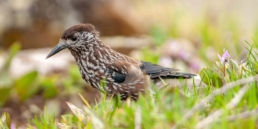
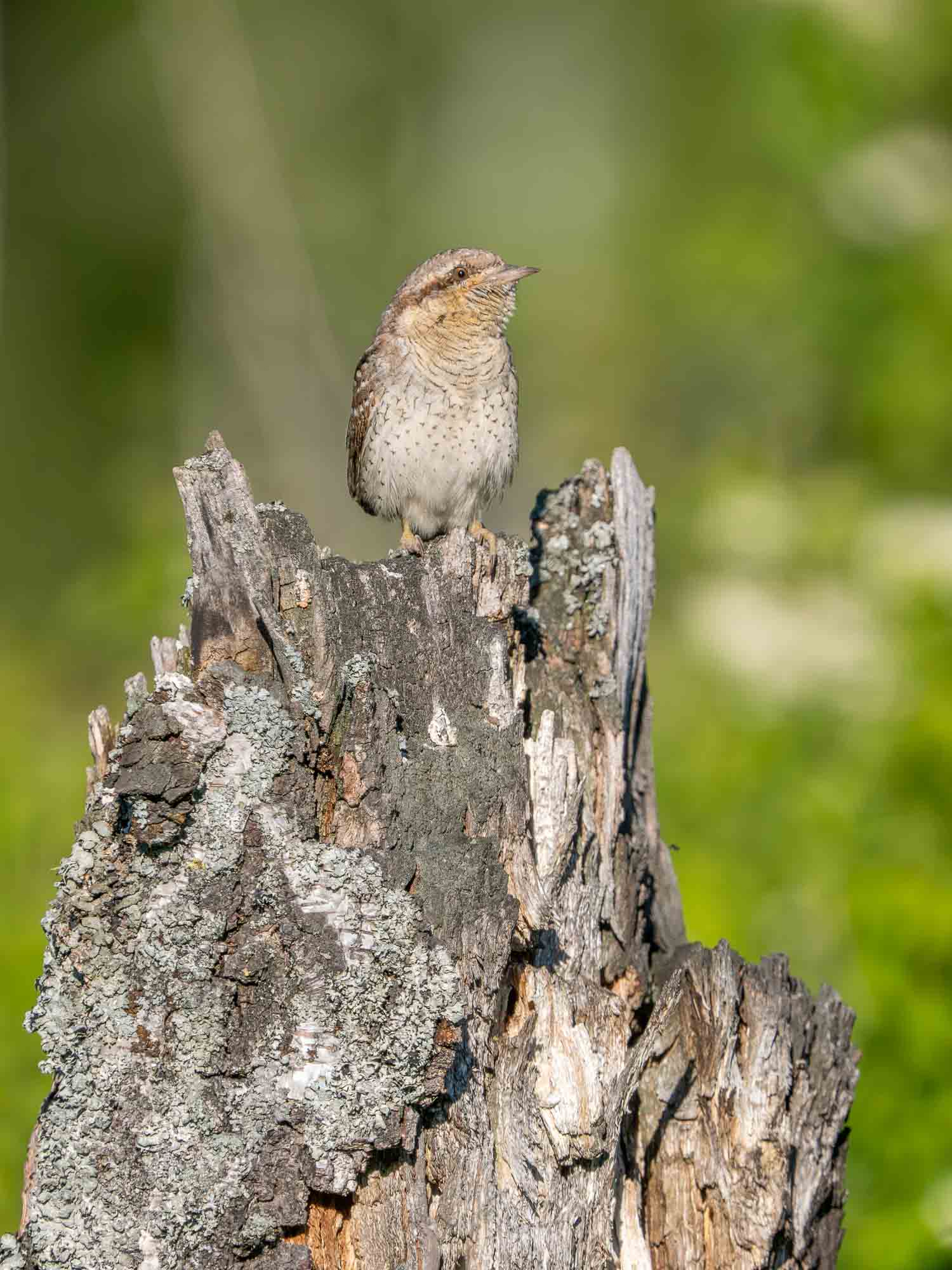
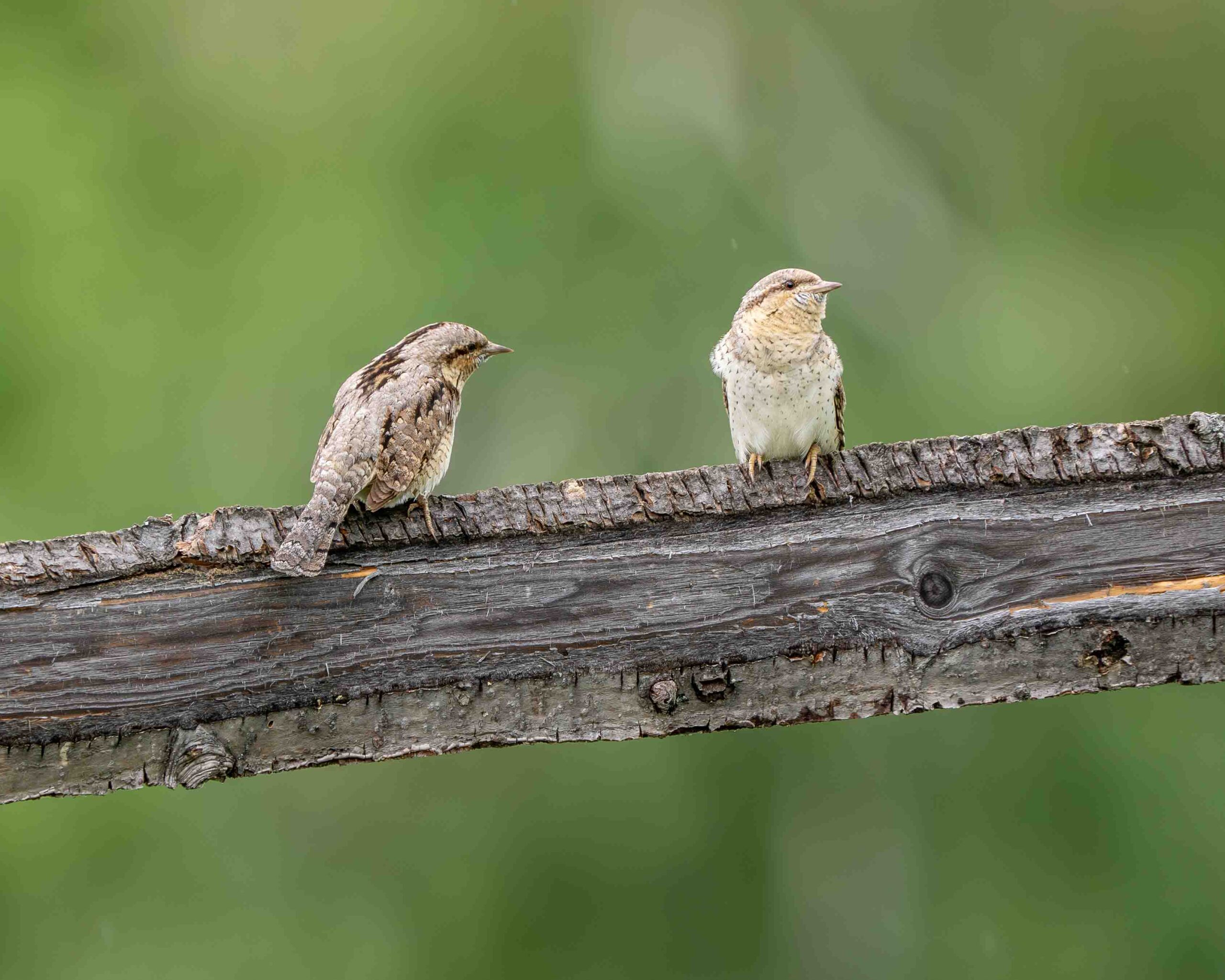
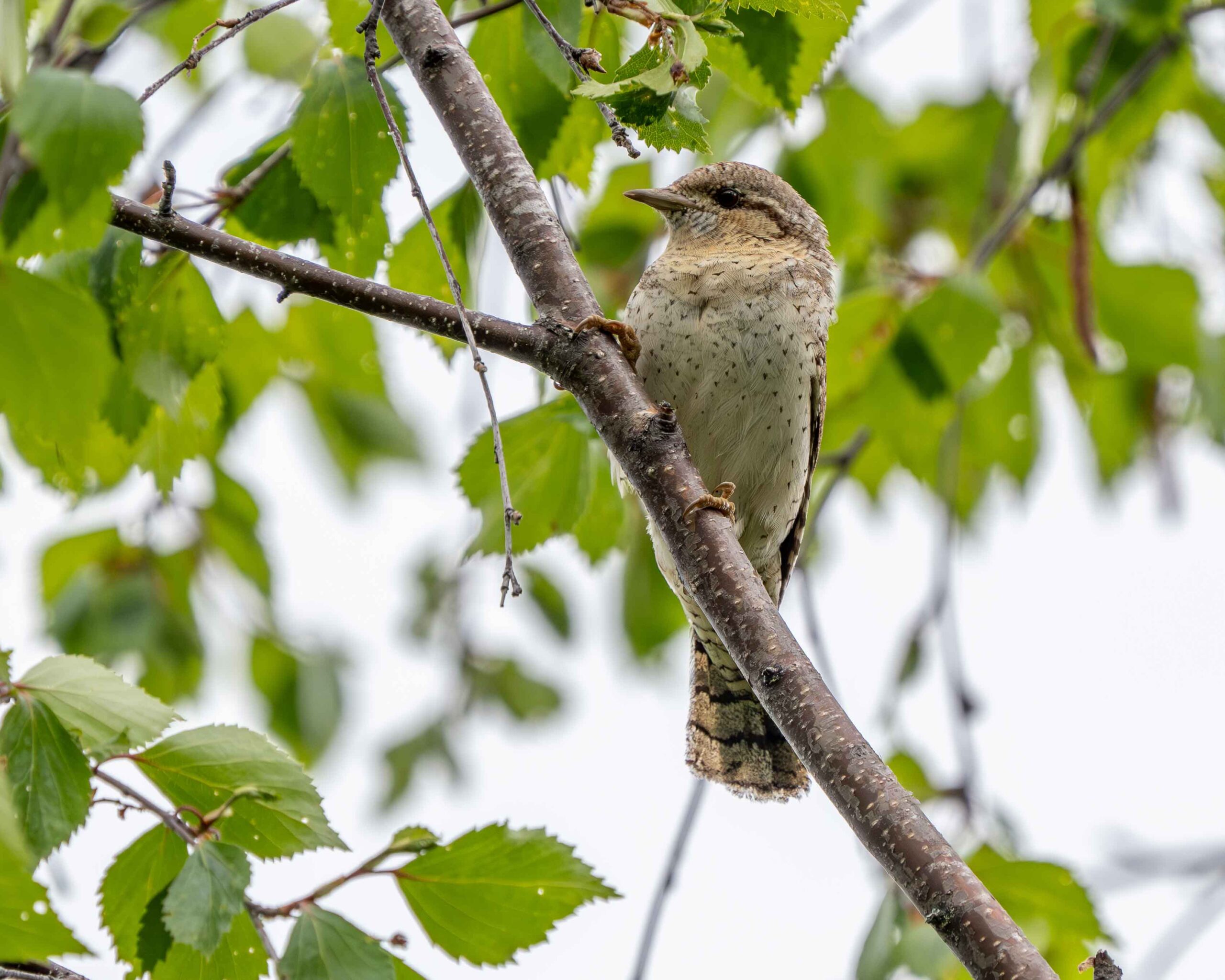
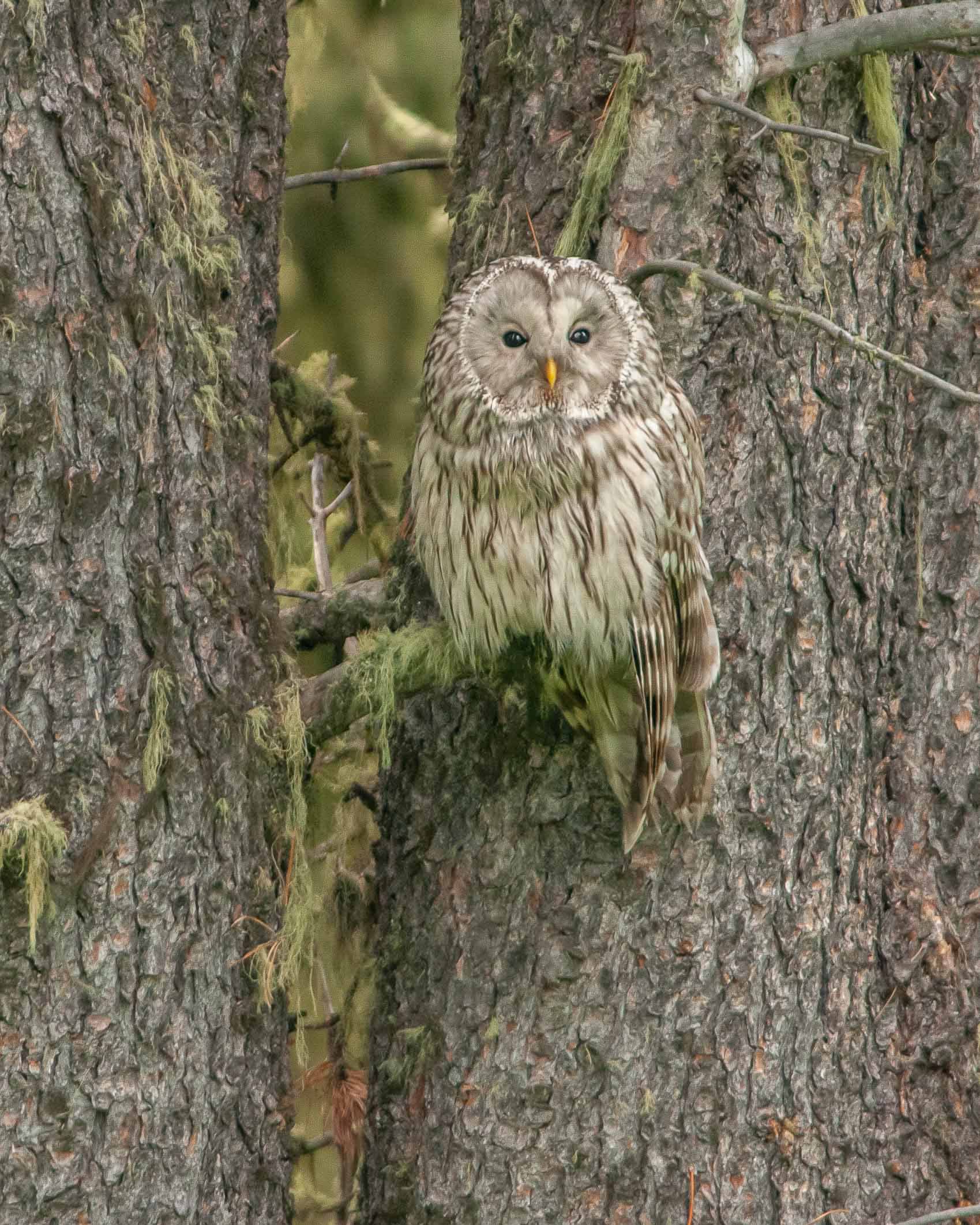
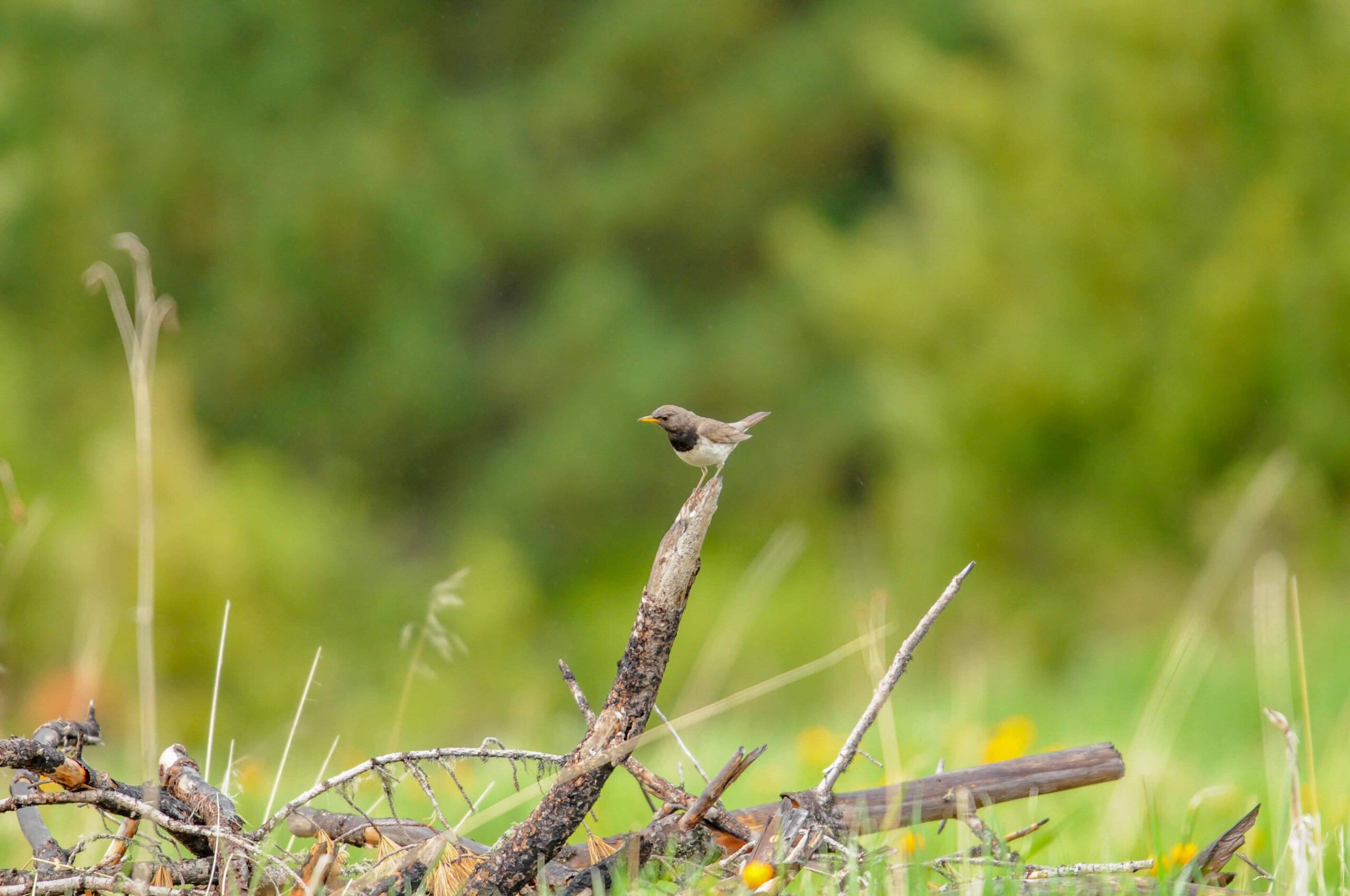
We offer an extension to the Kazakh Altai that seamlessly connects with our Spring Migration tour in Southeast Kazakhstan and Kyrgyzstan. This extension provides an opportunity to explore the Russian Taiga forests, an ecozone not covered in the main tour. We visit Kazakhstan’s largest nature reserve, located in the extreme northeast near the Russian border. Our chosen accommodation offers excellent access to prime taiga birding. During our stay, we’ll make every effort to locate elusive species such as the Asian Rosy-Finch, Swinhoe’s Snipe, and Ural Owl. More commonly, we’ll encounter Black-throated Thrushes and the fascinating Wryneck.
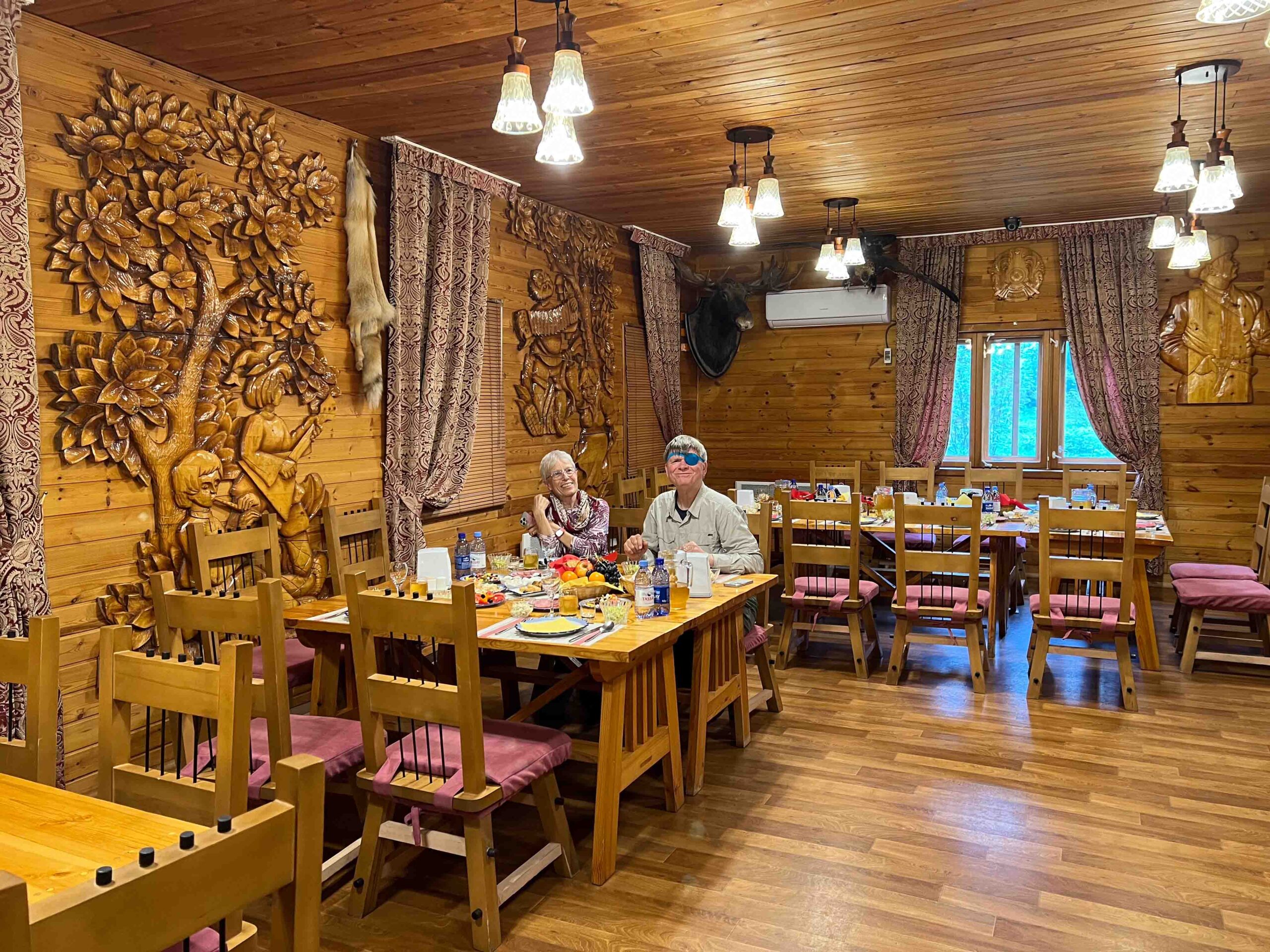
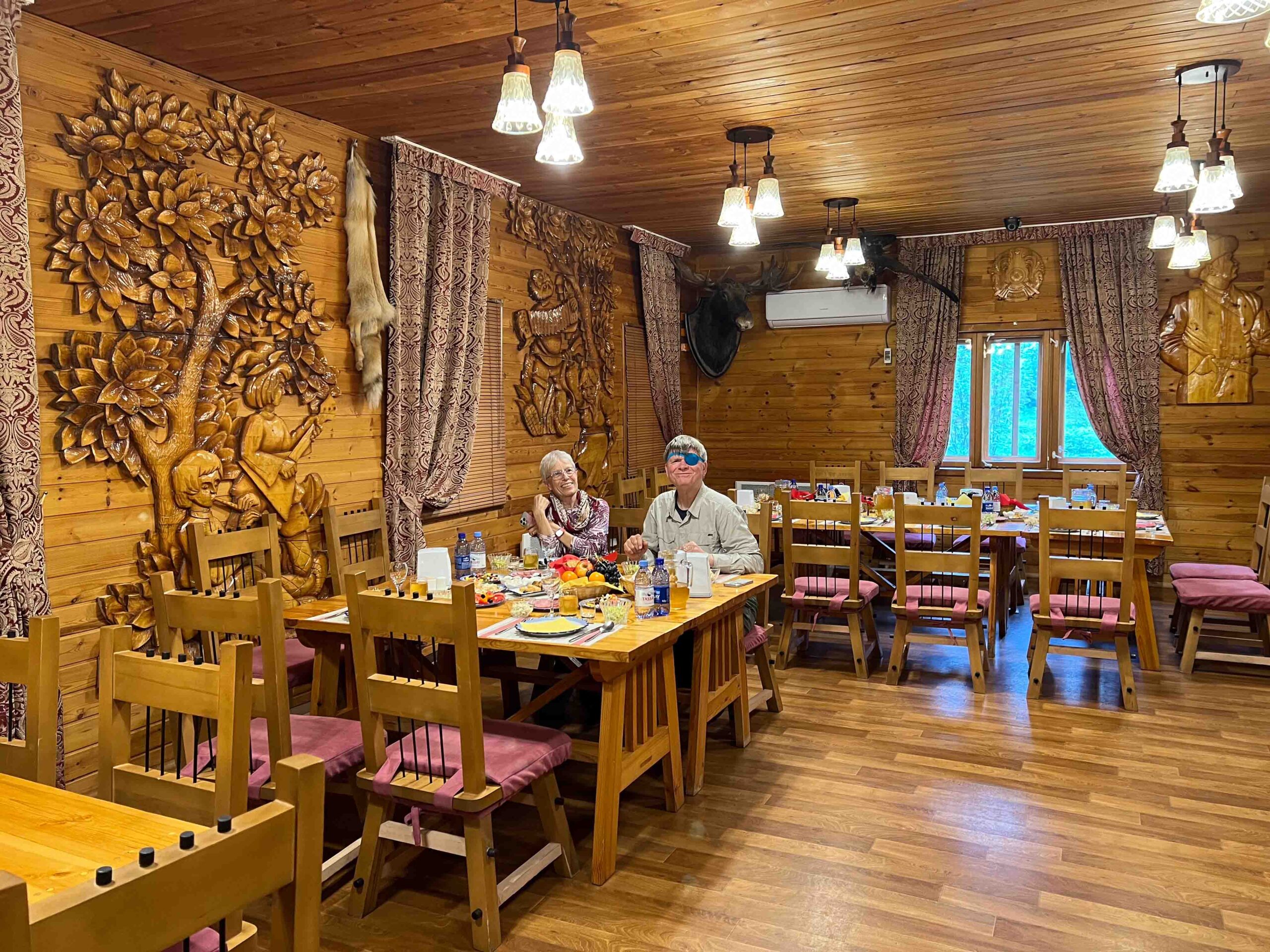
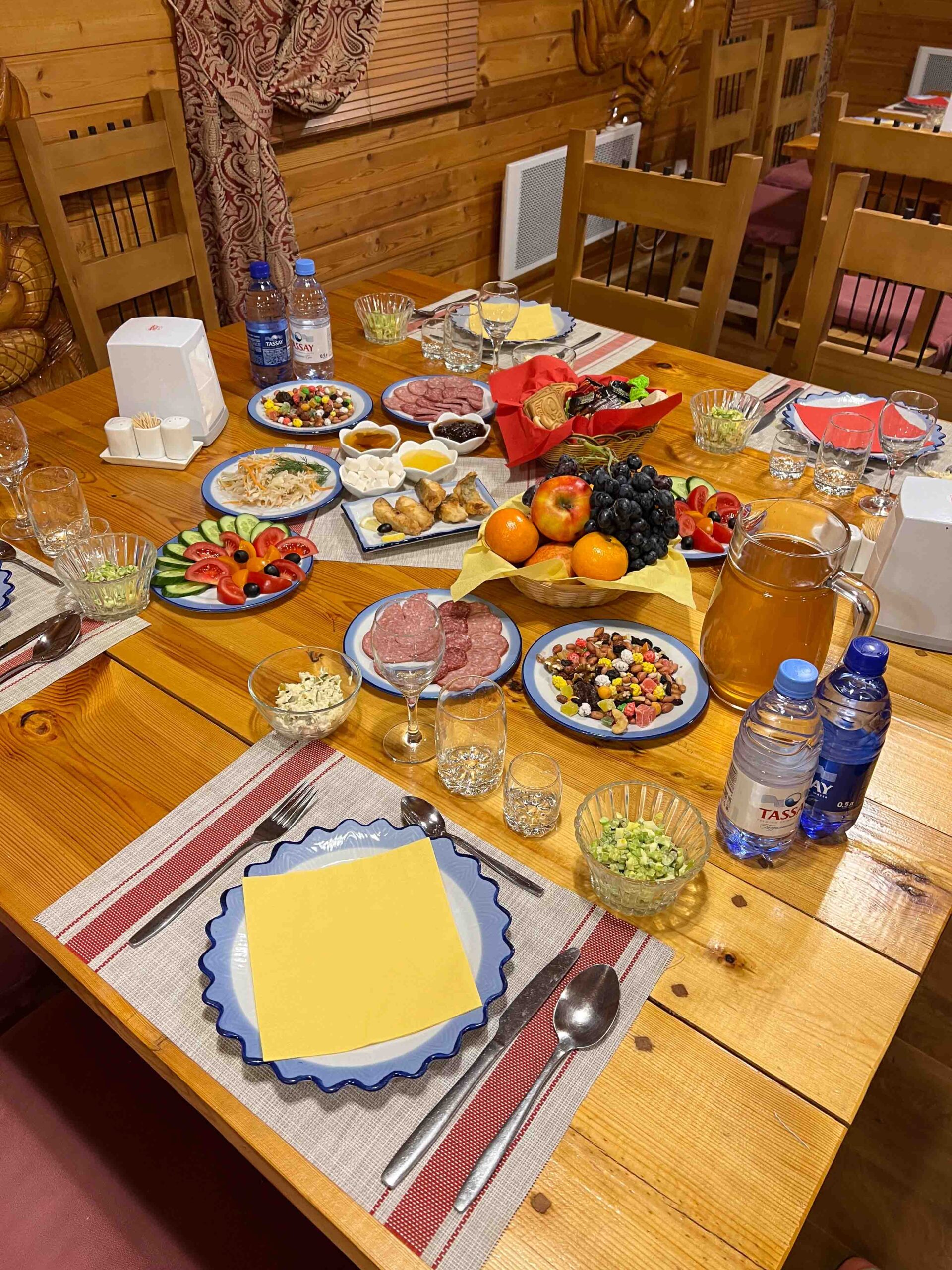
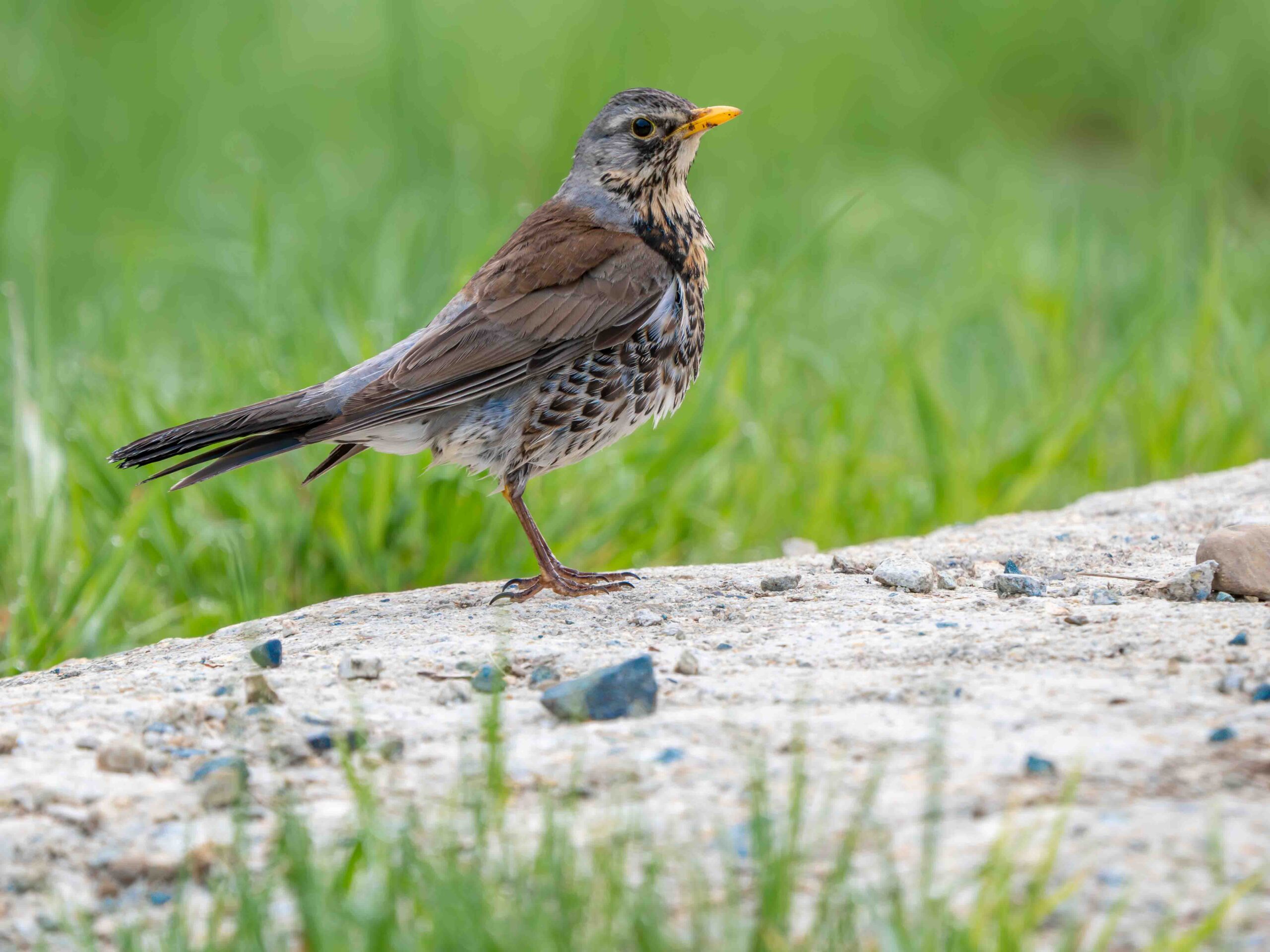
On the hotel grounds, it’s easy to spot species like Black-throated Accentors, Fieldfare, Song Thrush, and Siberian Nuthatch. Additionally, the accommodation provides great meals and a genuine folklore spirit, offering an authentic experience of Russian culture.
Next tour
28 May - 2 June 2025
Cost: $2.800
Single supplement: $500
Deposit: $600
Group size: Min 6 – Max 10
Best time: June – September
Leader: Arend Wassink
Upcoming tour
Book your private tour here
- Click on the image to enlarge
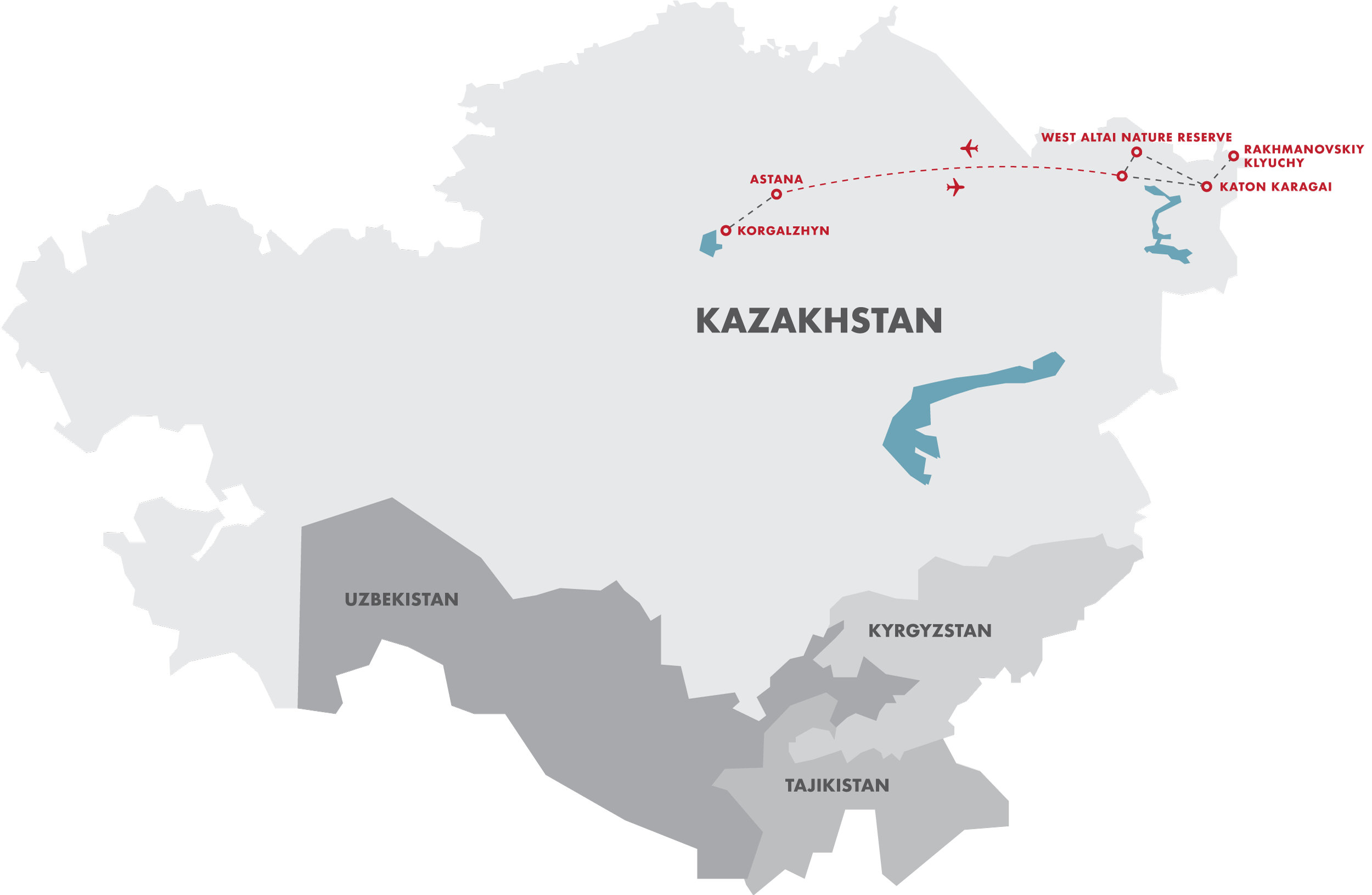
Your Kazakhstan itinerary
Day 1: To Ust-Kamenogorsk
We will extend our Central Asia adventure with a trip to the stunning Altai Mountains, focusing on the West-Altai Reserve near the city of Ridder. In the afternoon, we will board a domestic flight to Ust-Kamenogorsk (Oskemen in Kazakh), where our charming hotel overlooks the mighty Irtysh River. If time allows, we’ll take a walk in a nearby park, where we may spot European Beaver and Eurasian Jay of the race ‘brandtii,’ distinguished by its dark orange head. Greenish Warbler and Fieldfares are also common in this area.
Night: Comfortable Tourist Hotel Ust-Kamenogorsk
Day 2: Travel to West-Altai Nature Reserve
After a hearty breakfast in Oskemen, we will depart early to explore the Gorny Ublinka region, where we’ll search for Black-throated Thrush, Barred Warbler, and Siberian Meadow Bunting. This area also offers a chance to encounter the remarkable Wryneck. In the afternoon, we will drive to the village of Ridder, where we’ll stay in a charming guesthouse on the edge of the West Altay Reserve. Our first birds to find might include Red-backed Shrikes and Long-tailed Rosefinches.
Night: Comfortable Klimovka Lodge
Day 3 - 5: West-Altai Nature Reserve
Over the next three full days, we will explore the forests near the West-Altai Nature Reserve, the largest reserve in Kazakhstan, spanning 56,000 hectares. This vast area provides us with countless opportunities for wildlife sightings. Starting around our lodge, we have a good chance of encountering Ural Owls, Taiga Flycatchers, and Olive-backed Pipits. If we’re lucky, we may even spot a Siberian Jay visiting one of the feeders!
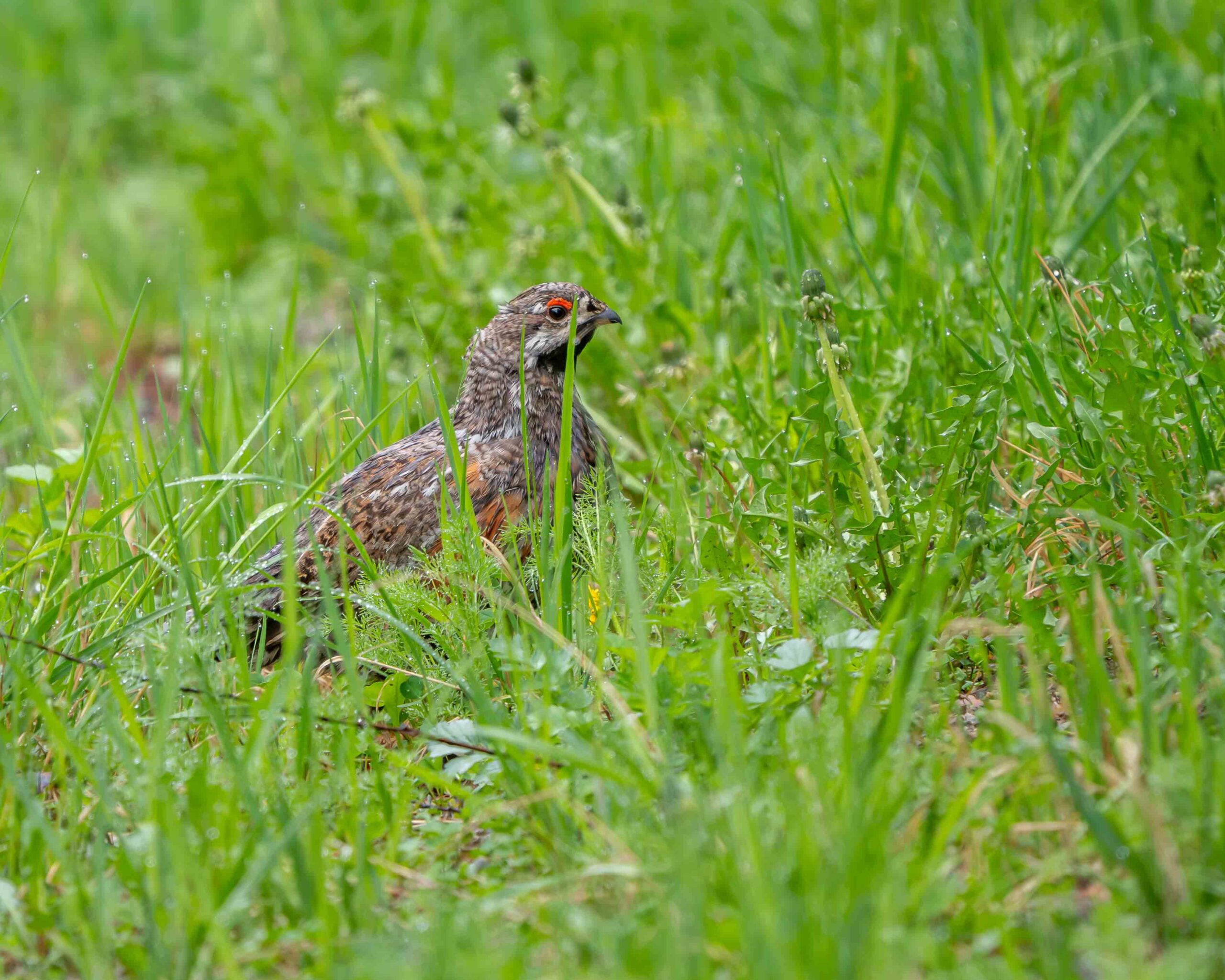
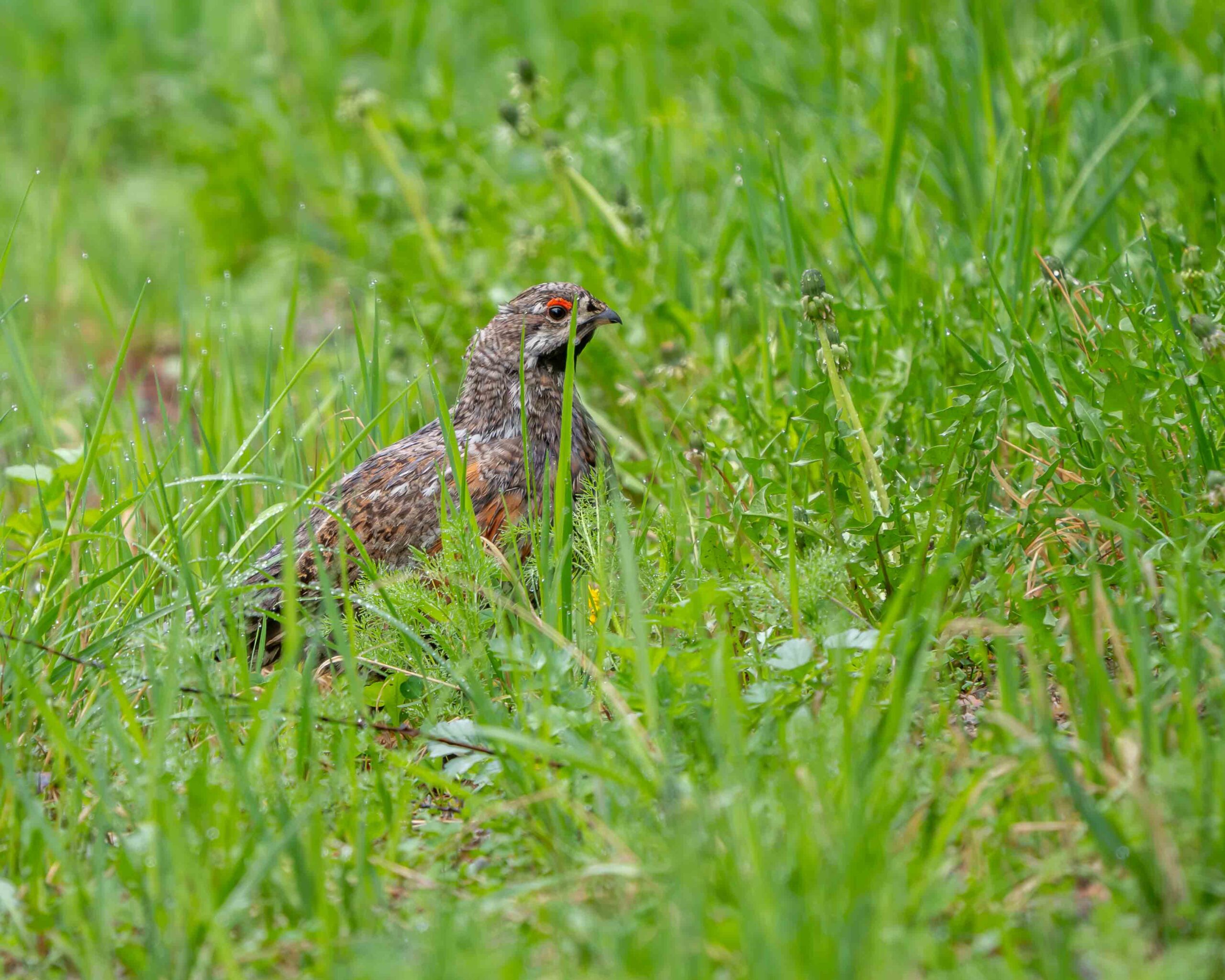
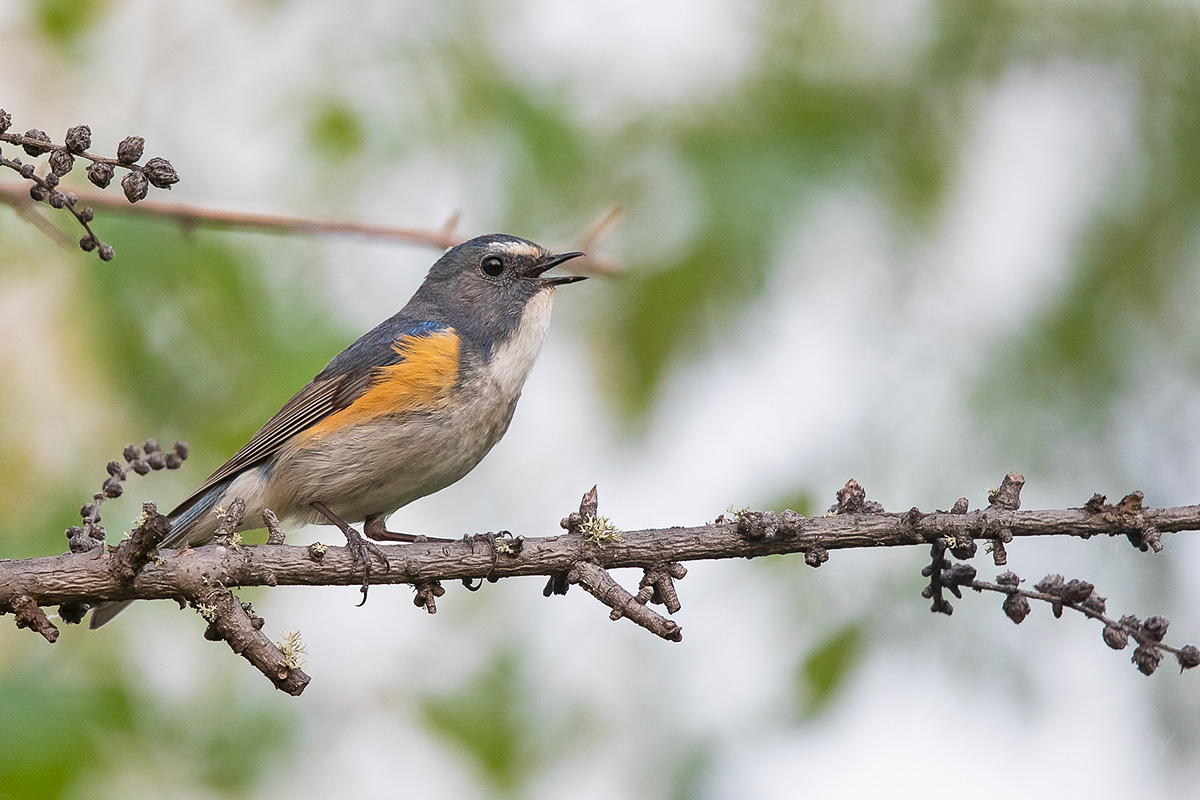
In these dense coniferous forests, we’ll likely hear the distinctive call of the Hazel Grouse and may have the chance to observe these elusive birds up close. Other common species in this area include Red-flanked Bluetails, Black-throated Thrushes, and Hawfinches. We will also be on the lookout for Baikal Bullfinches and Pallas’s Grasshopper Warblers. Additionally, we’ll make a special effort to find more elusive species such as Swinhoe’s Snipe, Pintail Snipe, Pine Grosbeak, Rock Ptarmigan, Willow Grouse, and the distinctive Asian Rosy Finch.
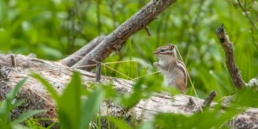
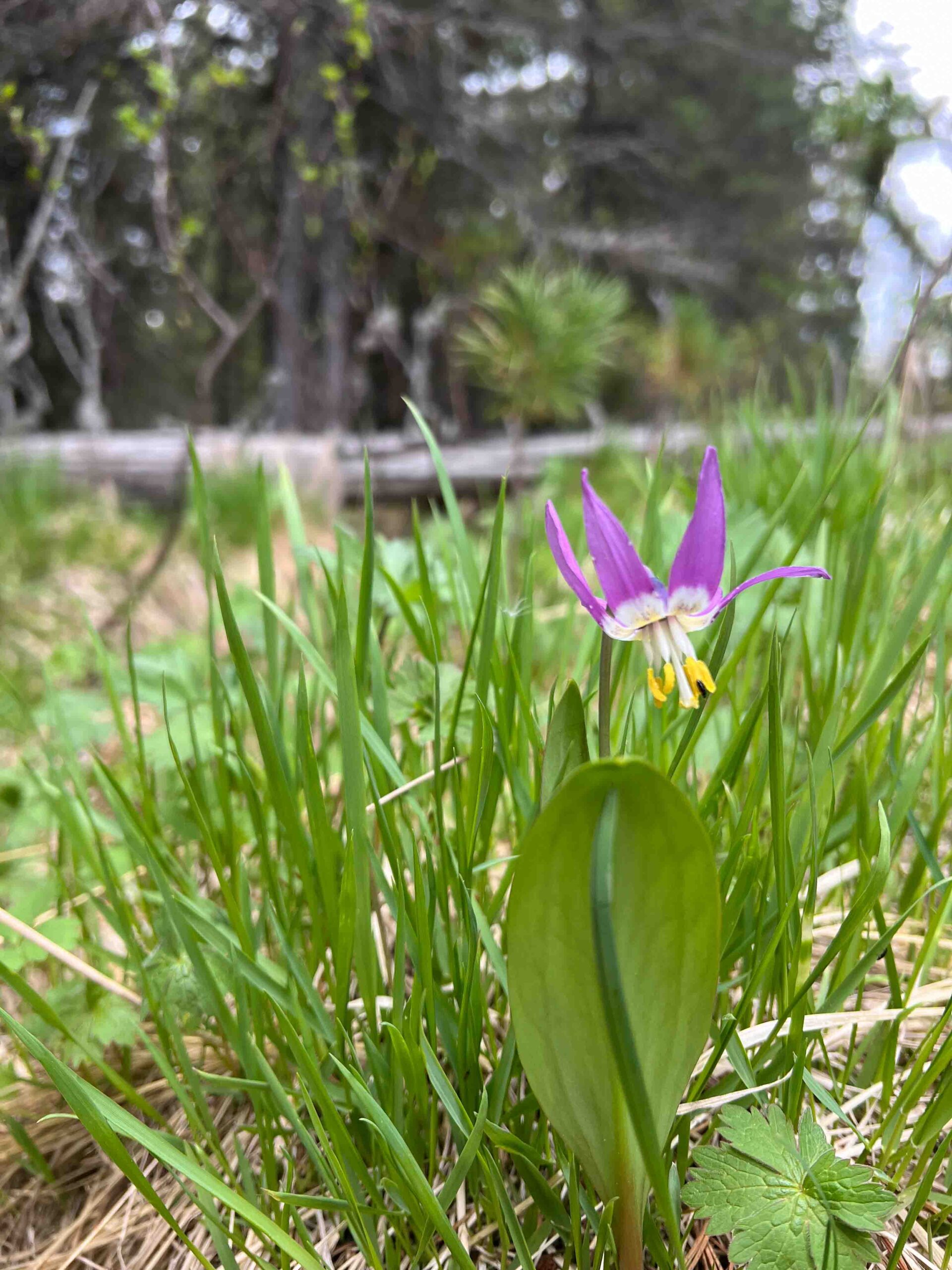
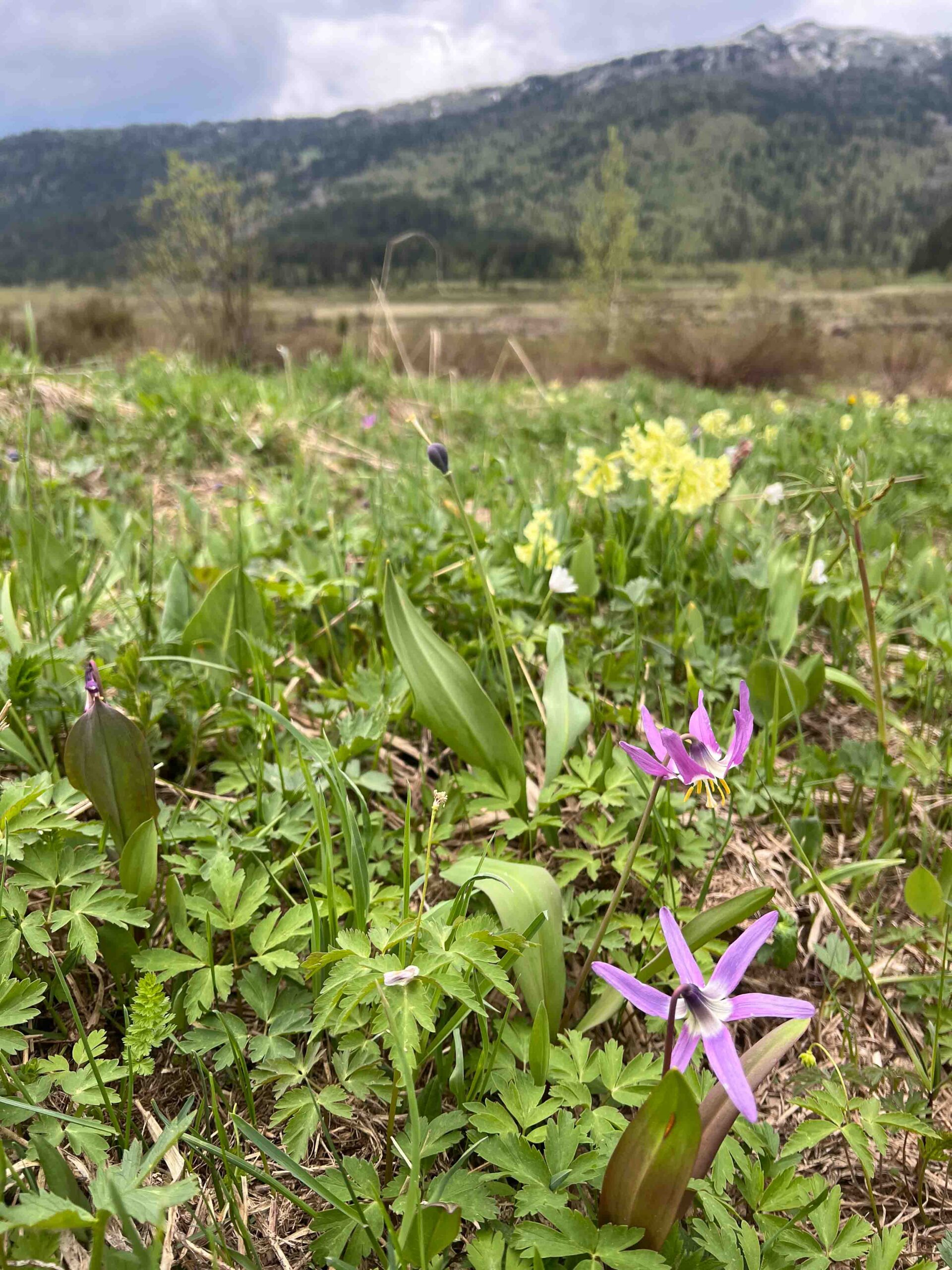
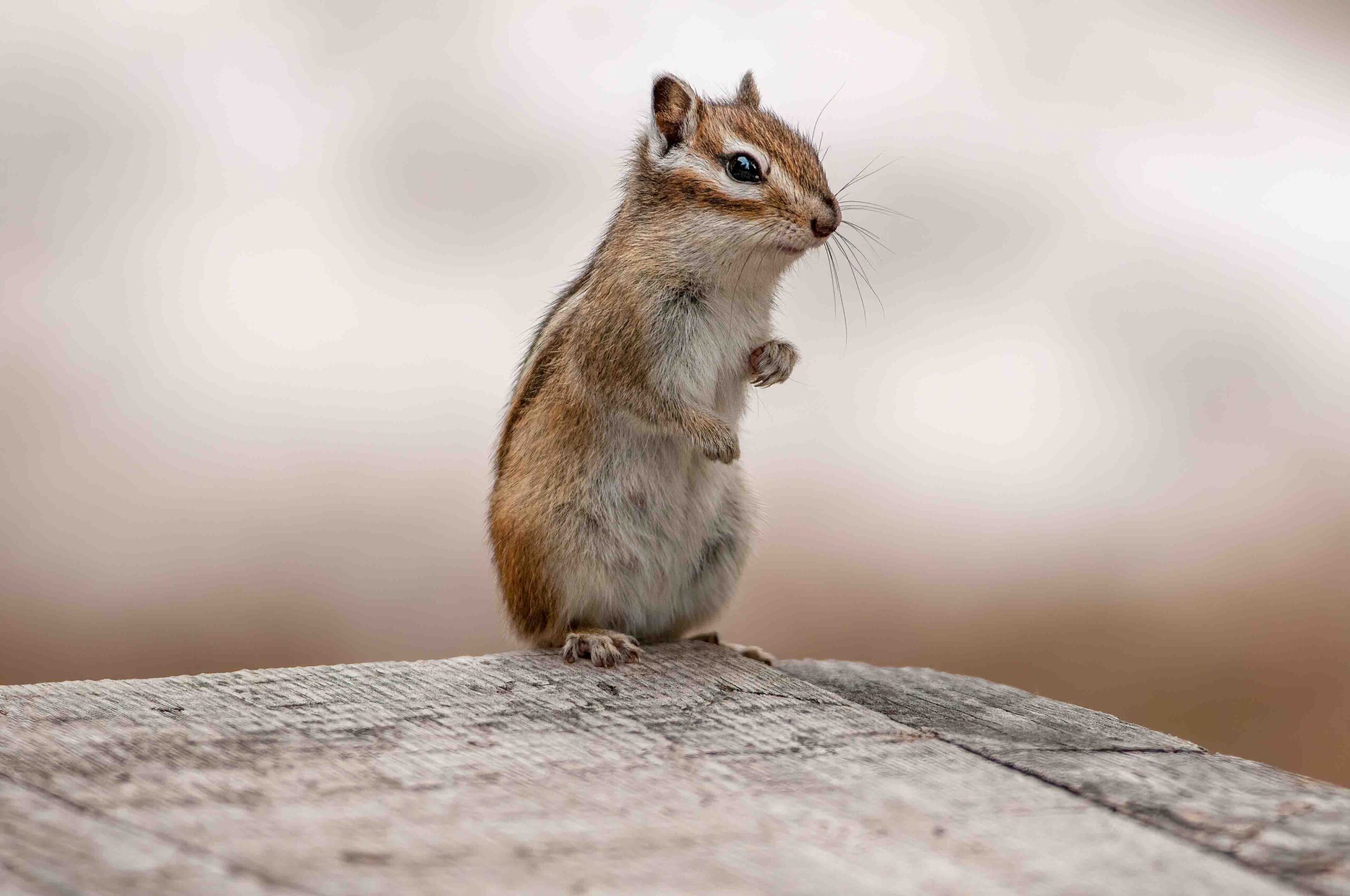
For botany enthusiasts, the reserve offers a wealth of plant species to discover, with highlights including Siberian Adder’s Tongue and Pink Rhodiola. The Altai Weasel, a threatened species, has a strong presence in this splendid reserve, and we may also spot Siberian Chipmunks and Common Shrews during our explorations.
Night: Comfortable Klimovka Lodge
Day 6: Travel back to Astana
We savour our final morning in the reserve before beginning our journey back to Oskemen, where we will eventually board our domestic flight back to Astana. Upon arrival in Astana, we will enjoy a final dinner at a local restaurant, reflecting on the incredible experiences and memories we’ve made during our adventure in the Altai Mountains.
Night: Comfortable tourist hotel in Astana
Day 7: Return to home
Early this morning, a transfer will be arranged to Nursultan Nazarbayev International Airport (NQZ), ensuring timely arrival for the Turkish Airlines flight to Istanbul, currently scheduled for departure at 3:20 a.m.
Night: No lodging
Tour information
Focus
- Birds
- Mammals
- Siberian Taiga Forests
Group size
Min 6 - Max 10
The group will be always led by one birding leader and one culture guide.
What's included in the Price?
All transport. All accommodations in twin rooming. All meals. All permits and national park entrances. Please note: Drinks, tips, possible visas and items of a personal nature including travel insurance, are not included.
Accomodation
We will be staying in comfortable tourist hotels in both Astana and Ust-Kamenogorsk. While visiting the West-Altai Nature Reserve in Ridder, we will lodge at the excellent Klimovka Lodge. The rooms offer shared shower and WC facilities, but they are of excellent standard. The lodge is also known for its delicious local Russian cuisine, with great attention to decoration and presentation.
Difficulty
Birding during the extension will be relatively relaxed, but we will have daily early wake-ups. While in the reserve, we will spend longer days searching for the more elusive birds of the Altai. Some walks will cover distances of up to 2–3 km. We will transfer between cities using a spacious 20-seat Mercedes Sprinter coach, and while birding in the Altai Mountains, we will use rugged Russian UAZ vehicles to navigate the wet dirt paths. Expect some bumpy rides along the way!
Flights
International flights are not included in the pricing. Please connect with the RBT office to find out your best connection to Central Asia.
Clothing - What to pack?
This trip is a wonderful opportunity to experience a bit of everything! You’ll need light, easily washable, quick-drying clothes, along with sunglasses and a sun hat for protection against the sun. Don’t forget to pack some lightweight yet warm layered clothing for the early mornings. A light waterproof jacket is very needed as rain is almost a certainty, with sometimes snow even a possibility.
For footwear, opt for light but sturdy walking boots that can handle various terrains, and it’s best to avoid shorts for sun protection, as the region is conservative. In the cities, however, people tend to dress more “modern” in light Western clothing.

Related tours
Ornithological expedition in the Kazakh Altai

Exciting fall migration in a Palearctic hotspot

The Flora & Fauna of Altai

Floating hide Photography expedition

Spring migration in Central Asia

Exciting fall migration in a Palearctic hotspot
Visit the Chokpak ringing-station
Exciting fall migration in a Palearctic hotspot

Kazakhstan is located just due east to Europe, near famous migration hotspots like Batumi in the Republic of Georgia. For a long time, Kazakhstan has been known for its large variety of rare Western Palearctic species making it an exciting place to go birding for anyone interested in Siberian and Central Asian vagrants.
The best time to visit is during fall migration, and on this venture, we head for southern Kazakhstan – a migration hotspot. The movements of birds are among their most captivating traits. We will spend most of our time in the vicinity of the Chokpak Ringing Station and the oldest national park of the former USSR – Aksu-Dzhabagly Nature Reserve.
In addition to this, we will also explore the Kyzyl-Kum desert for some unique resident birds and more wonderful migratory species.
Next tour
*No scheduled departure*
Cost: $2.800 – Domestic flight included
Single supplement: $400
Deposit: $600
Group size: Min 6 – Max 10
Best time: September – October
Leader: Machiel Valkenburg
Upcoming tour
Book your private tour here
- Click on the image to enlarge
Your Kazakstan itinerary
Day 1: To Almaty
Clients will depart from their home countries, heading to Almaty, the largest city in Kazakhstan. We recommend flying with Turkish Airlines via Istanbul, as they offer convenient connections to both Almaty and for your return from Astana. Please ensure you arrive in Almaty before 6:00 AM on September 12th. If you wish to arrive earlier, feel free to reach out to the RBT office; we are happy to assist with additional hotel bookings.
Night: Day 1, on aircraft
Day 2: Big Almaty Lake
We have a full day scheduled in this stunning high-altitude landscape to search for an incredible array of alpine specialists. Expect to see Black-throated, Altai, and Brown Accentors, Sulphur-bellied Warblers, Red-mantled Rosefinches, White-winged Grosbeaks, and the incomparable White-browed (Severtzov’s) Tit-Warbler!
We will descend a short distance by coach to Big Almaty Lake, where the extensive, braided, stony riverbeds are home to the unique Ibisbill. Look out for species such as Lammergeiers, Himalayan Griffons, Red-billed and Yellow-billed Choughs, Plain Mountain-Finches, and White-winged (Güldenstädt’s) Redstarts. Most of these species inhabit high mountain altitudes of around 10,500 feet. The star attraction today, which we have an excellent chance of spotting, is the regal Himalayan Snowcock.
In the early evening, we’ll enjoy a leisurely visit to the local park, where we can admire the historical Ascension Cathedral (also known as Zenkov’s Cathedral). This remarkable structure was built using ancient techniques, without a single nail! Its unique construction allowed the cathedral to survive the devastating earthquake that struck the city in 1910.
Night: Comfortable tourist hotel in Almaty
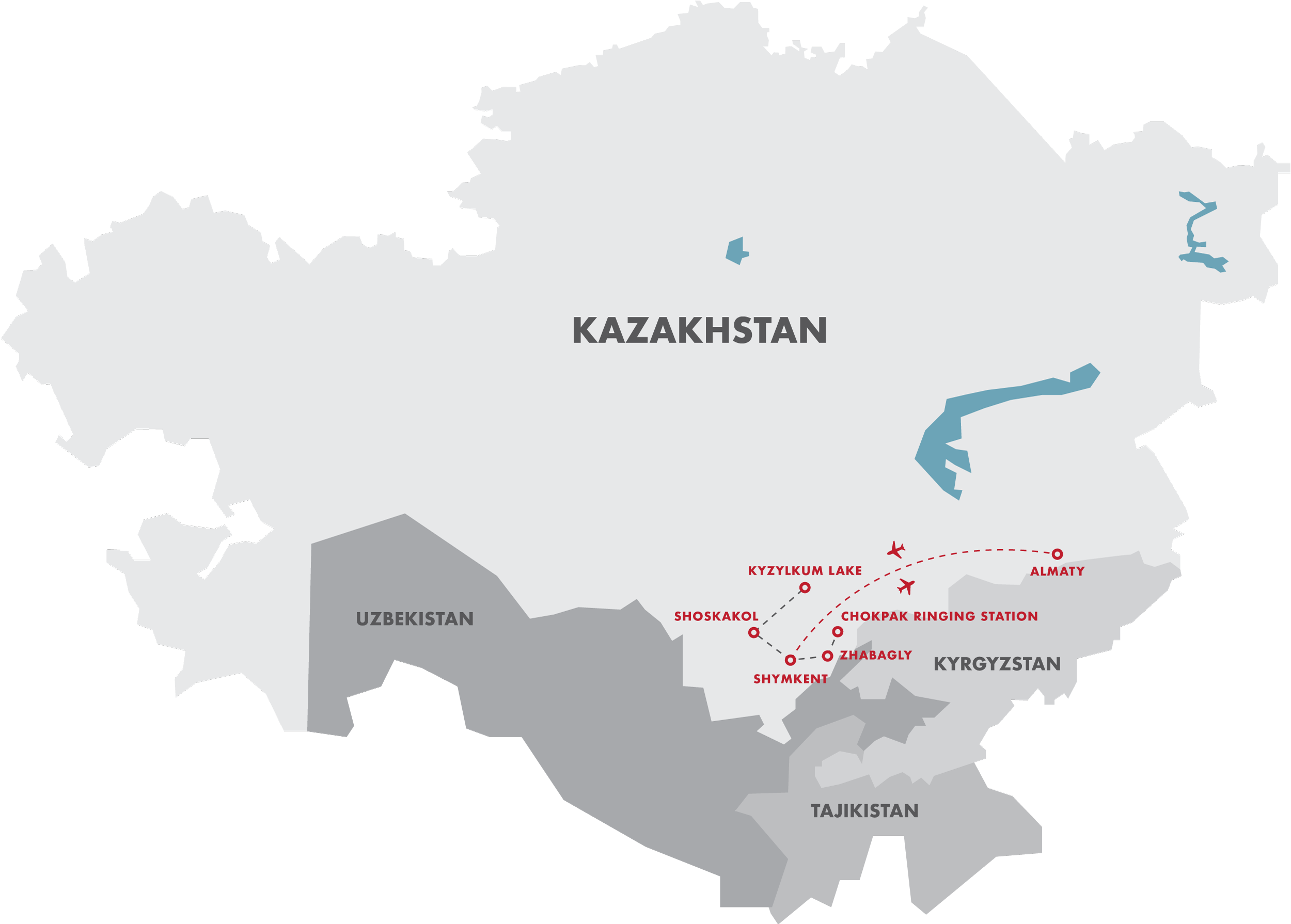
Day 3 - 5: Almaty to Dzhabagly & Chokpak Ringing Station
Today, we will fly west to Shymkent, arriving around noon. This is the third most populous city in Kazakhstan, located near the country’s first established nature reserve. A short drive will take us to the village of Dzhabagly, nestled in the foothills of the western Tien-Shan Mountains. After checking into the local guesthouse, we’ll acclimate to our new surroundings. The birding begins right here, as this charming village is ideally situated along a major migration route. On previous tours, we have spotted Yellow-breasted Azure Tits and Asian Paradise-Flycatchers in the guesthouse garden! We’ll quickly become familiar with common species such as Grey-crowned Goldfinches, White-crowned Penduline Tits, and Azure Tits. Along the main street, we may also discover gems like Eversmann’s Redstarts and Blue-capped Redstarts.
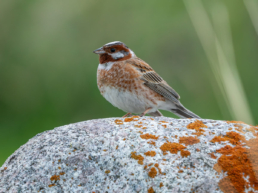
The first few days of the tour are designed to allow us flexibility in our exploration. The fertile agricultural fields surrounding the village are prime spots for spotting Siberian Stonechats, Pied Wheatears, Red-tailed Shrikes, and large flocks of Pine Buntings, which winter in the Tien Shan foothills. We may even see the first Black-throated Thrushes returning from Siberia. Weather permitting, we plan to visit Ulken Kaindy Gorge, where the dry, rocky slopes and juniper scrub may yield sightings of White-capped Buntings, Rufous-naped Tits, Red-mantled Rosefinches, and, hopefully, more stunning Yellow-breasted Azure Tits. In Berkara Gorge, we’ll aim to add Eastern Rock Nuthatches to our list, with Asian Paradise-Flycatchers as a delightful bycatch. Long-legged Buzzards will still be numerous this time of year, and we may spot the colourful Egyptian Vulture.
In the expansive reedbeds of Taskol, we will listen for the distinctive calls of Clamorous Reed Warblers, hoping to catch our first glimpses of the White-headed Duck. Birdwatching for raptors in the fall is heavily influenced by the wind conditions, so we will decide each morning which options to pursue. The nearby mountain bottleneck is ideally positioned for northeast winds, which are favourable for migrating raptors. This bottleneck funnels birds across the fields near the village, providing us excellent opportunities to view Montagu’s and Pallid Harriers, as well as the possibility of Shikras, Steppe Buzzards, Steppe Eagles, and Crested Honey Buzzards.
Night: Comfortable guesthouse Dzhabagly
Day 6 - 8: Lake Shoskakol
Today, we continue our journey westward towards Turkestan, making birdwatching stops along the way to observe any interesting species. Upon our arrival in Turkestan, we will visit the Mausoleum of Khawaja Ahmed Yasawi. This stunning structure is adorned with glazed tiles and turquoise ornamentation, characteristic of the Timurid architectural style. It is one of the best-preserved monuments from that era and has become a symbol of Kazakh national identity. After exploring the mausoleum, we will head to the Shoskakol Lake system. During migration periods, this area attracts a variety of unusual species that use the lakes as a resting point on their southward journeys. It’s an excellent spot for wildfowl, where we may encounter Garganey, Ferruginous Ducks, Red-crested Pochards, and White-headed Ducks. We can also expect to see Glossy Ibises, Little Bitterns, and the beautiful Black-crowned Night Heron.
In the semi-desert regions surrounding Shoskakol, we will look for our first larks, including Calandra and Bimaculated Larks. We will also venture closer to the Uzbek border in search of the delightful Streaked Scrub Warbler. We will dedicate one full day to exploring the sandy deserts characterized by Saxaul vegetation in pursuit of one of Kazakhstan’s most sought-after species—the superb Turkestan Ground Jay! If we are fortunate, we might also spot an Asian Desert Warbler, although many of these migratory birds will have left the area by this time.
After our daily adventures, we will return to Turkestan each evening to enjoy the comforts of a delightful hotel.
Night: Comfortable tourist hotel in Turkestan
Day 9 - 10: Kyzylkum Lake
Today, we embark on an exciting adventure to Lake Kyzylkum, a picturesque oasis nestled in the heart of an expansive desert. This small lake attracts a multitude of migratory birds, making it a vital stopover for avifauna from various regions. The surrounding landscape is flat and sandy, dotted with small scrubs and wormwood, and is alive with birds at this time of year. As we explore the area, we can expect to encounter a variety of shrikes, warblers, larks, pipits, and buntings. The vibrant Blue-cheeked Beef-eater is often spotted here, and we’ll be on the lookout for migrating Booted Warblers and Sykes’s Warblers. Occasionally, we might also see the more elusive Upcher’s Warbler and Menetries’s Warbler.
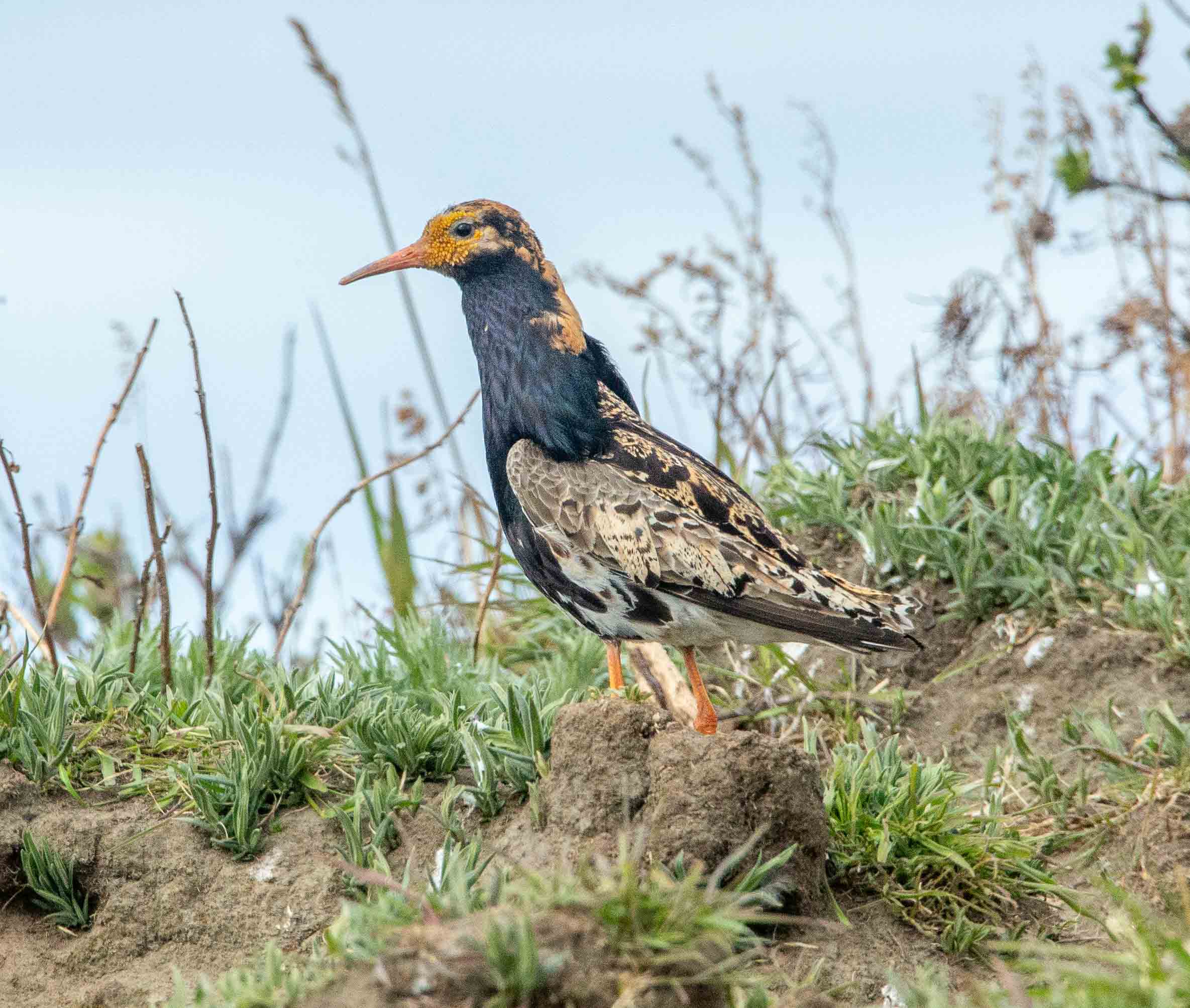
The lake can host impressive numbers of White-headed Ducks, with the largest recorded group reaching 2,000 individuals—representing a staggering 20% of the global population of this beautiful species. Tens of thousands of Yellow Wagtails, particularly the ‘beema’ race, are commonly found around the lake, adding to the vibrant avian display. Waders are also abundant, with Red-necked Phalaropes and Ruffs often seen in large numbers. After a full day of birdwatching, we will retire to a basic hotel in a nearby village, reflecting on the day’s adventures and the incredible wildlife we’ve encountered.
Night: Basic hotel Cholak Korgan
Day 11: Return to Dzhabagly
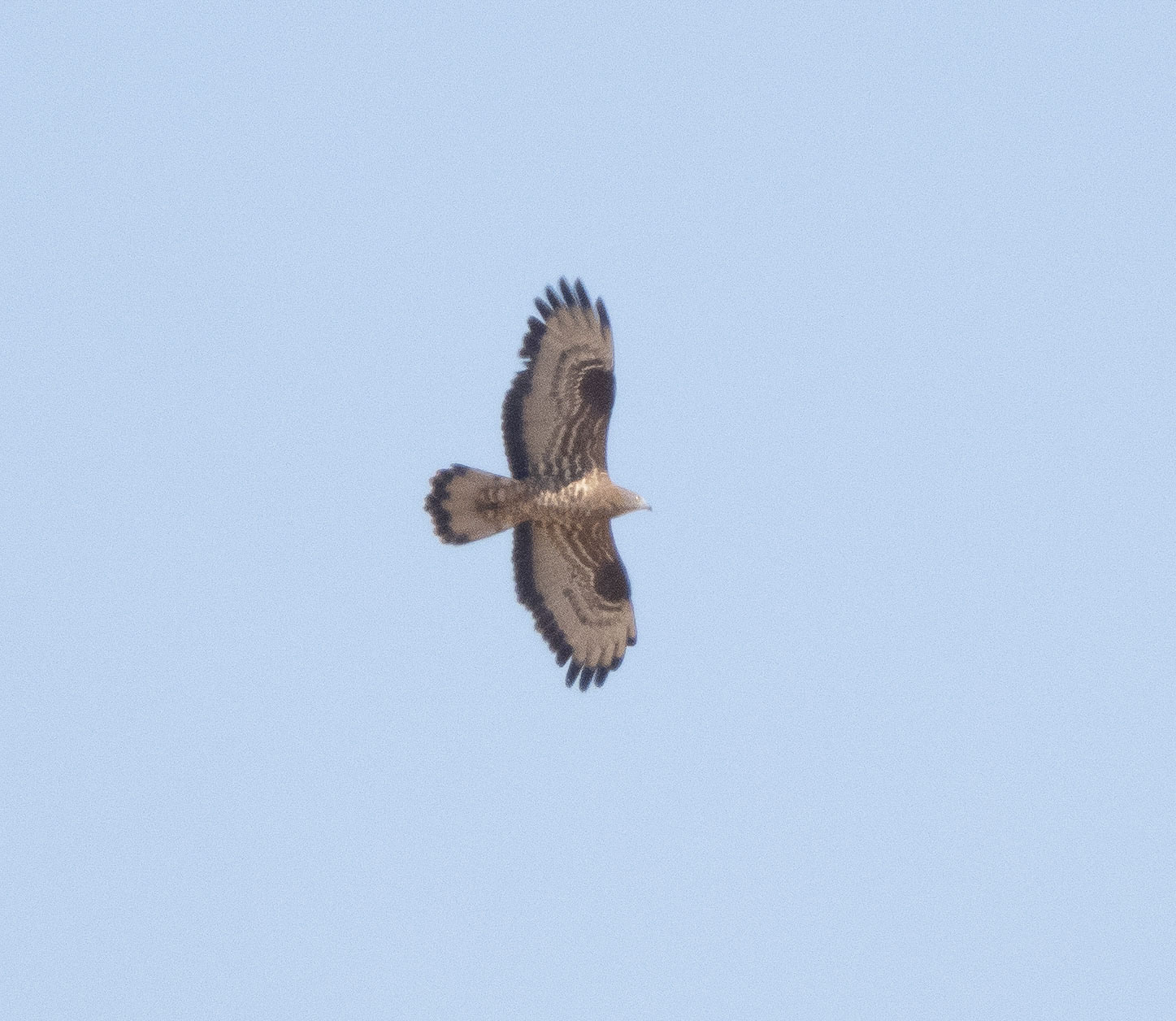
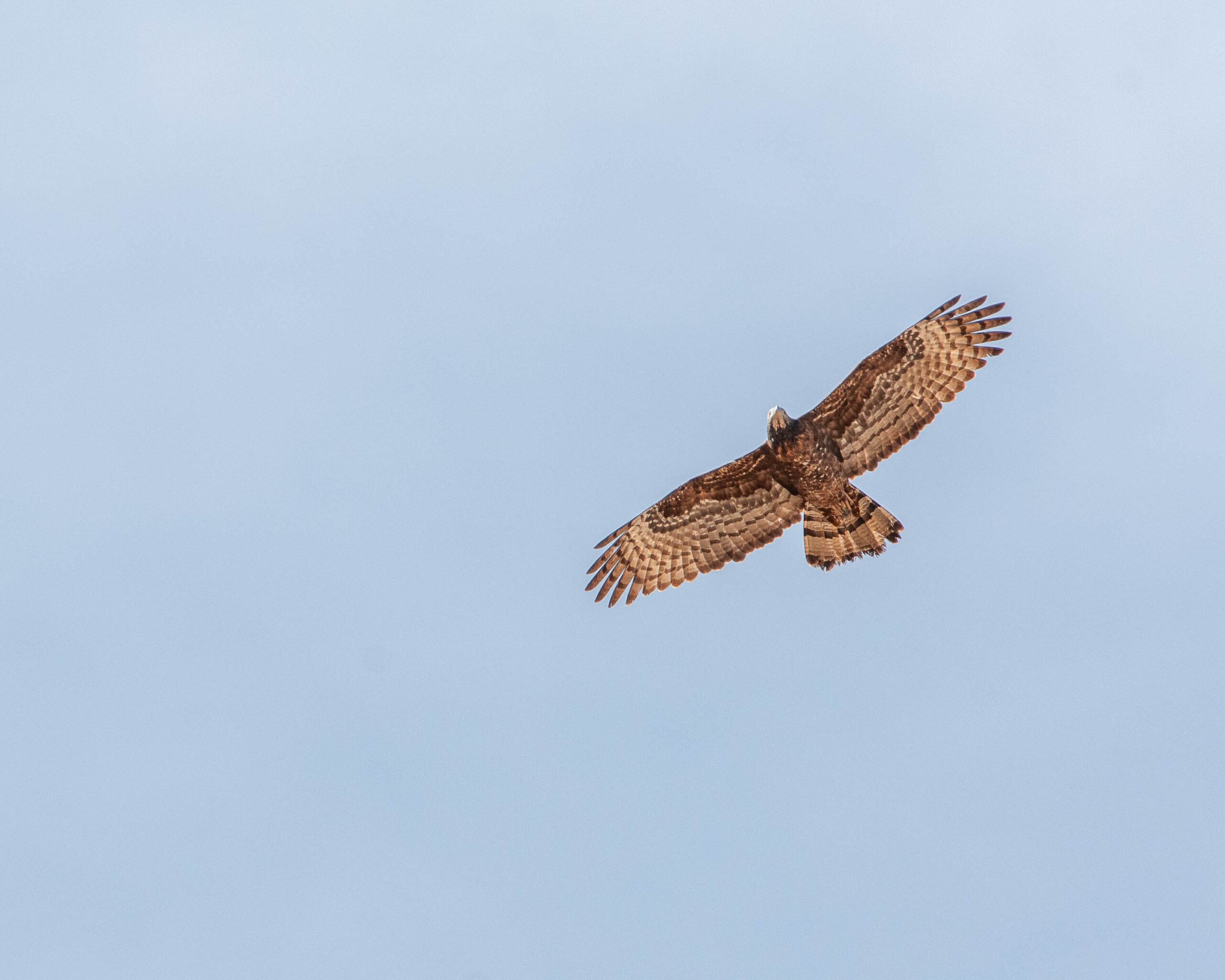
Today, we retrace our steps back to Dzhabagly for our final day of exploration. We’ll revisit the areas we discovered during the first part of our trip, but with a twist: as we’re now later in the month, we can expect to see a significant increase in eagle migrations over the village. We’ll be on the lookout for majestic birds such as the Steppe Eagle, Eastern Imperial Eagle, and Greater Spotted Eagle, all of which are known to dominate the skies at this time. Additionally, we hope to catch sight of the exciting Oriental Honey-buzzard, known for its striking plumage and graceful flight.
The number of Black-throated Thrushes will also have increased by now, as these beautiful birds arrive in Kazakhstan for the winter. With a day filled with birdwatching and the opportunity to witness these magnificent eagles, it’s a perfect way to conclude our adventure in this stunning region.
Night: Comfortable guesthouse Dzhabagly
Day 12: Back to Almaty
We begin our last day with some final birding around the lodge, immersing ourselves in the morning’s sights and sounds. After our birdwatching session, we will embark on a short drive back to Shymkent, where we’ll connect with our domestic flight to Almaty.
In the evening, we’ll come together for a delightful farewell dinner, savouring traditional shaslik while making toasts to celebrate the incredible experiences and memories we’ve shared throughout our journey. This is the perfect way to wrap up our adventure in Kazakhstan, reflecting on the breathtaking landscapes and the diverse birdlife we’ve encountered.
Night: Comfortable tourist hotel in Almaty
Day 13: Return to home
A transfer will be provided very early this morning to Almaty International Airport (ALA) to catch your Turkish Airlines flight to Istanbul, which is currently scheduled to depart at 3:20 AM.
Night: No lodging
Tour information
Focus
- Birds
- Mammals
- Vast unique landscapes
Group size
Min 6 - Max 10
The group will be led by one birding leader and one culture guide at all times.
What's included in the Price?
All transport, including the domestic flight between Almaty and Astana. All accommodations in twin rooming. All meals. All permits and national park entrances. Please note: Drinks, tips, possible visas and items of a personal nature including travel insurance, are not included.
Accomodation
Throughout our journey in Kazakhstan and Kyrgyzstan, we will venture primarily off the beaten track, immersing ourselves in the authentic beauty and culture of these remarkable countries. While Kazakhstan is renowned for its stunning vast landscapes, rich culture, and hospitable people, its tourism infrastructure is still developing. In Almaty, we will be accommodated in a comfortable tourist hotel with private facilities, providing a restful retreat after our adventures. As we travel through the Charyn and Astana regions, our accommodations will be more basic, offering shared facilities. These accommodations typically feature simple, clean rooms with basic amenities such as a shared bathroom and WC, ensuring our comfort during our explorations.
During our exploration of the Taukum Desert sites, we will experience the enchantment of camping under the stars in Rubythroat’s operated private yurt camp. We are the ONLY company offering this style of accommodation. Other companies use tents. Yurts are shared, and we will provide separate shower yurts and Western-style WC facilities. While the camping experience offers a unique opportunity to connect with nature, please note that washing facilities are basic. However, we will provide suitable warm sleeping bags to ensure a comfortable night’s rest under the open sky.
In Kyrgyzstan, our accommodations will include overnight stays in comfortable tourist hotels located in the heart of the city, providing a convenient and restful retreat after our adventures in this breathtaking country.
Difficulty
During our expeditions, we may embark on long journeys, some of which may traverse poor or unpaved roads. However, these extensive travels serve to highlight the vastness and adventure of the region. Throughout the journey, we’ll travel in comfort using a reliable coach for transportation. When it comes to walking, the tours are designed to be primarily easy to moderate, even in the high elevations of the Tien Shan Mountains. Most of our walking excursions involve short distances on flat terrain or downhill paths, ensuring that participants can comfortably explore the stunning landscapes and natural wonders of Central Asia.
Flights
International flights are not included in the pricing. Please connect with the RBT office to find out your best connection to Central Asia.
Clothing - What to pack?
For our expedition to Central Asia, it’s important to pack a variety of clothing to accommodate the diverse climates and activities we’ll encounter. Lightweight, easily washable, and quick-drying clothes are essential for the hot steppe and desert regions, along with sunglasses and a sun hat for sun protection. However, don’t forget to pack some lightweight yet warm layered clothing for higher altitudes, where temperatures can drop significantly. This includes a warm hat, fleece, and light gloves to keep you cosy. Additionally, a light waterproof jacket is recommended to shield against unexpected rain showers. When it comes to footwear, opt for light yet sturdy walking boots that can handle various terrains. It’s advisable to avoid shorts to protect yourself from the sun, as the region can be conservative in dress. While people in the cities tend to dress more casually in Western clothing, it’s still a good idea to respect local customs by dressing modestly. If needed, laundry facilities are available at hotels in larger towns such as Karakol, Almaty, and Astana, offering convenience for longer stays.

Related tours
Ornithological expedition in the Kazakh Altai

Exciting fall migration in a Palearctic hotspot
The Flora & Fauna of Altai

Floating hide Photography expedition

Spring migration in Central Asia

The Flora & Fauna of Altai
A Kazakhstan special
The Flora & Fauna of Altai

This new tour takes us to a little known and isolated part of Kazakhstan, the Altai Mountains. For many years we have run very successful tours into the Russian and Mongolian side of the Altai. In Kazakhstan the Altai Mountains are located in the far northeast of the country where the two superpowers of China and Russia meet.
Amongst Kazakhs, the Altai is considered the best natural environment in the country. Natural products from Altai such as jam, honey, and horse milk are sold widely throughout the country. People from all over flock to the Altaian health resorts in the high mountains for the clean air. However, to a foreign public, the Altai remains largely unknown with very few western tourists visiting each year.
Next tour
*No scheduled departure*
Cost: On request
Single supplement: $500
Deposit: $600
Group size: Min 6 – Max 8
Best time: June – September
Leader: Alexander Povarintsev
Upcoming tour
Book your private tour here
- Click on the image to enlarge
Your Kazakhstan itinerary
Day 1: Departure and arrival in Astana
Clients depart from home for the capital of Kazakhstan, Astana. This futuristic city resembles those of the oil states of Dubai and the United Emirates. Kazakhstan has an abundance of natural resources and has profited from the vast reserves of oil and gas, but also minerals like uranium and zinc. After arrival in Astana we check-in to our comfortable tourist hotel. If desired we are able to enjoy a small city tour of the city.
Night: Comfortable tourist hotel in Astana
Day 2: Astana surroundings
We start our tour this morning with excursions around Astana. We are in search of waterfowl that use the lakes around the city as a stopover during their migration north. Our top target, however, will be a small passerine, the Pine Bunting, which will likely be accompanied by several Red-footed Falcons and numerous Pallid Harriers. In the evening we will check in to our comfortable Astana hotel!
Night: Comfortable tourist hotel in Astana
Day 3: Korgalzhyn State Nature Reserve
An early morning rise will see us depart at 0500 for the breathtaking drive to Korgalzhyn State Nature Reserve. This region is surprisingly little known, even within Kazakhstan, but the abundance of birdlife here has recently attracted a nomination for UNESCO World Heritage Site status. The vast wetland area, a combination of virgin steppe and lakes, is home to Wolves, Marmots and Saiga. However, it is the birds that are the real attraction. A crossroads of two migration routes, the wetlands here act as a giant motorway junction service station for birds (Lake Tengiz alone can feed 15 million birds during migration).
This area, most of which is protected as a ‘Zapovednik’ (national nature reserve), is home to the world’s most northerly population of Greater Flamingo. One of over 300 species of birds which represents one of the largest wildfowl populations in Asia. Other notable residents include pelicans, cranes, and a variety of birds of prey.
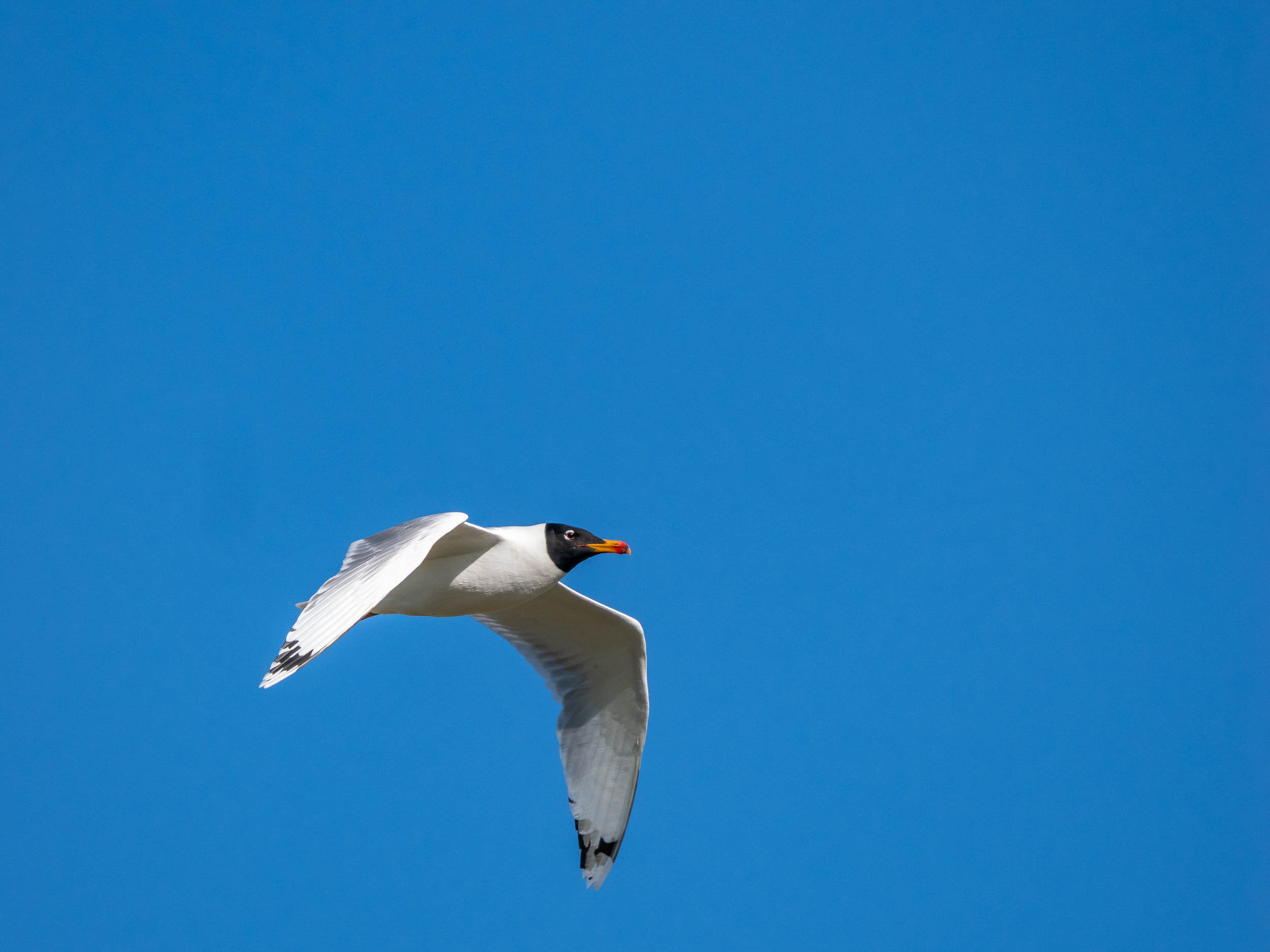
Our main targets here are nesting groups of the globally endangered Sociable Lapwing, which we have “staked out” for you. There are many other excellent attractions in this vast landscape. We can find roadside colonies of Black-winged Pratincoles and White-winged Black Terns in glorious breeding plumage. The steppe lakes are dotted with migrant shorebirds such as Red-necked Phalaropes, Spotted Redshank, Terek Sandpiper, Little- and Temminck’s Stints. Ruff can be observed displaying in all their finery. These innumerable wetlands and lakes should also produce breeding Dalmatian Pelican, Great Bittern, White-headed Duck, Red-necked and Eared Grebes, Whooper Swan, Greylag Goose, Red-crested Pochard and Caspian Terns. More exclusive still are the close colonies of splendid Great Black-headed Gulls, with a supporting cast of Steppe and Slender-billed Gull!
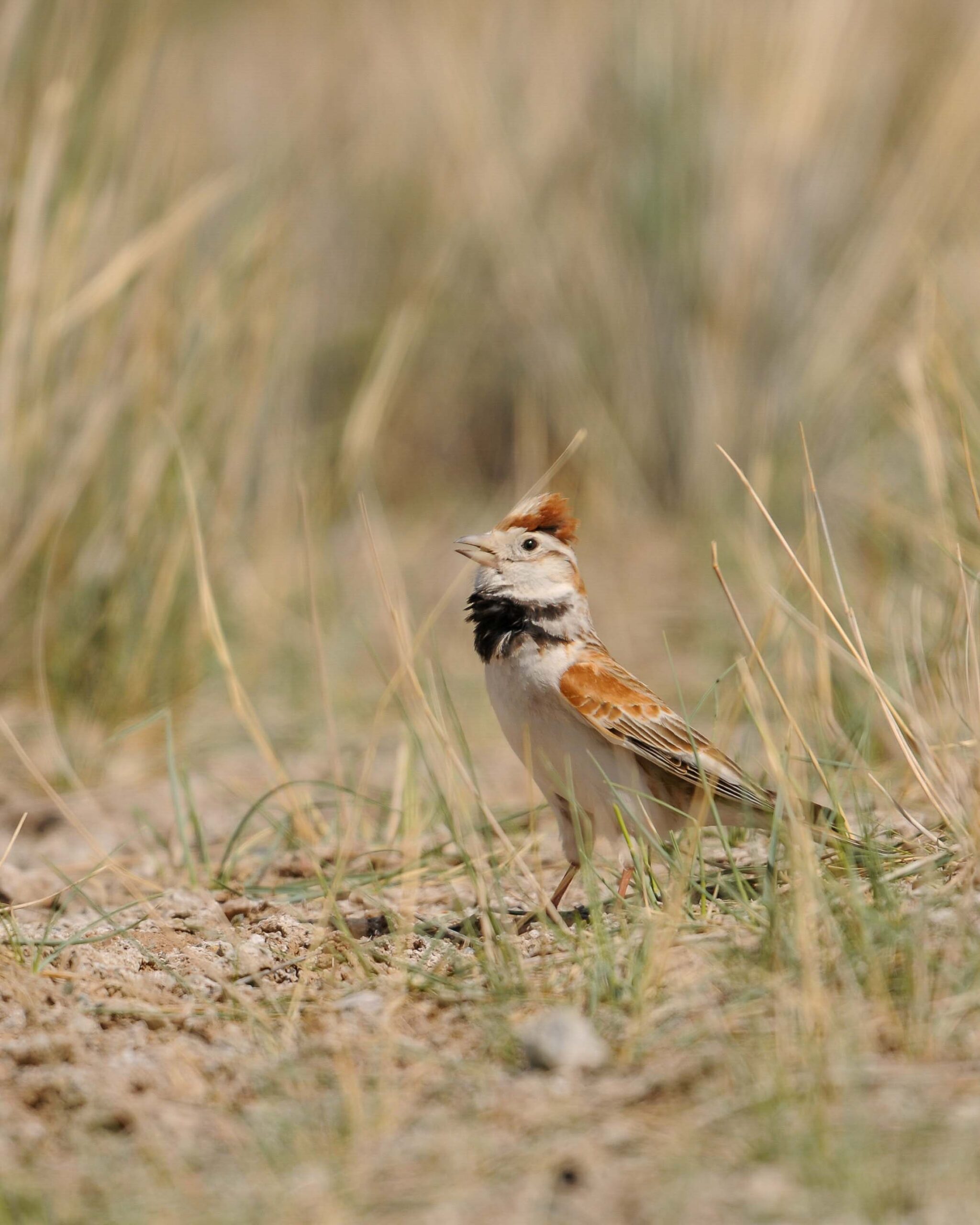
The damp grassy steppe is home to elegant Demoiselle Cranes while nearby scattered scrub should hold Booted Warbler, Pallid Harrier, and gorgeous Red-footed Falcons. We should find two other very unique birds today – Black and White-winged Larks which are often numerous along the roadside. Both species are confined to the Central Asian steppes and are a major drawcard for any visiting birder! In the evening we return to Nur-Sultan where we will enjoy a lovely dinner.
Night: Comfortable tourist hotel in Astana
Day 4 - 5: Ust-Kamenogorsk
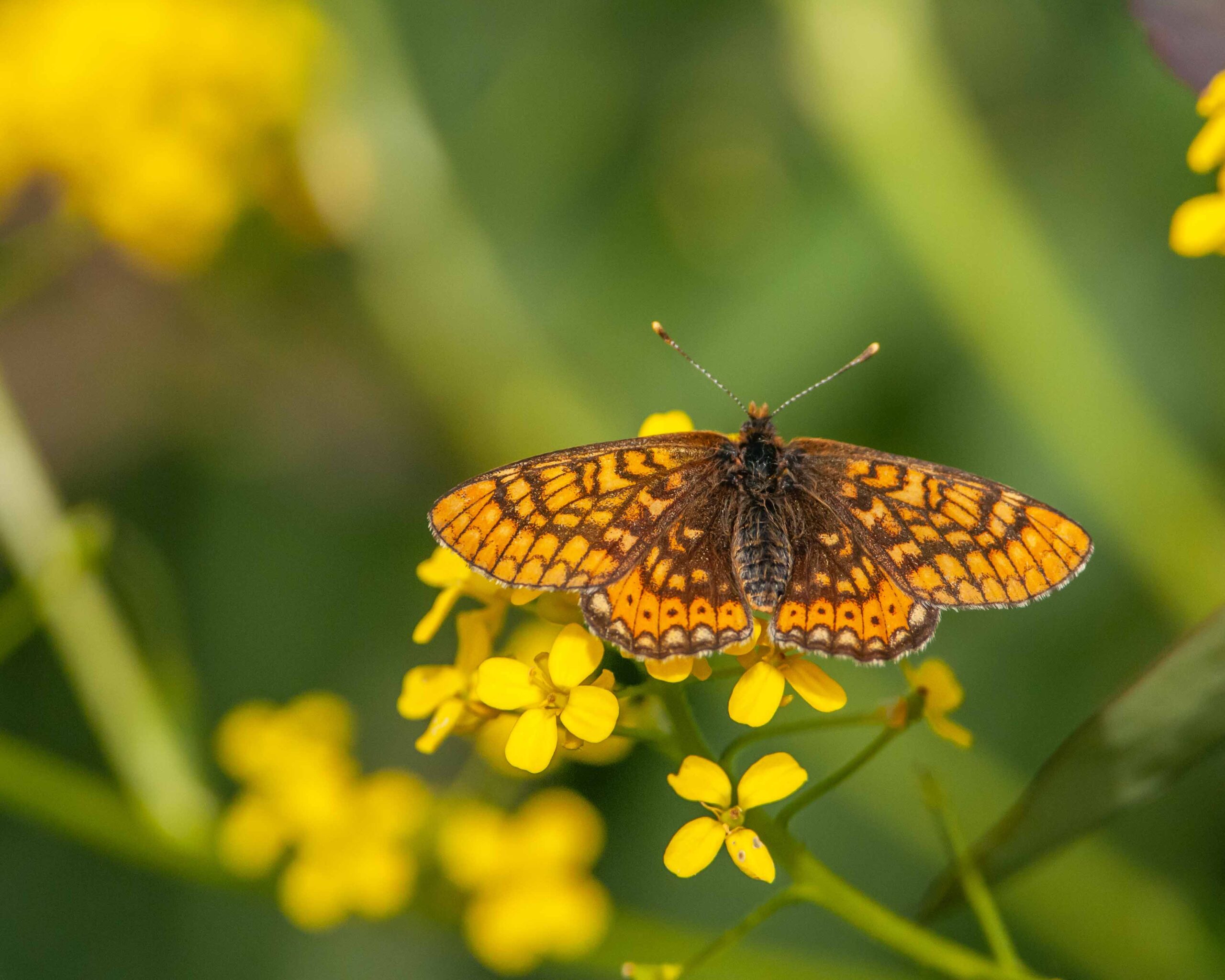
We will venture above the treeline. In this high-altitude habitat, we are in search of goodies like Ptarmigan, Willow Grouse and Dotterel. Amongst the dwarf birch, we should find Bluethroat and possibly Siberian Rubythroat. Grey Marmots will be calling in the valley, and the rocky slopes are home to Altai Pikas. At the same time, a Lapland Fritillary may flutter past during its search for its host plant. Around Katon Karagay we can explore the nearby forest where Oriental Cuckoos will be calling, and the droppings of Brown Bear may reveal their presence. At these lower elevations, around Katon Karagay flowers and butterflies are abundant and sure to be a spectacle.
On the outskirts of town birds such as Pine Bunting, Common Redstart and Eastern Black Kite can prove quite common.
Night: Basic lodge Katon
Day 6 - 7: Katon Karagay
For 3 full days, we immerse ourselves in the awe-inspiring mountains surrounding Karakol, a city nestled on the eastern shores of Lake Yssyk Kol. Our journey takes us to remarkable altitudes, including an excursion to Chon Ashuu Pass—the highest point of our tour—reaching an impressive 3,822 meters (12,539 feet). Venturing far beyond the tree line, we search for a unique set of alpine bird species. The nearby fast-flowing river is home to both White-bellied and Brown Dippers, while Lammergeyers soar overhead.
In the lush meadows, we have a chance to spot one of the world’s most enigmatic waders—the elusive Ibisbill. Eversmann’s Redstart, along with Himalayan and Brown Accentors, are common sightings at these heights. We’ll take our time to seek out the stunning White-browed Tit-Warbler, as well as its vibrant companion, the Güldenstädt’s Redstart. In the open patches of mature, mixed deciduous and coniferous forests, we’ll find Greenish and Hume’s Warblers frequently.
In Barskoon, we dedicate a full day to exploring this majestic high-altitude landscape, rich with alpine specialists. Black-throated, Altai, and Brown Accentors, Sulphur-bellied Warbler, Red-mantled Rosefinch, White-tailed Rubythroat, White-winged Grosbeak, and the striking White-browed (Severtzov’s) Tit-Warbler are all on our target list. As we ascend higher near a gold mine, at an altitude of 10,500 feet, we’ll be on the lookout for Lammergeier, Himalayan Griffon, Red-billed and Yellow-billed Choughs, Plain Mountain-Finches, White-winged (Güldenstädt’s) Redstart, and the magnificent Himalayan Snowcock, which we have a strong chance of encountering.
Night: Comfortable tourist hotel in Karakol
Day 8 - 11: Rakhmanovskiy Klyuchi
In the coming days we explore possibly the most beautiful mountain lake in Central Asia, the Rakhmanovskiy Lakes. The long and bumpy road will take us over a pass at an elevation of around 2000 m. During our ascent, we will stop and explore several forest types. We hope to find the greyish form of Eurasian Bullfinch, Pine Grosbeak and maybe a Dark-sided Flycatcher if we are lucky. The gorgeous Brown Shrike is likely to be seen perched on the top of a thorny bush while Golden Eagle may be observed hunting for small marmots. In the afternoon, we will arrive at our luxurious lodge high in the mountains.
At the lake itself, we should secure close views of the interesting White-winged Scoter. Sometimes we are lucky enough to find a pair of Black-throated Divers joining the scoters. Siberian Rubythroats will be singing from their posts along the lake. Black-throated Thrushes, Siberian- and Willow Tits are finding food for their recently hatched chicks. Inside the scrub, we can find Greenish-, Hume’s- and Dusky Warblers, while open patches of forest hold Eversmann’s Redstarts, Siberian Nuthatches and Three-toed Woodpeckers. Pacific Swifts and large flocks of Red-billed Choughs rule the skies above. The substantial walk up the slopes through flower-filled alpine meadows will guarantee fantastic scenery. Here we are in the habitat of Plain- and Brandt’s Mountain Finches, Güldenstädt’s Redstart, Asian Rosy Finch and Altai Accentor. In 2013 we found a breeding pair of Pallas’s Bunting here. We will end each day with a lovely dinner on the terrace overlooking the lake.
On day 11, we leave the gorgeous lake behind us for a full day of driving which will bring us back to Ust-Kamenogorsk. We will aim to arrive back at our hotel in the early evening.
Night: Comfortable tourist lodge in Rakhmanovskiy.
Night day 11: Comfortable tourist hotel in Ust-Kamenogorsk
Day 12 - 15: West-Altai Nature Reserve
Passing through glowing agricultural fields as we drive northwards to the Russian border (a 2.5-hour drive) where we will be lodging in a lovely cabin in the forest. We will start with a visit to the wet fields around the city of Ridder, where Pallas’s Grasshopper Warbler and Long-tailed Rosefinch are our main objectives. In the hedges, Red-backed Shrikes are common while Azure Tits forage nearby. Here we hope to add some more aquatic species like the White-crowned Penduline Tit and, less likely, Blyth’s Reed Warbler.
We will explore the forests near the West-Altai Nature Reserve. This reserve is the largest in Kazakhstan, at 56,000 hectares, and gives us countless options for wildlife viewings. Starting around our lodge, we have a reasonable chance of finding Ural Owl, Taiga Flycatcher and Olive-backed Pipit. Sometimes even Siberian Jay may appear on one of the feeders! In these dark coniferous forests we are sure to hear the call of the White’s Thrush and if lucky, maybe come eye-to-eye with one of these subtle beauties. Commoner birds here include Red-flanked Bluetail, Black-throated Thrush and Hawfinch. The botanists amongst us will enjoy the thousands of species of plants surrounding us – Siberian Adder’s Tongue and Pink Rhodiola being the most interesting. The threatened Altai Weasel has a stronghold in this splendid reserve, and we have a chance of seeing Siberian Chipmunks and Common Shrews.
We will have one last walk before checking out and driving back to Ust-Kamenogorsk. We will board our domestic flight at 2000, which will take us back to the capital.
Night: Klimovka Camp in Ridder.
Night day 15: Comfortable tourist hotel in Astana
Day 16: Astana to home
A transfer will be provided very early this morning to Nursultan Nazarbayev International Airport (airport code NQZ), in time for the Turkish Airlines flight to Istanbul, currently scheduled to depart at 3:20 a.m.
Tour information
Focus
- Birds
- Mammals
- Vast unique landscapes
Group size
Min 6 - Max 8
The group will be always led by one wildlife leader and one culture guide.
What's included in the Price?
All transport, including the domestic return flight between Astana and Ust-Kamenogorsk. All accommodations in twin rooming. All meals. All permits and national park entrances. Please note: Drinks, tips, possible visas and items of a personal nature including travel insurance, are not included.
Accomodation
Throughout our journey in Kazakhstan, we will venture primarily off the beaten track, immersing ourselves in the authentic beauty and culture of this remarkable country. The Altai region, while rarely visited by Western tourists, offers abundant wildlife and stunning landscapes. However, with its remote roads come more basic accommodations. Be prepared for simple hotels and guesthouses, where you’ll be welcomed by warm and hospitable locals eager to share their corner of the world. Most accommodations will feature shared shower and WC facilities. However, in Ust-Kamenogorsk and the capital, Astana, we will stay in comfortable tourism hotels, ensuring a pleasant end to our adventure.
Difficulty
During our expeditions, we may embark on long journeys, some of which may traverse poor or unpaved roads. However, these extensive travels serve to highlight the vastness and adventure of the region. Throughout the journey, we’ll travel in comfort using a reliable coach for transportation. When it comes to walking, the tours are designed to be primarily easy to moderate, even in the high elevations of the Altai Mountains. Most of our walking excursions involve short distances on flat terrain or downhill paths, ensuring that participants can comfortably explore the stunning landscapes and natural wonders of Central Asia.
Flights
International flights are not included in the pricing. Please connect with the RBT office to find out your best connection to Central Asia.
Clothing - What to pack?
For our expedition to Central Asia, it’s important to pack a variety of clothing to accommodate the diverse climates and activities we’ll encounter. Lightweight, easily washable, and quick-drying clothes are essential for the hot steppe and desert regions, along with sunglasses and a sun hat for sun protection. However, don’t forget to pack some lightweight yet warm layered clothing for higher altitudes, where temperatures can drop significantly. This includes a warm hat, fleece, and light gloves to keep you cozy. Additionally, a light waterproof jacket is recommended to shield against unexpected rain showers. When it comes to footwear, opt for light yet sturdy walking boots that can handle various terrains. It’s advisable to avoid shorts to protect yourself from the sun, as the region can be conservative in dress. While people in the cities tend to dress more casually in western clothing, it’s still a good idea to respect local customs by dressing modestly. If needed, laundry facilities are available at hotels in larger towns such as Astana and Ust-Kamenogorsk offering convenience for longer stays.

Related tours
Ornithological expedition in the Kazakh Altai

Exciting fall migration in a Palearctic hotspot

The Flora & Fauna of Altai

Floating hide Photography expedition

Spring migration in Central Asia

From Altai Snowcocks to Mongolian Ground-Jays
A birding tour in Russia and Mongolia
From Altai Snowcocks to Mongolian Ground-Jays

This exciting tour takes us to one of Central Asia’s most impressive mountain ranges – the Altai Mountains. We combine three unique biomes to cover some of Central Asia’s most incredible species. We begin the tour in the fertile farmlands of the South-Siberian lowlands. Heading south, we move into the rugged peaks of the Altai Mountains, home to various rare avifauna. Finally, we reach the steppes of Mongolia. The unique position of the Altai region, at the junction of eastern and western Palearctic species ranges, together with a great diversity of habitats, creates a special offering for any naturalist.
This tour is a birdwatcher delight with loads of avifaunal treasures passing through our viewfinder. Top birds include Swan Goose, Asiatic Dowitcher, Oriental Plover, Altai Snowcock, Relict Gull, Pallas’s Fish-Eagle, Siberian Thrush, Daurian Jackdaw, Ural Owl, Henderson’s Ground-Jay, Mongolian Lark, Kozlov’s Accentor, Pallas’s Rosefinch, Pallas’s Bunting, Godlewski’s Bunting and lots more!
Next tour
*No scheduled departure*
Cost: $4.000
Single supplement: $450
Deposit: $800
Group size: Min 6 – Max 10
Best-time: May-June
Leader: Machiel Valkenburg
Upcoming tour
Book your private tour here
- Click on the image to enlarge
Your Russia itinerary
Day 1: To Gorno-Altaisk
The tour starts with an international flight from your home city to the capital of Russia, Moscow, followed by a domestic flight bringing you to the small provincial town of Gorno-Altaisk.
Night: On aircraft
Day 2: Gorno-Altaisk to Seminskiy Pass
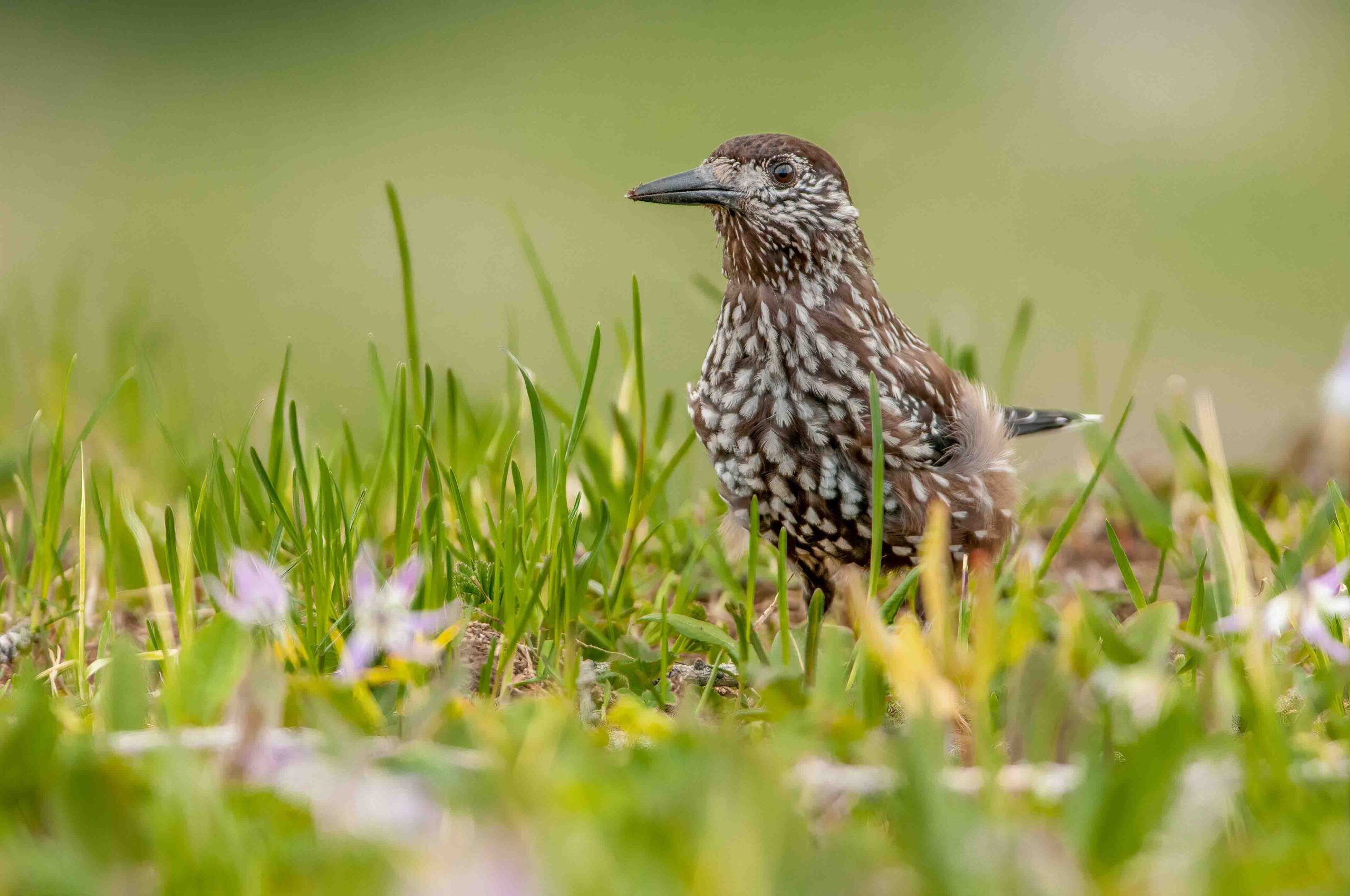
After arriving early morning at the Gorno-Altaisk Airport, you will meet up with your RBT tour leader who will accompany you for the duration of this excellent birdwatching holiday. We leave Barnaul and take a long drive along the Chuy Highway to the Seminsky Pass (195 km). Seminsky Pass is the highest point on the Chuy Highway, reaching 1,717 metres above sea level. After arrival, we will undertake an afternoon excursion to the slopes of Mount Vershiina Tiyakhtii. We will likely come across some of the commoner species of the Siberian boreal coniferous forest, such as Ural Owl, Spotted Nutcracker, brandtii Common Jay, Eversmann’s Redstart, Willow Tit, sayanus Siberian Tit, Crested-honey Buzzard, Swinhoe’s and Pin-tailed Snipes, Olive-backed Pipit, Altai Accentor, Black-throated Accentor, Hume’s and Dusky Warblers, Pallas’s Grasshopper Warbler, Red-flanked Bluetail and many lovely Black-throated Thrushes. The big target bird for Seminsky is one of the most illustrious rosefinches of Asia – the Pallas’s Rosefinch!
Night: Wooden lodges at Seminsky
Day 3: Seminsky Pass
We start with some early birding before breakfast at Seminsky, where we hope to see more of the previously mentioned species. After breakfast, we will depart towards the Tiid-Tujariik Valley, located in the Chuya Steppe. Birding en route, we will be on the lookout for Hill Pigeon, Pale Sand Martin, Rosy Starling, Daurian Jackdaw, Isabelline Wheatear, Eastern Goldfinch, Godlewski’s Bunting, Siberian Meadow Bunting, Saker, and the gorgeous Demoiselle Crane. We will drive over the Chicke-Taman Pass (1,295 m), with a stop at the observation point. Here we may hear the fantastic song of the Siberian Blue Robin. Other sightings could include more Red-flanked Bluetail and Dusky warblers. Along the road, we will see several high cliffs inhabited by Eurasian Crag Martins and Lesser Kestrels. In the village Aqtash, we will make a stop for our permits to visit the border zones with Mongolia. To quote Dostoevsky, “you get nowhere in Russia without documents”. We will undoubtedly make additional stops along the way as we spot raptors perching on telegraph poles (lots of Imperial and Steppe Eagles, Saker and Peregrine Falcons). In the evening we will arrive at our yurt camp near the Tiid-Tujariik River.
Night: Yurt camp at Tujariik
Day 4: Beltir
Today we have a long drive through the Chuya Steppe to the ruins at Beltir, and then upwards into the mountains. Along the road, we will make stops at several spots to watch Booted and Barred Warblers, Greater Sand Plovers, Red-billed Choughs, Pied and Isabelline Wheatears, Horned and Greater Short-toed larks, Rock Petronias, Pere David’s Snowfinches, and Desert Wheatears. Lunch will be served in the fields near a colony of wise Pere David’s Snowfinches. The village of Beltir is all but abandoned, the result of a disruptive earthquake in 2003, meaning many of the empty barns and houses have become inhabited by birds. This area is an excellent place for Eastern Black Redstart, Brown Accentor, Pied Wheatear, Twite, and Red–billed Chough. Our destination in the mountains is situated at an altitude of 2,205 metres, which is 260 metres higher than Beltir. Target birds in this area are White-winged Snowfinch, Brown and Altai Accentors, Golden Eagle, and Upland Buzzard. Today in the steppe areas we may also encounter Black Stork, Demoiselle Crane, Steppe Eagle, Imperial Eagle, Isabelline Shrike, Brown Shrike, Rosy Starling, Daurian Jackdaw, Alpine Chough, Pallas’ Sandgrouse, Horned Lark, Richard’s Pipit, and unreal Mongolian Finches.
Night: Yurt camp at Tujariik
Day 5: Tabozhok, in search of Altai Snowcocks
From dawn, we will begin to scan our surroundings for the ground jay. In this area, we may also see big flocks of Pallas’s Sandgrouse, Daurian Partridge, Greater Short-toed Lark, Barred Warbler, Isabelline- and Brown Shrikes, Rock Petronias, and Mongolian Finches. The unique habitat here is reflected in the avifauna we encounter. After breakfast (and hopefully excellent views of the ground jay!), we continue the drive to Lake Achit-Nuur. Here, in the swampy areas, overwhelming amounts of waders and ducks can be found breeding. The most interesting among them is arguably the stunning red Asian Dowitcher and elegant Long-toed Stint. Here we are also in search of the mighty Pallas’s Sea Eagle, Little Crake, Pallas’s Gull, and Lesser Short-toed Lark. One side of the lake is covered with colossal reed beds which are surrounded by rocky hills. Here we will make our camp for the night. Our neighbours could be Savi’s Warbler, Paddyfield Warblers, Great Reed Warblers, halimodendri Lesser Whitethroats, Bearded Reedlings, Thick-billed Reed Buntings, Pallas’s Reed Buntings and Grey-necked Buntings – better than any five-star hotel!
Night: Tent camp at Achit-Nuur
Day 6: Tujariik to Kindiiktiikul
Today we will transfer to the high-altitude Lake Kindiiktiikul. Before our morning departure, we will scour a bushy area near the Tujariik River, and scan the swampy plains near Kosh-Agach. Here we can usually find Long-tailed Rosefinches, Azure Tits, Taiga Flycatcher, Yellow-browed Warbler and Blyth’s Reed Warbler. The translation of Kindiiktiikul in the Altai language means ‘lake with the navel’, a small island in the lake’s centre is the reason for this. It serves as a safe nesting site for Mongolian Gulls and Willow Grouses. At the lake, we may find Whooper Swans, Arctic Loons, Bar-headed Goose, White-winged Scoters, Red-breasted Mergansers, Yellow-billed Choughs, Horned Larks, and Citrine Wagtails. Along the road near the lake, several raptors are possible, including Lammergeyer, Black Vulture, Golden and Steppe Eagles, but also flocks of Pallas’s Sandgrouse. After arriving at the lake, we will do some final birding nearby, while our crew sets up our tented camp ready for the evening.
Night: Tent camp at Kindiiktiikul
Day 7: Nariin-Gol Valley
Today we have a great walk planned along the Nariin-Gol River to the three lakes situated near the Bogutii Mountain Range. Our focus for the day is finches: Plain Mountain Finch, Brandt’s Mountain Finch, Asian Rosy-Finch, and kobsensis Spotted Great Rosefinch. We may also come across Rock Ptarmigan, Siberian Stonechat, Sulfur-bellied Warbler, Blyth’s Pipit, Himalayan Accentor, Brown Accentor, Güldenstädt’s Redstart, and more Twite. Even Altai Snowcock is possible here. In the evening we will return to our camp and spend our last night on Russian soil before moving to Mongolia.
Night: Tent camp at Kindiiktiikul
Day 8: Border crossing to Mongolia
Today we need to do our best to depart from Kindiiktiikul as early as possible to reach the border before the queue. Even if we arrive promptly, the estimated time to cross the border is nearly 7 hours! As such, there is not much time for birding today. However, while waiting for our turn, we can do some birding near the border which could yield several common species such as Red-billed Choughs, Little Ringed Plovers, Hill Pigeons, Brown Accentors, Northern-, Pied- and Isabelline Wheatears, and some raptors. After crossing into Mongolia, we will head east towards Achit-Nuur. We will spend our first night camping in the semi-desert. These plains are the perfect habitat for the illustrious Mongolian Ground Jay, and the next morning will be entirely devoted to finding this unique bird.
Night: Tent camp near Achit-Nuur.
Day 9: Turkestan Ground Jay and Achit-Nuur
From dawn, we will begin to scan our surroundings for the ground jay. In this area, we may also see big flocks of Pallas’s Sandgrouse, Daurian Partridge, Greater Short-toed Lark, Barred Warbler, Isabelline- and Brown Shrikes, Rock Petronias, and Mongolian Finches. The unique habitat here is reflected in the avifauna we encounter. After breakfast (and hopefully excellent views of the ground jay!), we continue the drive to Lake Achit-Nuur. Here, in the swampy areas, overwhelming amounts of waders and ducks can be found breeding. The most interesting among them is arguably the stunning red Asian Dowitcher and elegant Long-toed Stint. Here we are also in search of the mighty Pallas’s Sea Eagle, Little Crake, Pallas’s Gull, and Lesser Short-toed Lark. One side of the lake is covered with colossal reed beds which are surrounded by rocky hills. Here we will make our camp for the night. Our neighbours could be Savi’s Warbler, Paddyfield Warblers, Great Reed Warblers, halimodendri Lesser Whitethroats, Bearded Reedlings, Thick-billed Reed Buntings, Pallas’s Reed Buntings and Grey-necked Buntings – better than any five-star hotel!
Night: Tent camp at Achit-Nuur
Day 10: Achit-Nuur to Khar-Us-Nuur
After some early birding at the lake, we will have a field breakfast before continuing on our journey. Today we have 200 km of bad road to overcome and a crossing of the Shovergol River, before finally arriving in the evening at our destination on the shore of Lake Khar-Us-Nuur. “Khar-Us” in Mongolian means “black water”. The dark colouring of the lake water is due to the presence of organic compounds and high levels of plankton. As a result, the lake is abundant with fish. We will bird several small, but gorgeous lakes abundant with waterfowl such as grebes, egrets and herons, swans, ducks, and avocets, en route. We will arrive at Khar-Us-Nuur Lake in the early evening. Here we may find our first Mongolian Larks!
Night: Tent camp at Khar-Us-Nuur
Days 11: Round trip from Khar-Us-Nuur to nearby saline lake
We start the day birding the nearby hills looking for Asian Desert Warblers, Isabelline Shrikes, Desert Wheatears, and the famous Kozlov’s Accentor. Closer to the water, we can see Greater- and Lesser Sand Plovers, Terek Sandpipers and more Asian Dowitchers. On the lake itself, Swan Goose, Bar-headed Goose, White-winged Scoter, and the rare Relict Gull may be observed foraging. Large numbers of Pacific Swift and Rose-coloured Starlings are regularly observed in this area. Another big target is conveniently located a short distance from our camp – the dazzling Oriental Plover! In this perfect steppe habitat, we may encounter more Upland Buzzards, Kentish Plovers, Lesser Sand Plovers, Long-Toed Stints, Pallas’s and Relict Gulls, Pallas’s Sandgrouse, big flocks of Demoiselle Cranes, and even Henderson’s Ground Jays. After birding at the salt lake, we will drive back to our camp at Khar-Us-Nuur.
Night: Tent camp at Khar-Us-Nuur
Day 12: Khar-Us-Nuur to Tsagaan-Nuur
Today will be a day of driving as we head back towards the Mongolian-Russian border. If we make good time today, we should reach Lake Tsagaan-Nuur, which is the closest lake to the border. Here we could see an Arctic Loon, a Whooper Swan, a variety of ducks, a Terek Sandpiper and a Red-headed Bunting.
Night: Tent camp at Tsagaan-Nuur
Day 13: Border crossing to Russia
Today we must undertake the border crossing once again. The plan will be to line up at customs as early as possible, however, it could still take up to 7 hours to cross. Once back in Russia, we will return to the good old “Tujariik” yurt camping. Before dinner, there is the option to rest up or visit a lovely Poplar grove nearby for some birding. The famous Russian sauna is waiting for us after dinner – the perfect way to relax after a long day.
Night: Yurt camp at Tujariik
Day 14: Aqtash Village
Today we will be searching for any species we have so far missed. Another option will be to do some birding near Uzunkyol Lake and Katu-Jariik Pass where Booted Eagle, Siberian Thrush, Red-throated Thrush, and the mysterious Siberian Jay are all possible.
Night: Wooden lodges near Aqtash
Day 15: Return to Seminsky
Today we transfer back to the Seminsky Pass. Our route will be the same as the one we took to get to the Chuya Steppe. On the way back we can spend more time birding at Beliy Bom looking again for Godlewski’s-, Meadow- and Pine Buntings, Pied Wheatear, Siberian Stonechat, and Goldfinches of the subulata race. A short walk at the Chicke-Taman Pass for Red-flanked Bluetail, Siberian Blue Robin, Oriental Cuckoo, Greenish-, Hume’s- and Blyth’s Reed Warblers, is also on the cards. During the drive expect to see loads of raptors such as Lesser Kestrels, Upland Buzzards, Imperial- and Steppe Eagles and Saker Falcons. There should also be enough time for an afternoon birding session in the coniferous forest on the slopes of Tiyakhtii Mountain at Seminsky. Here we can go after species like Pallas’s Rosefinch once more.
Night: Wooden lodges at Seminsky
Day 16: Seminsky to Gorno-Altaisk
Today will sadly be the last of our fantastic birdwatching adventure. After an early morning departure from Seminsky Pass, and 2-3 hours on the road, we should reach the city of Gorno-Altaisk in the late afternoon. We will enjoy a grand final dinner before spending our last night in Mother Russia.
Night: Comfortable tourist hotel
Day 17: Departure for Home
In the morning we will depart for the Gorno-Altaisk Airport where we say our farewells and depart for home.
Night: On aircraft
Tour information
Focus
- Taiga Birding
- Steppe Birding
- Unique Landscapes
Group size
Min 6 - Max 10
The group will be led by one birding leader and one culture guide at all times.
What's included in the Price?
All transport. All accommodations are in twin rooming. All meals. All permits and national park entrances. Please note: Drinks, tips, possible visas and items of a personal nature including travel insurance, are not included.
Accomodation
Russia and Mongolia are vast, sparsely populated countries, meaning that tourism accommodations are limited outside of the capitals and major cities. During the Russia portion of our trip, we will stay primarily in basic guesthouses or small hotels. In Mongolia, we’ll travel with our own tented camp, allowing us the flexibility to adapt to weather and birding conditions. The camp will be equipped with kitchen facilities and staff to cater to our needs, though shower and WC facilities will be shared. For a touch of comfort, we’ll stay at a well-appointed tourism hotel in Barnaul, offering a pleasant contrast to the rustic accommodations experienced throughout most of the tour.
Difficulty
During our expeditions, we may embark on long journeys, some of which may traverse poor or unpaved roads. These extensive travels highlight the vastness and adventure of the region. We will be using sturdy 4WD Landcruiser vehicles throughout the tour, ensuring reliable transportation across the varied terrain. Our drives will take us to moderate heights, from where we will embark on shorter walks, sometimes uphill for extended periods. There will also be ample time for private excursions or walks around the tented camp, allowing participants to comfortably explore the stunning landscapes and natural wonders of Mongolia at their own pace.
Flights
International flights are not included in the pricing. Please connect with the RBT office to find out your best connection to Mongolia.
Clothing - What to pack?
For our expedition to Russia and Mongolia, it’s important to pack a variety of clothing to accommodate the diverse climates and activities we’ll encounter. Lightweight, easily washable, and quick-drying clothes are essential for the hot steppe and desert regions. Don’t forget to bring sunglasses and a sun hat for protection from the sun. However, it’s also crucial to pack some lightweight yet warm layered clothing for higher altitudes and early morning excursions, where temperatures can drop significantly. This should include a warm hat, fleece, and light gloves to keep you cozy. Additionally, a light waterproof jacket is recommended to shield against unexpected rain showers.
When it comes to footwear, choose light yet sturdy walking boots that can handle various terrains. It’s advisable to avoid shorts to protect yourself from the sun and respect the region’s more conservative dress customs. While people in the cities may dress more casually in western clothing, dressing modestly is still a good idea.
Mammal Bonanza
The initial focus of this venture takes us to eastern Mongolia, where we search for the sought-after Pallas’s Cat. The combination of its stocky posture and dense, long fur makes it appear stout and ritzy. This small cat inhabits the grasslands and montane steppe of Central Asia where it preys on small mammals like gerbils, pikas and voles. In the middle of the steppe, we have located a burrow where we will position ourselves in the afternoons to wait for it to appear. Here where the horizon has no end, we search for further delights like Daurian Pika, Mongolian Gerbil and Saiga Antelope. Colourful birdinclude the smallest crane on the planet; Demoiselle Crane and the eccentric-looking Mongolian Ground Jay.
Our next focus takes us to the west of the country, we will head to the picturesque Altay Mountains, a range that continues into neighboring Kazakhstan and Russia. This is the realm of the Snow Leopard. Around a decade ago the Snow Leopard was considered a ghost, seen only by scientists who spent most of the year in the mountains inhabited by these beautiful creatures. They are only seen reliably in a few places and Mongolian Altay are considered the best of all. As the Altay Mountains are not a particularly high range, the conditions in which we search for this enigmatic species are comfortable and doable for all. During the pleasant fall weather, we have good hopes of finding this cat – our sighting ratio from previous tours is 80%. Alongside this majestic cat, expect to come across packs of wolves, the unusual Northern Three-toed Jerboa and Saiga Antelopes. The birdlife here is outstanding with nine species of warblers, White-headed Ducks, Altai Snowcocks and Saker Falcons to mention a few possibilities.
We end the tour with a short visit to the Khustain Nuruu National Park where the once-extirpated Przewalski’s Horse has reclaimed the steppe. Mongolian Gazelles and Chinese Penduline-Tits are also found here, alongside attractive Brown Shrike and Mongolian Lark.

Related tours
From Altai Snowcocks to Mongolian Ground-Jays
An adventurous expedition for Snow Leopard & Pallas’s Cat

Birding the Far East
A unique birding tour in Russia
Birding the Far East

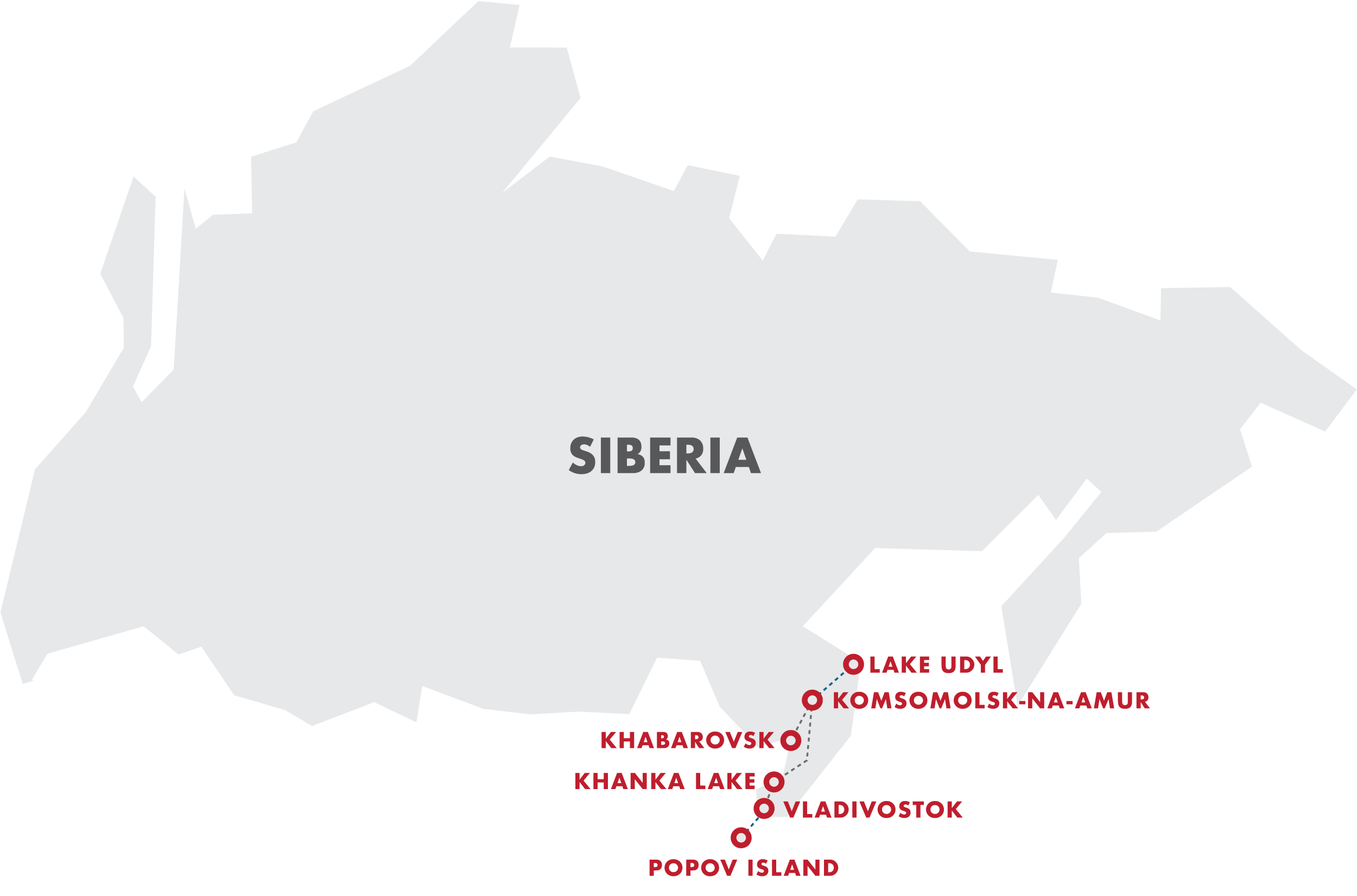
Our expedition places a special emphasis on birding in the southern reaches of Ussuriland, situated within Primorskiy Krai. This region stands as one of the last truly enigmatic and untamed wilderness areas on our planet. It is a crossroads where diverse species coexist harmoniously, forming a mosaic of life within Russia’s most biodiverse region.
Our journey takes us to exceptional birdwatching locations, including the mesmerizing Khanka Lake and the untamed Bikin River, often referred to as the “Russian Amazon.” As we venture deeper into our expedition, we travel northward to explore the southern region of Khabarovsk Krai. Here, the immense boreal forests of Russia stretch out as far as the eye can see, offering a unique opportunity for coveted Russian taiga birding experiences.
Join us as we embark on this extraordinary adventure, immersing ourselves in the wonders of Ussuriland and the Russian wilderness, and uncovering the mysteries of this remarkable ecosystem.
Next tour
16 - 29 June 2026
Cost: $4.250
Single supplement: $400
Deposit: $800
Group size: Min 6 – Max 10
Availability: Only 2 spaces left
Leader: Machiel Valkenburg
Upcoming tour
18 June – 1 July 2027: 8 Spaces
- Click on the image to enlarge
Your Russia itinerary
Day 1: To Vladivostok in Russia
Clients depart from home towards the largest city in eastern Russia, Vladivostok. Clients need to be in Vladivostok in the early morning of day two. Please note that it is essential you arrive on time as we board our chartered vessel at 0530hrs on day two. For those who wish to arrive early, please contact the RBT office and we will gladly help you with extra hotel arrangements.
Night: Day 1, on aircraft.
Day 2 - 3: Popov Island & pelagic in Peter the Great Gulf
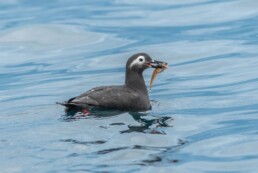
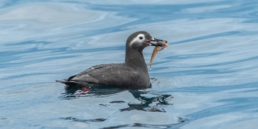
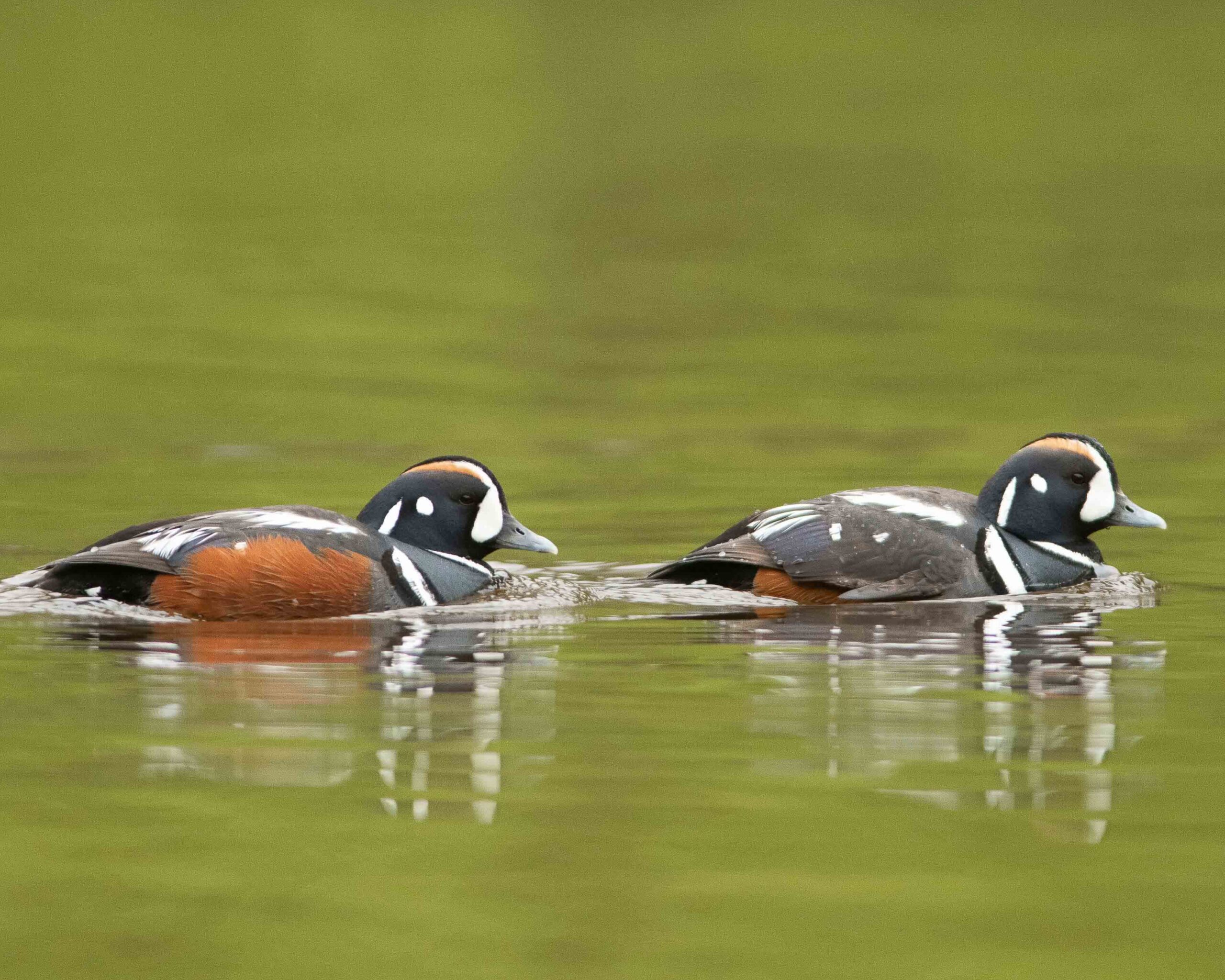
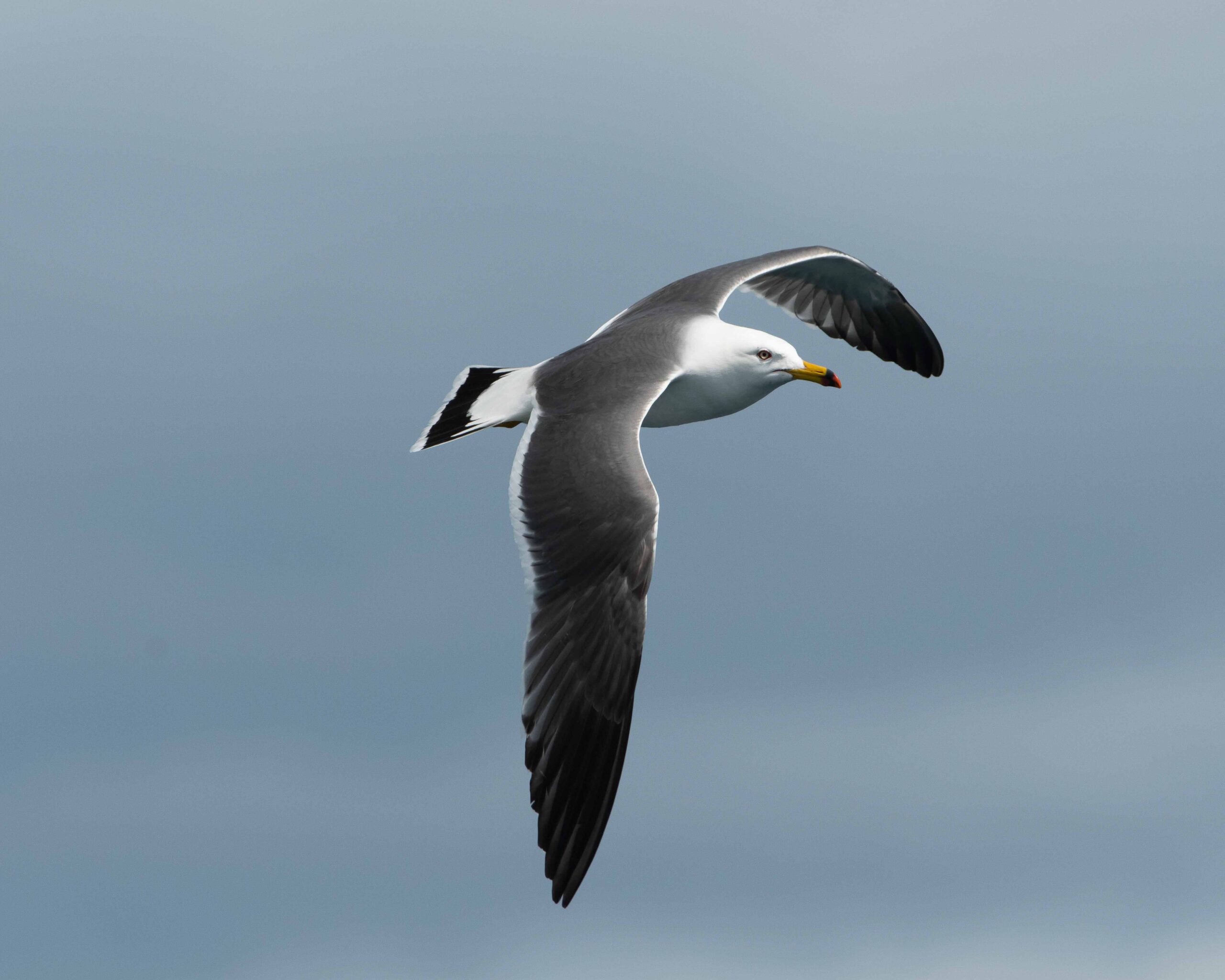
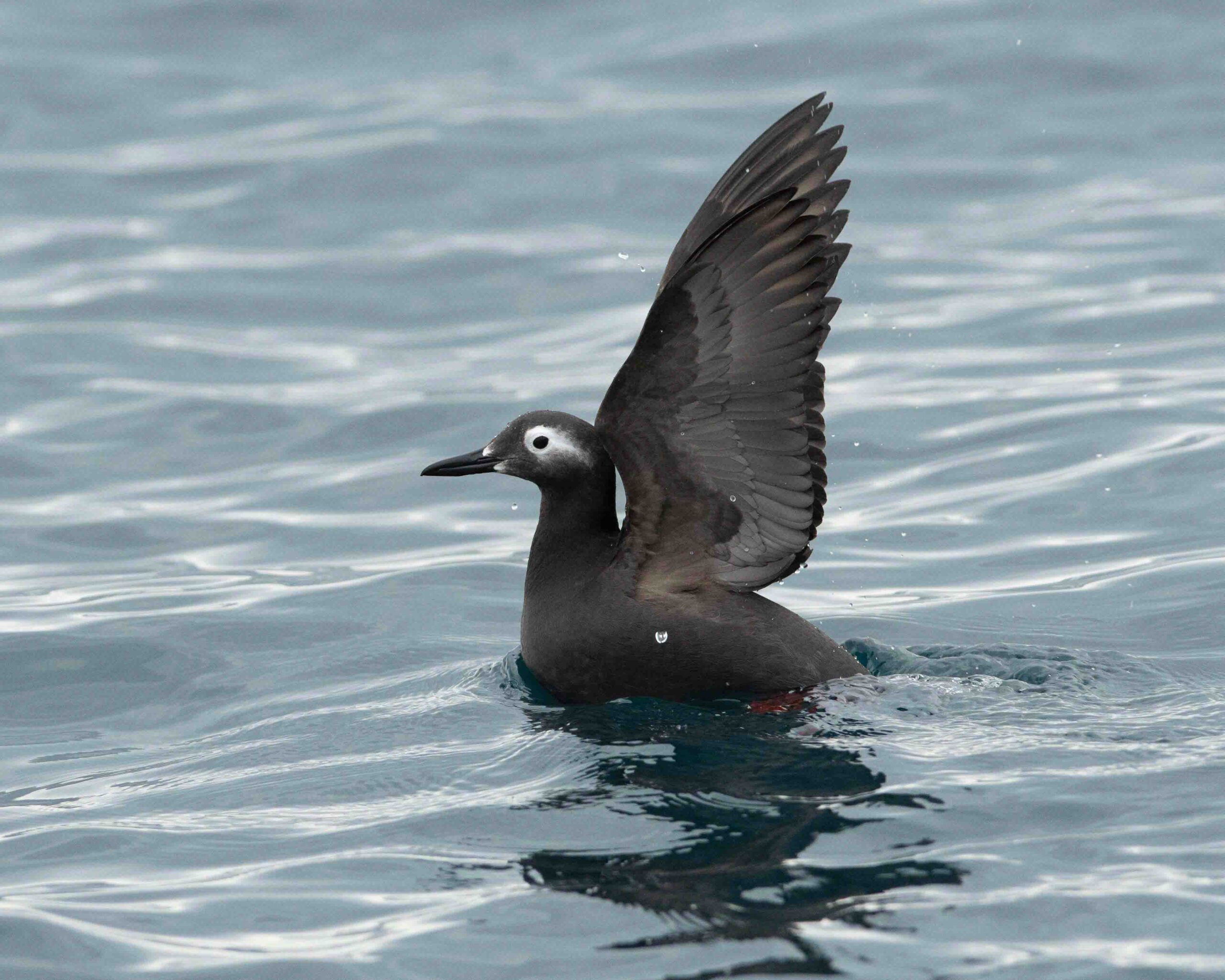
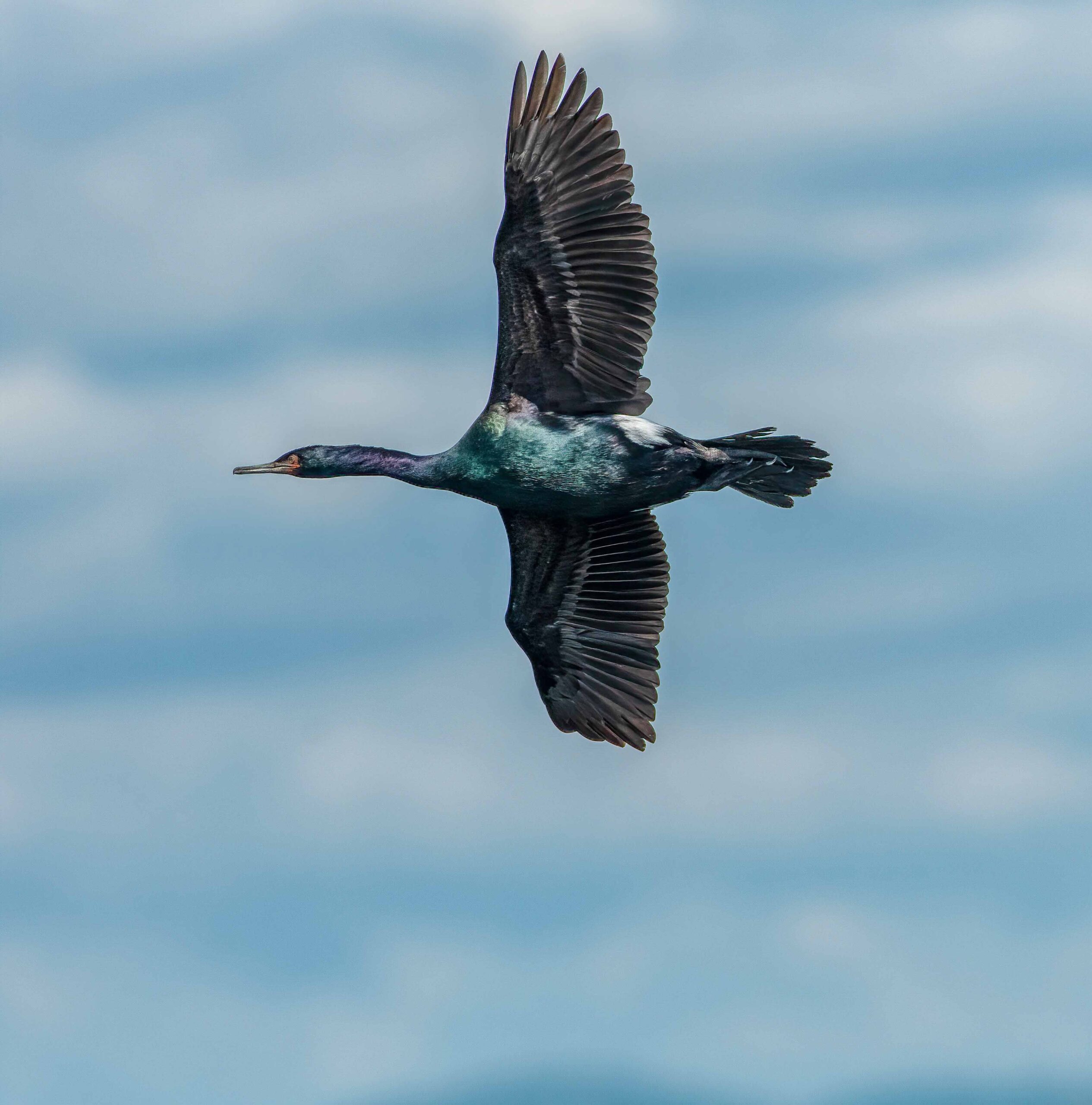
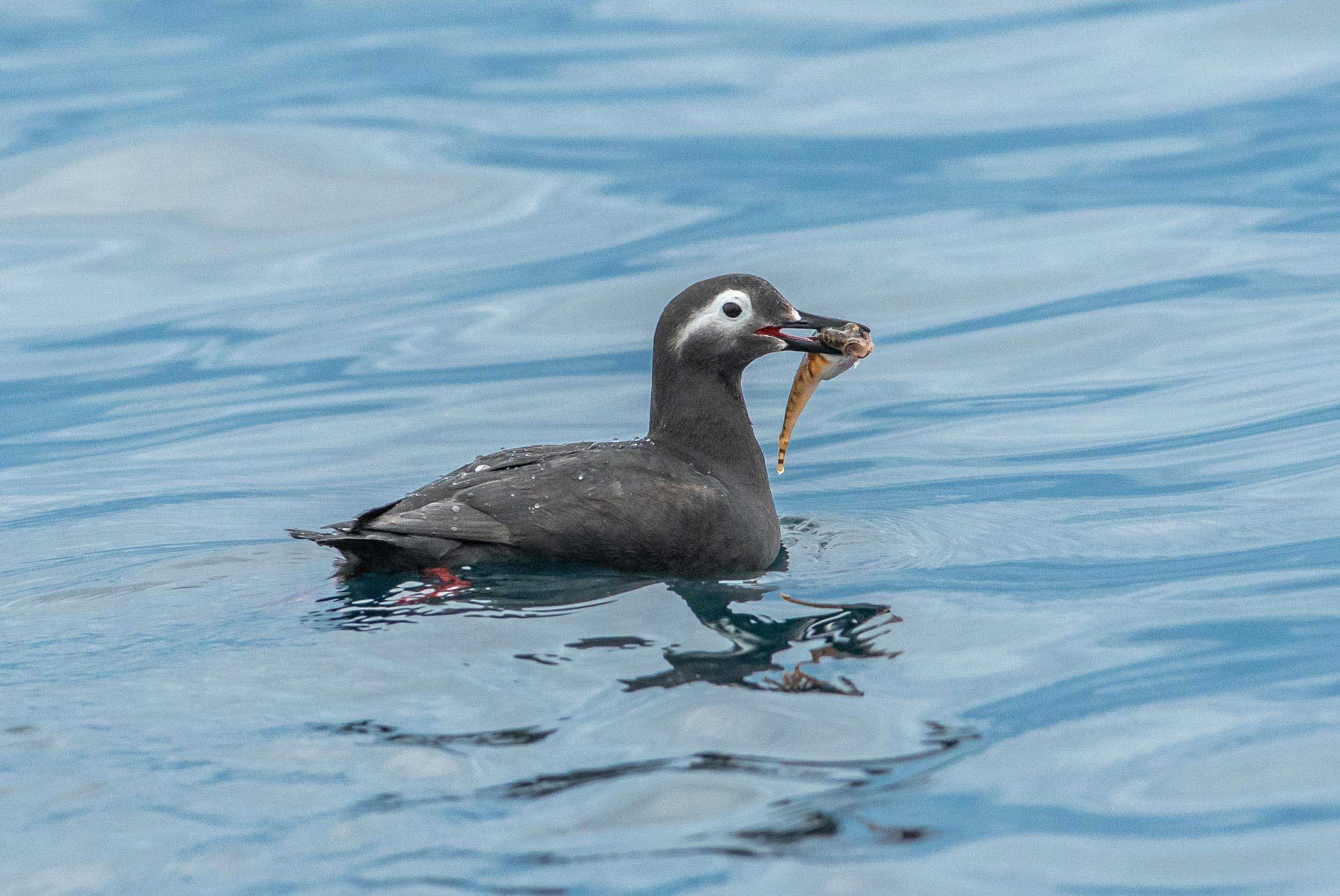
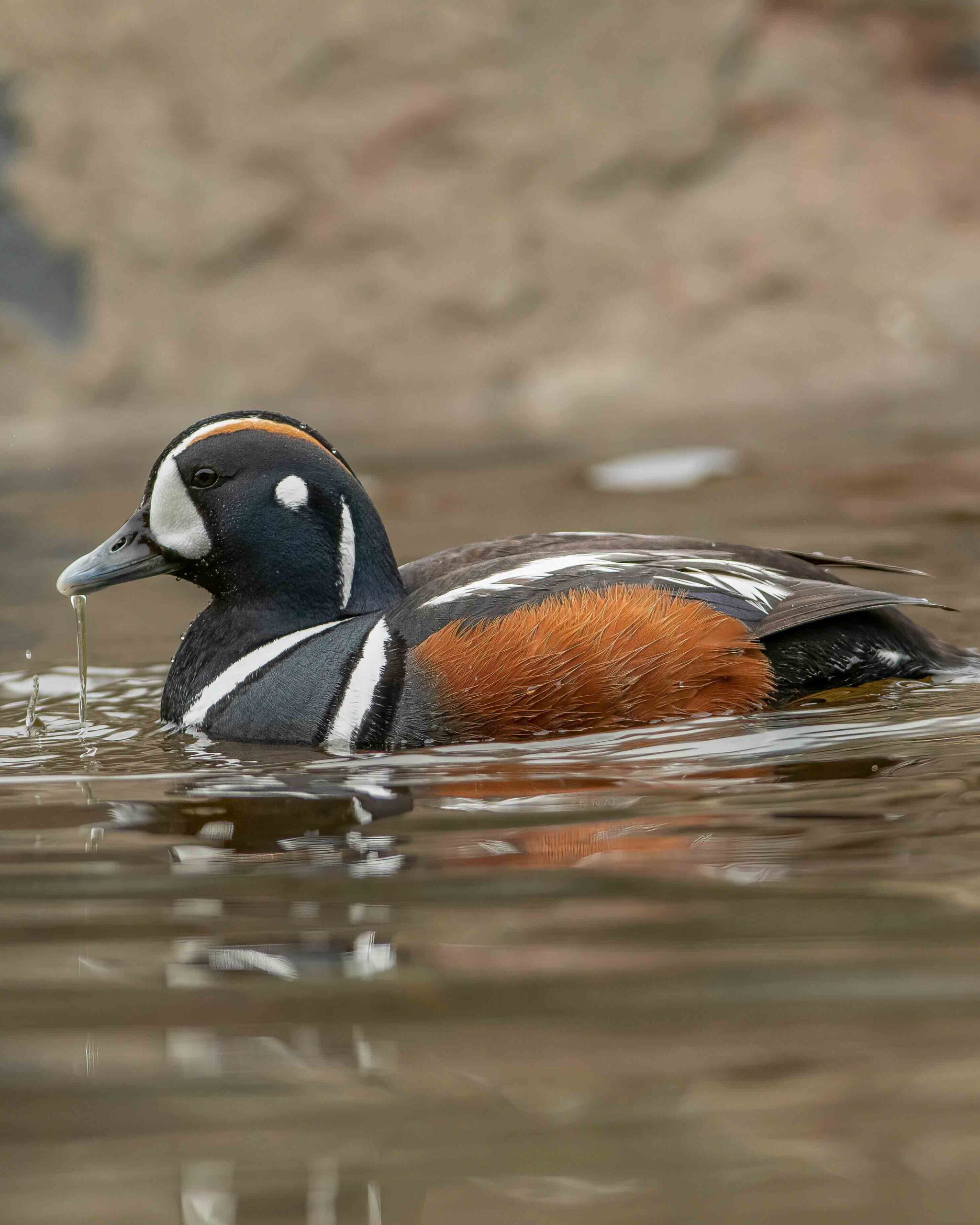
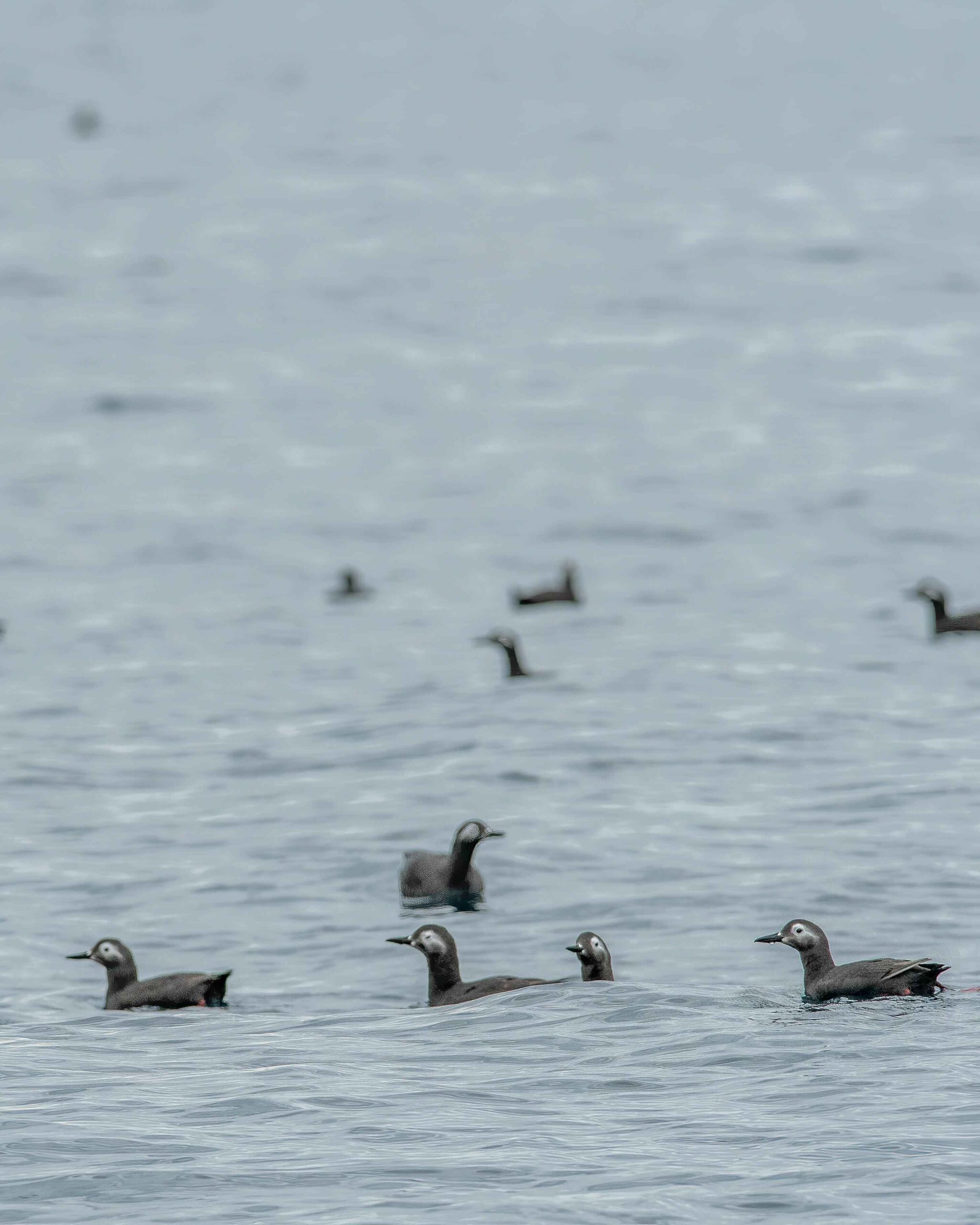
After an early morning domestic flight from Moscow to Vladivostok, we will immediately depart the airport for the large harbour of the historic city of Vladivostok. Over the coming two days, we will make pelagic trips in the Peter the Great Gulf and conduct several exciting landings on a few key islands in the Gulf. Several large seabird colonies will be an extravaganza and pure heaven for any birder. Amongst others, we hope to come across large amounts of Spectacled Guillemot, Rhinoceros Auklet, Black-tailed- and Slaty-backed Gulls, Temminck’s- and Pelagic Cormorant. Rarer sightings might include Marbled and Ancient Murrelet, Common Guillemot, Harlequin Duck, Swinhoe’s Storm Petrel or Streaked Shearwater. Cute Spotted Seals are often found sunbathing on rocks near the islands. As we are in the middle of migration time, we should encounter good waves of passerines.
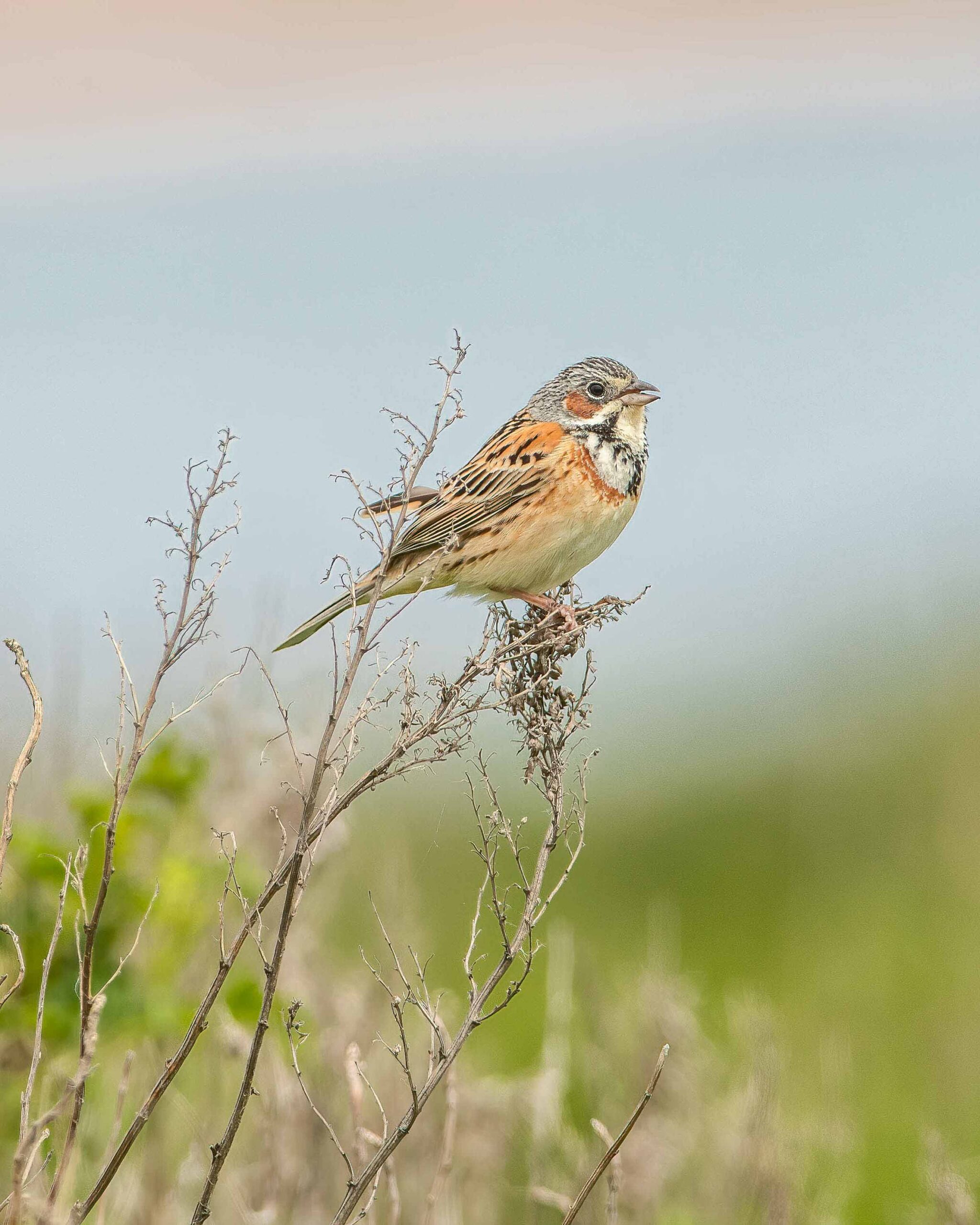
Popov Island offers some excellent birding in the open grasslands that are full of flowers and butterflies. On the scouting trip in 2017 we came across many Chestnut-eared Buntings, (stejnegeri) Japanese Stonechat, Oriental Greenfinch, Grey-backed Thrushes, and, if we are lucky, we may bump into a Latham´s Snipe or Baikal Grasshopper Warbler. The forested parts of the island are full of Yellow-rumped Flycatchers, Pale-legged Leaf Warblers, Eastern Crowned Warblers, Ashy Minivets, Azure-winged Magpies, Japanese Pygmy Woodpeckers, and Japanese Tit. We will be greeted upon our return to Vladivostok each evening by swarming flocks of Pacific Swift. Back at our comfortable hotel, we will enjoy a flavorful dinner.
Night: Comfortable tourist hotel in Vladivostok
Day 4: Vladivostok to Lake Khanka
After breakfast we leave Vladivostok, driving towards the region of Khanka Lake, north of the city. We leave the coastal habitats behind and exchange them for extensive agricultural landscapes and taiga forests as far as the eye can see. In open areas, large numbers of the striking Pied Harrier will be quartering, as Brown Shrikes hunt from treetop perches. Enigmatic Siberian buntings like Elegant Bunting and Black-faced Bunting are found in some darker regions of the forests. In the evening, we will check out the wetlands of Khanka Lake in the hope of discovering Falcated and wild Mandarin Ducks, the latter being one of the most attractive duck species in the world.
Night: Hotel Voyage, Spassyk-Dalniy.
Day 5: Khanka Lake and surroundings
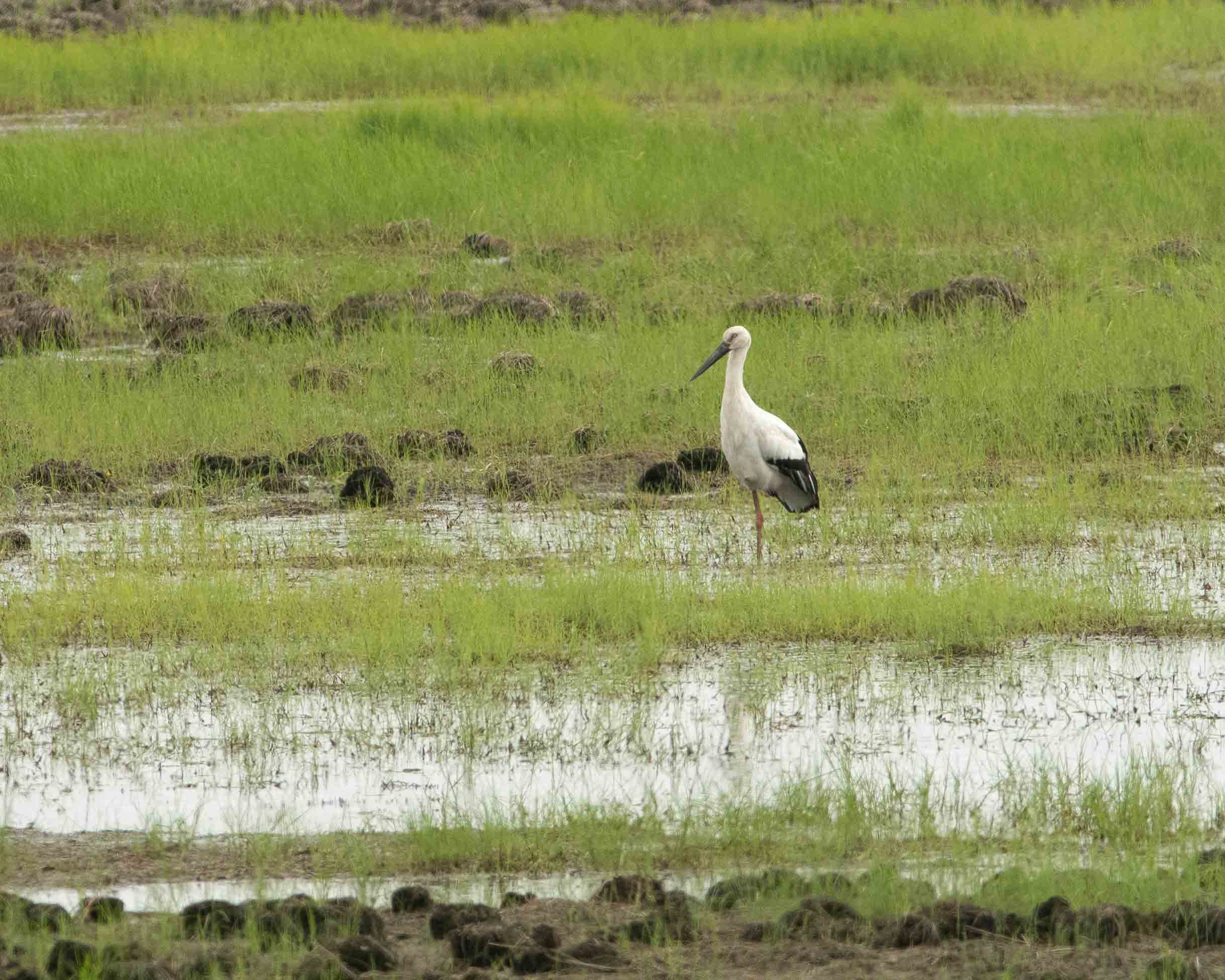
As usual on this tour, we will have an early rise to go birding in the nearby forests where many gems are on the menu. We will do our best to show you Asian Stubtail, Black-naped Oriole, Asian Paradise Flycatcher, Japanese Grosbeak and Azure Tit. Around noon there will be a significant dip in bird activity. We will use this time for an extended lunch and drive back towards Khanka Lake. In the evening we will explore the lake vicinity once more in the hope of the previously mentioned duck species and hopefully more sightings of Oriental Stork, Amur Falcon, and curious Black-browed Reed Warbler. In the evening we will drive to the village of Luchegorsk where we will lodge for the coming two nights.
Night: Tourist hotel, Luchegorsk
Day 6: Bikin River
Another early rise to reach a small, traditional Siberian village where we will board our three-person boats for an exploration of the Bikin River, sometimes called the Russian Amazon! It is an absolute delight to be on the river in the early morning with the sun just shining its first rays of light through the trees. This river is the best place for beauties like Scaly-sided Mergansers, Mandarin Duck and Long-billed Plover. The Mandarin Duck is an unmistakable, small duck and a big contender for the most beautiful duck on the planet. Large orange wing sails and whiskers combined with a coppery red, white and green head make it a real treasure to find in the Siberian wilderness. In the adjacent marshes, we hope to come across, amongst others, the Far Eastern Curlew and the endangered Oriental Stork. The latter has a small worldwide population of fewer than 2000 individuals. This is also an excellent spot for the elusive Forest Wagtail. Back in the village itself, Daurian Redstart, White-cheeked Starling and Oriental Reed Warbler are omnipresent. In the evening hours, we will bird the marshes around town where Eastern Marsh Harriers are seen along with hopefully more Falcated Ducks. At dusk, we will explore the river edges in the hope of hearing the territorial deep “boo” calls of the Blakiston’s Fish-Owl. We return to our hotel in Luchogursk late in the evening.
Night: Tourist hotel, Luchogursk
Day 7: Bikin River to Komsomolsk
Today will be mostly a travel day (700km, 9 hours), but we have some time in the morning to bird around the village, and near some of the marshes we visited the day before. One spot we have staked out will hopefully deliver a very pleasing Gray´s Grasshopper Warbler and lovely Grey-backed Thrush. In the late evening, we arrive at our tourist hotel in Komsomolsk-na-Amur.
Night: Tourist hotel, Komsomolsk-na-Amur
Day 8 - 11: Lake Idyl
Today we head for Lake Udyl where we will make some round trips of the lake to find the breeding and hopefully some hunting pairs of Steller’s Sea Eagle! These huge, striking raptors with their characteristic bright yellow beaks and white wing patches are our primary target during our stay at the lake. We have a good chance of close views as we travel by boat to several nesting sites staked out. On Lake Udyl we also hope to see the strange Swan Goose and the handsome Baikal Teal. In the nearby forests, Yellow-rumped Flycatcher, Dusky Warbler, Pallas’s Leaf Warbler, Oriental Greenfinch and Grey-bellied Bullfinch are common. On the third day, we head back towards Komsomolsk-na-Amur, where we expect to arrive in the early evening.
Nights day 08 – 10: Basic lodge at Lake Udyl
Night day 11: Tourist hotel in Komsomolsk-na-Amur
Day 12: Komsomolsk State Nature Reserve & transfer to Khabarovsk
At this state nature reserve, we are after one of the most sought-after grouse in the northern hemisphere; the Siberian Grouse! These small grouse are the only Russian endemic bird. They live in dense spruce forests with heavy understory. We will do our utmost best to find these attractive birds, and if we are fortunate enough to come across an individual, their trusting nature is hard to believe. They are a photographer’s dream! In this taiga forest, the endangered Black-billed Capercaille is also a big target. They occur in the same type of habitat as the grouse but are more challenging to locate. Other sightings in the forest may include Siberian Thrush, Mugimaki Flycatcher, Rufous-tailed Robin, Siberian Rubythroat, Red-flanked Bluetail, Arctic Warbler, Two-barred Greenish Warbler and Black-faced Bunting! Breeding Tristram´s Bunting is another highlight. In the evening we will have a lovely dinner in the city of Komsomolsk-na-Amur before we board an overnight train to Khabarovsk.
Night: Sleeper train to Khabarovsk.
Day 13: Khabarovsk marshes
Our train reaches Khabarovsk in the morning, ready for our final day of birding. In the extensive wetlands near Khabarovsk, we have a whole new set of birds to discover. In the open areas, the Lanceolated Warbler and Pallas´s Grasshopper Warbler are ubiquitously singing. The gorgeous and rapidly declining Yellow-breasted Bunting might be found nearby while a couple of Long-tailed Rosefinches are usually calling from willow scrub. A thick-billed Warbler would be one of the rare sightings of the day, but certainly possible. In the evening we check into our comfortable tourist hotel in Khabarovsk where we will enjoy a sizeable final dinner with a few shots of Vodka, just like the locals!
Night: Comfortable tourist hotel, Khabarovsk
Day 14: Khabarovsk to home
All participants will have a day room until 11am at our tourist hotel in Khabarovsk before transferring to the local airport and subsequent departure home.
Tour information
Focus
- Birds, including Pelagics
- Mammals
- Russian culture.
Group size
Min 6 - Max 10
The group will be always led by one birding leader and one assistant.
What's included in the Price?
All transport, including pelagics in Vladivostok and boating in Lake Idyl. All accommodations in twin rooming. All meals. All permits and national park entrances. Please note: Drinks, tips, possible visas and items of a personal nature including travel insurance, are not included.
Accomodation
Throughout the tour, we primarily use regular tourism hotels or lodges, all of which offer private facilities. On a few occasions, we may stay in basic lodges or hotels where shared facilities are encountered. In the larger cities, the hotels are very decent, and some are even rather lovely.
Difficulty
Our expedition to the Far East is moderately intensive. Given the long days, we take full advantage during our excursions. Typically, we start the day early with some birding, accompanied by a light snack and coffee. We return later in the morning for breakfast when bird activity slows down. Midday is often spent transferring to new birding areas or taking a short break, followed by more birding in the afternoon and evening.
We’ll be doing some walking, covering up to 4-5 km per day, so a moderate level of fitness is required to comfortably complete these walks. Weather-wise, we generally expect cooler temperatures, though in recent years, temperatures have occasionally risen to nearly 30°C.
As for mosquitoes, we recommend bringing adequate repellents, though the best protection is to cover exposed skin. While we do expect to encounter some mosquitoes, our early-season timing means the majority of them will appear later in the year.
Flights
International flights are not included in the pricing. Please connect with the RBT office to find out your best connection to Russia.
Clothing - What to pack?
For our expedition to Russia, it’s essential to pack a variety of clothing to accommodate the diverse climates and activities we’ll encounter. Lightweight, easily washable, and quick-drying clothes are crucial for potentially hot days in the taiga and during longer walks. Be sure to bring sunglasses and a sun hat for sun protection.
It’s also important to pack lightweight yet warm layered clothing for early mornings, especially when on the water, as temperatures can drop significantly. This should include a warm hat, fleece, and light gloves to keep you cozy. Additionally, a light waterproof jacket is recommended to shield against unexpected rain showers. For footwear, opt for lightweight yet sturdy walking boots that can handle various terrains.
Ready for your next adventure?
Reserve your spot on our Far East birding tour in Russia now.

Related tours
From Altai Snowcocks to Mongolian Ground-Jays

Birding the Far East

Ornithological expedition to Lake Baikal

An expedition to the Indigirka Delta for Ross’s Gull & more

Ornithological expedition to Lake Baikal
The pearl of Siberia!
Ornithological expedition to Lake Baikal

We have developed and have been running a birding-focused venture into Central Siberia for over a decade. Baikal is known as the pearl of Siberia. A seldom-visited region located in central Russia, full of authenticity and highly appealing birdlife. The Baikal is a unique part of Russia, where natural conditions create a fantastic variety of landscapes and habitats. High snowcapped peaks meet a substantial freshwater reservoir, while the immense Siberian taiga borders areas of the tremendous vast steppe.
The avifauna of these places is rewarding. The habitats attract many uncommon representatives of buntings, thrush, and warblers. Another drawcard for this region is its position on a major migration route, making it especially attractive during spring and autumn. Our tour takes a fascinating journey into the realm of Siberian Rubythroat, Eyebrowed and Siberian Thrushes, Rufous-tailed Robin, Siberian Blue Robin, and many other beautiful birds.
Next tour
*No scheduled departure*
Cost: $4.100
Single supplement: $500
Deposit: $850
Group size: Min 6 – Max 10
Best time: May – September
Leader: Alexander Povarintsev
Upcoming tour
Book your private tour here
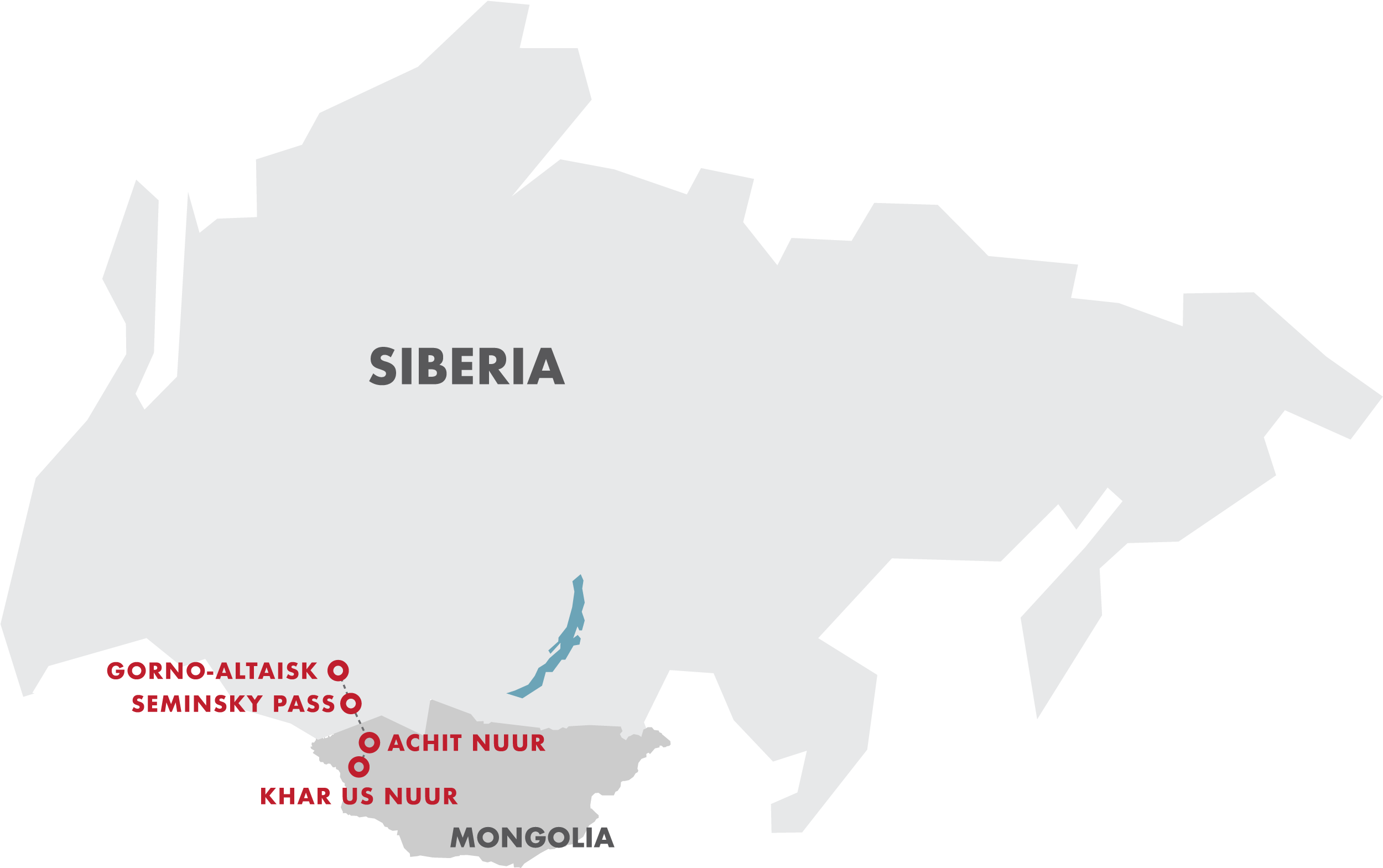
- Click on the image to enlarge
Your Siberia itinerary
Day 1: Arrival in Irkutsk
Clients depart from home towards the most significant city near Lake Baikal, Irkutsk. For those who wish to arrive early, please contact the RBT office and we will gladly help you with extra hotel arrangements.
Night: On aircraft.
Day 2: Irkutsk
We will meet for breakfast at 9 am in the Marriott Hotel lobby, keen to embark on this unique Siberian adventure. Our first day is spent exploring this fantastic city, sometimes called ‘the Paris of Siberia’. Many of the ancient wooden buildings have been preserved and showcase ornate and hand-carved decorations. The centre of the city is located on the tentative list of UNESCO World Heritage Sites. We will take a guided city excursion, explore the old city centre, walk along the Angara River, and visit, among other landmarks, the Epiphany Cathedral.
Night: **** Marriott Irkutsk City Center Hotel, Irkutsk
Day 3: Novo-Leninskiy Marshes; afternoon transfer to Bolshoye Goloustnoye
We start our venture with a visit to the Novo-Leninskiy Marshes (New Lenin Marsh). This wetland is located within the city limits and consists of many overgrown lakes with reeds, and moist meadows filled with territorial birds. These lakes are teeming with various waterfowl, sometimes Falcated Duck is even found here, but the undisputed star of the show here is Yellow-breasted Bunting. Males can be heard singing right across the marsh. Nearby we can see and hear Common Reed Bunting and Black-faced Bunting as well. This is one of the best places to encounter the mysterious Pallas´s Grasshopper Warbler, while Eastern Marsh Harrier patrols the reedbeds, and we will search for the diminutive Baillon´s Crake. Long-tailed Rosefinch, Azure Tit and many other exciting species are frequent visitors to this area.
Bolshoye Goloustnoye is a small Siberian village located two hours from Irkutsk. The town has approximately 700 residents of whom most have lived all their lives here. All the buildings are built in a classic wooden style, with the road leading to the town being equally primitive! Our first stop is the meadows of the Ushakovka River, a regular haunt of Swinhoe’s Snipe which gives its aerial display flight above the fields. Mature trees attract Black Woodpeckers, and Swinhoe’s Robin and Red-flanked Bluetail can be seen in patches of pine. The open meadows are inhabited by Brown Shrike, and we will be keeping an eye on the sky for Booted Eagles and Crested Honey Buzzards. Back in the village, we will check in to our attractive guesthouse near Lake Baikal.
Night: Russkoye Podvorye Resort, Bolshoye Goloustnoye
Day 4: Bolshoye Goloustnoye
Dawn is early, and we start with a visit to the dense Taiga forest. This is the habitat of some classic and beautiful Siberian birds. Here we can find Pallas´s Leaf Warbler, Yellow-browed Warbler, Orange-flanked Bush-robin, White´s Thrush and even Rufous-tailed (Swinhoe´s) Robin are sometimes seen. Woodpeckers are frequently observed, Black, Gray-headed and Little Spotted woodpeckers are all possible. Buntings are the dessert, with the magnificent Chestnut and Yellow-browed Buntings being the most prominent targets. After breakfast, we will visit some captivating taiga meadows in a small river valley, with colourful wildflowers and an extensive selection of butterflies on offer. Here Gray´s Grasshopper Warbler, Lanceolated Warbler, Baikal Grasshopper Warbler, Chinese Grasshopper Warbler, as well as Naumann´s, Dusky, and Red-throated Thrush are the key targets.
After an afternoon break, we will enjoy a leisurely walk in the village to have a closer look at the traditional wooden houses. We will have an excellent chance to come across birds like Hill Pigeon, Barn Swallow of the race ‘tytleri’ (all red belly and breast) and Lesser Whitethroat. On the nearby open grassland plains, Blyth’s Pipit and Thick-billed Warblers are breeding. A colony of handsome Daurian Jackdaws will undoubtedly receive a lot of attention as well! In the evening we return to our guesthouse where we will enjoy a delicious local meal.
Night: Russkoye Podvorye Resort, Bolshoye Goloustnoye
Day 5: Bolshoye Goloustnoye to Arshan
In the morning, we start driving towards the village of Arshan, which is renowned for its mineral springs. During the drive, we make several stops where Pallas’s Warbler and Siberian Chiffchaff will hopefully be added to our list. The Siberian Chipmunk is one of the smaller mammals living in the Taiga forest; it is the only species of Chipmunk found outside of North America, and we have a good chance of finding it near Arshan. After a long day of driving, we arrive in the early evening at the small resort village of Arshan.
Night: Tuyana Hotel, Arshan
Day 6: Tunka Marshes
Today we visit the Tunka Marshes, an area of snow-capped peaks, woodland patches, grassy meadows and several small lakes with reedy margins. Before reaching Tunka, an area of bushes is worth checking for Siberian Rubythroat, Tree Pipit and Pine Bunting. In the meadows, Richard’s Pipits are common, while stands of trees and scrub hold Eurasian Wryneck, Northern and Brown Shrikes and perhaps a Thick-billed Warbler. A walk around Tunka Marshes may reveal Eurasian Bittern, Stejneger’s Scoter, Common Pochard, Greater Spotted Eagle, White-winged Tern, Siberian Stonechat and singing Yellow-breasted Buntings. Tunka is also reliable for calling Japanese Quails, although our chances of seeing one are slim. Scarcer birds occurring at Tunka include Black Grouse, White-tailed Eagle, Eastern Buzzard and Little Gull. In the evening we return to Arshan, where we will visit the magnificent preserved Buddhist temple of Bodhidharma or Hoymorsky Datsan.
Night: Tuyana Hotel, Arshan
Day 7 - 8: Sayan Mountains
In the morning we leave beautiful Arshan behind us and head west along a picturesque road. We travel through a valley surrounded by snow-capped peaks, to eventually climb up a mountain plateau near the border with Mongolia. This scenic area is located at the base of the highest mountain of the Eastern Sayan – Mount Munku Sardyk (3,491 m). Here we will seek out the elegant Red-throated Thrush and Güldenstädt’s Redstart, but the main goal has to be Pallas’s Rosefinch. All three of these species are undoubtedly stunners, but the latter is probably the most amazing. The rosefinch has a deep pinkish-brown colour with white primaries and a subtle light pinkish throat patch. In tracts of birch forest, we will many Two-barred Warblers frantically calling. There are no hotels in this mountainous region, and as such we have organized a cosy tented camp for our time here. Our meals will be cooked over an open fire with an endless glittering sky above our heads!
Night: Private Tented camp, Arshan Mountains
Day 9: Sayan to Teply Ozero
We will have a final walk around our camp before we leave Sayan and drive to the southern shores of Lake Baikal. Along streams and mountain rivers in this area we often see White-throated Dippers – this is also the habitat of a rare and mysterious bird, the Solitary Snipe. It favours fast-flowing streams at high elevations and is tricky to spot. If we are lucky, we may find the odd pair of Asian Rosy-Finch here. During our drive, we stop to visit the small village of Kudrino where the gardens hold birds like Daurian and Common Redstarts, Eurasian Nuthatch and Azure-winged Magpie. An area of forest nearby may be productive for the scarce Siberian Bush Warbler, Olive-backed Pipit, Lanceolated Warbler and Common Rosefinch. Stands of silver birch dominate the place where we should locate the attractive Chestnut Bunting, Oriental Turtle Dove, Eurasian and Baikal Bullfinches, Hawfinch, and various Woodpeckers. We expect to arrive at our hotel near Teply Ozero in the early evening. We will spend three nights here on the shores of Lake Baikal.
Night: Belosnezka Hotel, Vydrino Village
Day 10 - 11: Birding at Teply Ozero
Birding in this fabulous place is something that must be experienced to believe. The location, between Lake Baikal and a nearby high mountain range, creates the wettest area in southern Siberia. These conditions produce an area of unique vegetation. A combination of dark coniferous taiga with relic poplar forests makes the Teply Ozero area prosperous for wildlife. Be prepared for a plethora of new species – Oriental Cuckoo, White-backed, Three-toed and Grey-headed Woodpeckers, Red-flanked Bluetail, Olive-backed Pipit, Dark-sided, Asian Brown, Mugimaki and Taiga Flycatchers, Radde’s, Arctic, Yellow-browed, Pallas’s, and Two-barred Greenish Warblers, Siberian Blue and Swinhoe’s Robins, and Black-faced Bunting. Uncommon species known to occur in these forests include Yellow-browed Bunting, Siberian Jay, White’s, Eye-browed and Siberian Thrushes and, above the forest, White-throated Needletails. In the evenings we will wait for beautiful views over Lake Baikal as well as some short forays in search of Ural Owl, Great Grey Owl and Boreal Owl.
Night: Belosnezka Hotel, Vydrino Village.
Day 12: Teply Ozero to Ulan-Ude
In the morning we will make one more visit to Teply Ozero before we set sails for the Buryat capital of Ulan-Ude. This is a region dominated by steppe, salt lakes and small river valleys. This is a markedly different landscape from what we have previously witnessed. On the way, we will make several stops for birding, with a chance to find the rare and handsome Chestnut-eared Bunting. We will reach Buryatia in the early evening. Buryats are another indigenous people of Siberia, closely related to the Mongols that live to the south. Once in the city, we immediately feel its local flavour which will add colour to our journey. In the evening we can take a short walk to visit the largest Lenin-head statue in the world. We end a long day with a delicious local flavoured dinner.
Night: *** Baikal Plaza, Ulan-Ude.
Days 13: Ulan-Ude to Beloozersk
Early this morning, a transfer will be arranged to Nursultan Nazarbayev International Airport (NQZ), ensuring timely arrival for the Turkish Airlines flight to Istanbul, currently scheduled for departure at 3:20 a.m.
Night: No lodging
Day 15: Beloozersk to Ulan-Ude
We do some final birding, revisiting the regions of the previous days. In the afternoon we have the option to visit the Ivolginskiy Datsan, the only Buddhist spiritual centre of the former USSR. Eventually, we return to Ulan-Ude, where the tour concludes with a grand final dinner.
Night: *** Baikal Plaza, Ulan-Ude
Day 14: Birding the steppe of Beloozersk
An early start will see us arrive at an area of salt lakes near the village. This is a great place, with a high concentration of ducks and waders at this time of year. At times there are so many Ruddy Shelducks present that parts of the lake appear red! Alongside the numerous shelduck, we may find Whooper Swan, Slavonian and Black-necked Grebes and numerous ducks which may include small numbers of Long-tailed Duck and Smew. The open steppe habitat attracts Demoiselle Crane, Cinereous Vulture, Steppe Eagle, Upland Buzzard and Eurasian Hobby. In the tall grasslands, colourful Mongolian Larks are breeding, with males continually displaying. Blyth’s Pipit and Pallas’s Reed Bunting can be found nesting on the shores and in tall tufts of grass. The lakes here occasionally hold the very rare Swan Goose. On the muddy margins of the lake, we may find migrant shorebirds including Pacific Golden Plover, Red-necked, Long-toed and Temminck’s Stints, Eastern Black-tailed Godwit, Marsh Sandpiper, Pied Avocet and Little Ringed Plover. A walk-through riverside woodlands gives a good chance of finding migrant passerines, resting after a night of migration. On the ground, Daurian Partridge may be sighted scuttling away from us, while Golden Eagle, Lesser Kestrel, Azure Tit, Meadow and Black-faced Buntings are omnipresent. Upland Buzzards and even Saker Falcon can usually be found on the electrical pylons nearby. All in all, a great day awaits us!
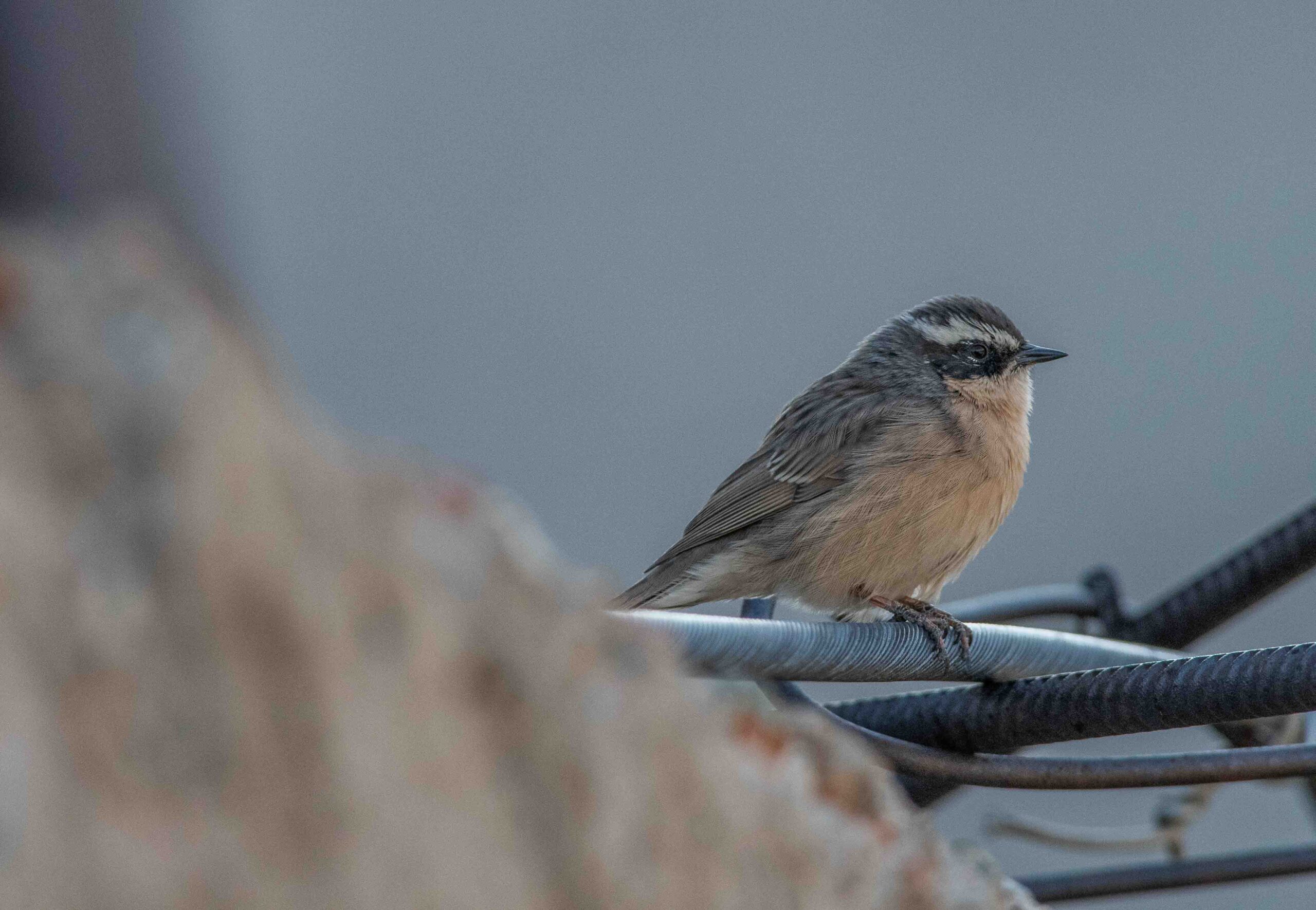
Night: Private residence, Beloozersk
Day 16: Departure for Home
After a splendid holiday in Central Siberia, it is time to depart for home. We say our farewells at the Ulan-Ude Airport from where everybody boards their respective flights home.
Tour information
Focus
- Birds
- Mammals
- Russian culture
Group size
Min 6 - Max 10
The group will be always led by one birding leader and one assistant.
What's included in the Price?
All transport. All accommodations in twin rooming. All meals. All permits and national park entrances. Please note: Drinks, tips, possible visas and items of a personal nature including travel insurance, are not included.
Accomodation
Throughout the tour, we primarily use regular tourism hotels or lodges, all of which offer private facilities. On a few occasions, we may stay in basic lodges or hotels where shared facilities are encountered. In the larger cities, the hotels are very decent, and some are even rather lovely.
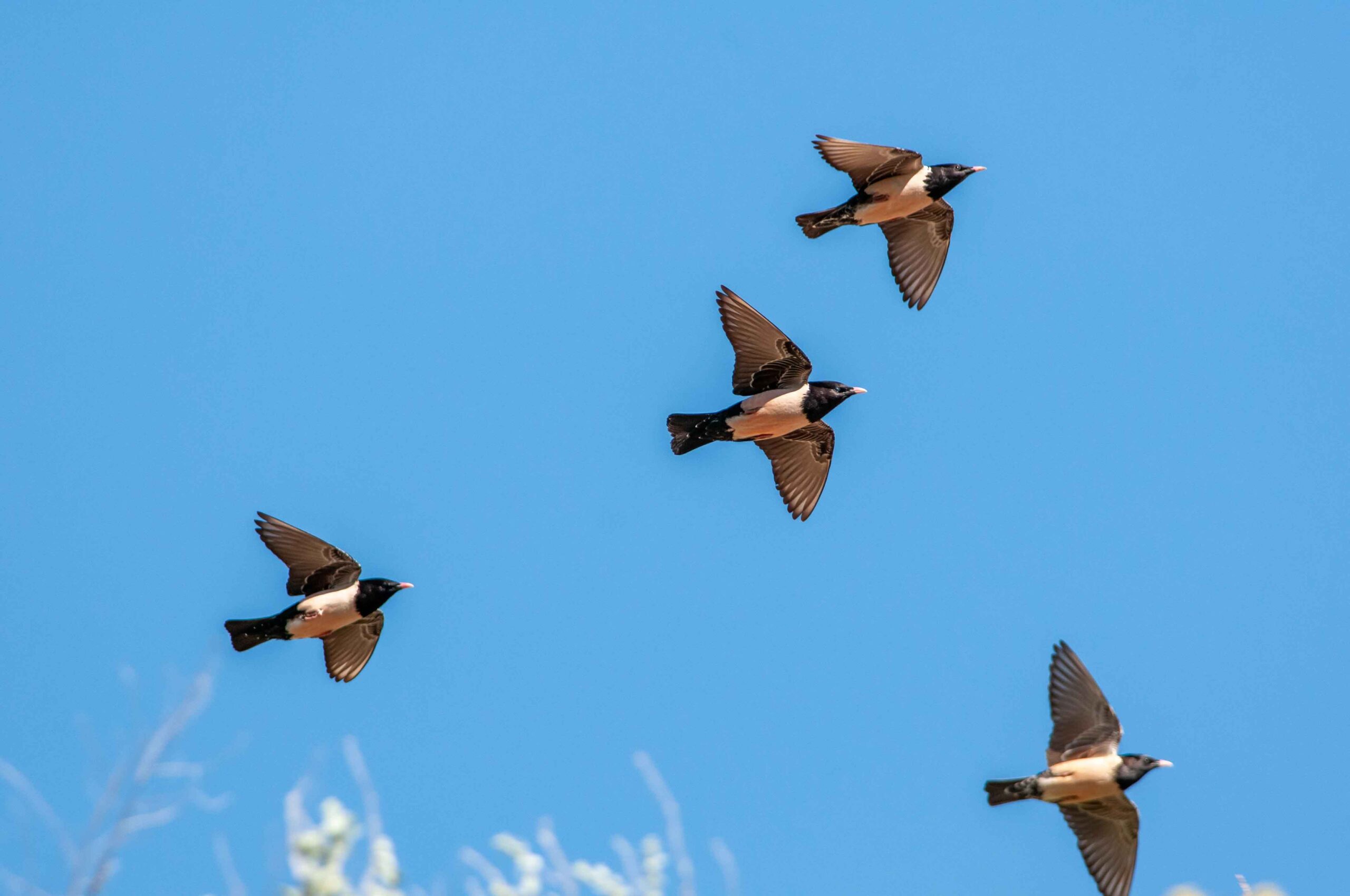
Difficulty
Our expedition to Lake Baikal is moderately intensive. Given the long days, we take full advantage during our excursions. Typically, we start the day early with some birding, accompanied by a light snack and coffee. We return later in the morning for breakfast when bird activity slows down. Midday is often spent transferring to new birding areas or taking a short break, followed by more birding in the afternoon and evening.
We’ll be doing some walking, covering up to 4-5 km per day, so a moderate level of fitness is required to comfortably complete these walks. Weather-wise, we generally expect cooler temperatures, though in recent years, temperatures have occasionally risen to nearly 30°C.
As for mosquitoes, we recommend bringing adequate repellents, though the best protection is to cover exposed skin. While we do expect to encounter some mosquitoes, our early-season timing means the majority of them will appear later in the year.
Flights
International flights are not included in the pricing. Please connect with the RBT office to find out your best connection to Russia.
Clothing - What to pack?
For our expedition to Russia, it’s essential to pack a variety of clothing to accommodate the diverse climates and activities we’ll encounter. Lightweight, easily washable, and quick-drying clothes are crucial for potentially hot days in the taiga and during longer walks. Be sure to bring sunglasses and a sun hat for sun protection.
It’s also important to pack lightweight yet warm layered clothing for early mornings, especially when on the water, as temperatures can drop significantly. This should include a warm hat, fleece, and light gloves to keep you cozy. Additionally, a light waterproof jacket is recommended to shield against unexpected rain showers. For footwear, opt for lightweight yet sturdy walking boots that can handle various terrains.
Ready for your next adventure?
Reserve your spot on our Lake Baikal expedition in Seberia now.

Related tours
From Altai Snowcocks to Mongolian Ground-Jays

Birding the Far East

Ornithological expedition to Lake Baikal
An expedition to the Indigirka Delta for Ross’s Gull & more

An expedition to the Indigirka Delta for Ross’s Gull & more
An expedition to the Indigirka Delta
A quest for Ross’s Gull & more
This trip is all about photography, as we optimize our time in the field to take advantage of the best light. Experience has taught us that the best lights in the far north of Russia are during the nights, a neverendingly evening glow giving us perfect results. Sleep and fine dining take the back seat here! As such, it’s a very intense expedition, but also a rewarding one, in a place few photographers have ever visited. Come with an open mind, and prepare for a once-in-a-lifetime trip! We are the only company in the world offering this mega expedition.
Throughout the more significant part of this venture, we camp in the Indigirka Delta, where we are only a small walk away from a reliable and stable colony of Ross’s Gulls. Very exciting! We walk several miles a day with our gear over swampy uneven terrain and sleep in tents during the days to optimize our time photographing during the evenings and nights. This photography tour is for the hardcore photographer wanting to come eye-to-viewfinder with some extreme elite arctic species!
Next tour
18 June - 4 July 2026
Cost: $6.500 – domestic flight included
Single supplement: $500
Deposit: $2.000
Group size: Min 4 – Max 7
Availability: SOLD OUT – spaces for 2027
Leader: Alexander Povarintsev
Upcoming tour
18 June – 04 July 2027: 3 Spaces
- Click on the image to enlarge
Your Russia itinerary
Days 1 - 2: Arrival in Yakutsk
Clients depart from home, heading towards the most significant city on the Lena River, Yakutsk. The town is located just 450 km south of the Arctic Circle. Clients need to be in Yakutsk before June 18 – 1800h! A welcome meeting is scheduled for this time, followed by dinner. For those wishing to arrive earlier, please contact the RBT office, and we will gladly assist with additional hotel bookings.
Night: Day 0 on aircraft
Day 3: Yakutsk to Chokurdah
Depending on the available flight schedule, we will depart from our hotel at noon for the Yakutsk Domestic Airport for our flight aboard a small aircraft to the far north. Chokurdah is located 1300 km northeast of Yakutsk, on the shores of the Indigirka River, close to the East Siberian Sea. Here we will be far from civilization! This little town is disconnected from the outside world by road for most of the year. It is only in the winter, when the tundra freezes over, that the village becomes accessible by ‘road’. After some paperwork, we will head for our accommodations for our first night in this northern outpost. Within walking distance of our hotel, we will be able to find some lovely birds like Dusky Thrush (very common), Siberian Accentor, Pallas’s Bunting, and Vega Herring Gull.
Night: Basic hotel/apartment in Chokurdah
Days 4 - 11: Birding Indigirka River for Ross's Gull & Siberian Crane
For the next seven days, we will explore the Indigirka River Delta from our private camp near a self-built ornithological station. Our forays into the surrounding area will be on foot and by boat. Numerous exquisite species call this tundra home, and we will be on the hunt for some of the best examples. The remoteness of this location and lack of hunting here has a noticeably positive effect on the birds. Most of the birds here are not used to being around humans; meaning many are easily approachable. Of course, our primary reason for visiting these untouched lands is the nearby breeding colonies of Ross’s Gull – within walking distance of our tented camp! This gorgeous little gull only breeds in isolated regions of northern Greenland and, here, in arctic Russia. We will spend much time studying and photographing these magnificent creatures. Another top bird found here is the critically endangered Siberian Crane – the rarest member of the crane family. These elegant snow-white birds are veritably common around our tented camp to have been a daily fixture on previous trips to the region.
On and around the many small lakes, we will find many beautiful species, including a trio of eiders – Spectacled, King, and Steller’s. All three species are very desirable and occur only in remote parts of the arctic. Here we can also come across Baikal Teal, Long-tailed Duck, White-winged Scoter, and Sandhill Cranes, all commonly found in the vicinity. This area is attractive for no less than four species of diver; Red-throated, Arctic, Pacific, and the enormous Yellow-billed Diver. The latter is a crucial target for many. Our team has constructed a small hide near the lake where this enigmatic species breeds. Massive amounts of waders breed in the Arctic, using the never-ending summer days to raise their young. In full summer plumage, we may find the fantastic Pacific Golden Plover, Sharp-tailed Sandpiper, Pectoral Sandpiper, Ruff, and Long-billed Dowitchers. The skies here are full of predators looking for an easy meal – Arctic Jaeger, Pomarine Skua, and Long-tailed Jaeger are all notable. The birdlife here is amazingly plentiful, other commonly observed species include Red-throated Pipit, Little Bunting, Eastern Yellow Wagtail, and Lapland Longspur. On the last day, we motor back to the tiny city of Chokurdah, by boat, where more Dusky Thrush will undoubtedly be waiting.
Night: Basic tented camp
Day 12: Birding Chokurdah
Today our schedule involves a tour of the region surrounding the village with new additions likely. Some of the species here that we may have not already encountered include the Wood Sandpiper, East-Siberian Wagtail race ‘ocularis,’ Glaucus Gull, Redpoll, and Bean Goose. We will spend one last evening at Chokurdah’s only hotel!
Night: Basic hotel/apartment in Chokurdah.
Day 13: Flight to Yakutsk
This morning we will board our flight back to civilization after an extraordinary experience in the Russian tundra. In the evening we can enjoy a feast in one of the many excellent restaurants in Yakutsk. This feast will go together, for those who are interested, with a shot of good Russian Vodka! A fitting toast to our Arctic adventure.
Night: Comfortable tourist hotel in Yakutsk
Days 14 - 16: Forest birding around Yakutsk & visit to the Lena River
Our final days of birding around Yakutsk will be at one of the ornithological stations in the forest west of the city. On our way, we can stop at various lakes where White-winged Terns will prove plentiful. Eurasian Hobbies will be hunting for dragonflies while Black-eared Kites patrol the roads for roadkill. In the forest, we will search for ‘brevirostris’ Great Spotted Woodpecker, while the songs of Pine- and Black-faced Buntings echo in the background. The rarest catch of the day could be the critically endangered Yellow-breasted Bunting. This brightly-coloured, attractive bunting has a peculiar call which proves the best way of finding it. They are usually found atop small willow bushes.
We will continue exploring the area around Yakutsk with an excursion to the taiga forests along the Lena River. In this gorgeous transitional habitat, new birds will quickly appear, with gems such as Siberian Rubythroat, Brown Shrike, and Oriental Cuckoo all breeding here. We will do our best to show you the lovely Rustic Bunting, Red-flanked Bluetail, and hopefully the appealing Yellow-browed Bunting. Above the forest, vast swirling flocks of Pacific Swifts often disguise the odd Eastern Buzzard. In marshes near the Lena river, Lanceolated and Pallas’s Grasshopper Warblers are common and will be heard singing their respective songs. Perched alongside the road, we may find attractive Japanese Stonechat or the ‘stejnegeri’ race of Common Stonechat, while Naumann’s Thrushes forage nearby in the grassy meadows.
In the evening, we return to our hotel to get ready for the flight back home. Naturally, we will enjoy a wonderful dinner in the evening to celebrate this once-in-a-lifetime adventure!
Night: Comfortable tourist hotel, Yakutsk
Day 17: Yakutsk to home
Everyone will have a day room until 11 am in our tourist hotel in Yakutsk prior to the airport transfer.
Tour information
Focus
- Exclusive Birds
- Arctic Mammals
- Vast Tundra
Group size
Min 4 - Max 7
The group will be always led by one birding leader and one assistant.
What's included in the Price?
All transport. All accommodations in twin rooming or tented camp. The domestic return flight between Yakutsk and Chokurdah. All meals. All permits and national park entrances. Please note: Drinks, tips, possible visas and items of a personal nature including travel insurance, are not included.
Accomodation
During this expedition to Arctic Russia, we will journey to visit a stable colony of Ross’s Gulls. In Yakutsk, one of the largest cities in eastern Siberia, we will stay in a comfortable tourist hotel with ensuite facilities. However, accommodations in the Arctic North will be more basic. In Chokurdakh, we will lodge in a private, basic apartment with a shared shower and WC facilities. During our week-long stay in the delta, we will use a private tented camp equipped with very basic facilities, including a toilet tent and a shower tent. While around Yakutsk, we will travel in a private, comfortable coach. To reach the delta from Chokurdakh, we will take several motorized boats that will carry us 40 km to our destination.
Difficulty
Our expedition to the Indigirka Delta is likely our most intensive tour. In the northern region, all excursions will be made on foot, traversing soggy tundra terrain with daily walks of approximately 5 km. A moderate level of fitness is required to comfortably complete these walks. Weather-wise, we typically expect cooler temperatures, with some mornings dropping close to freezing. However, in recent years, temperatures have occasionally risen to nearly 30°C.
Regarding mosquitoes, we recommend bringing adequate repellents, though the best protection is to cover exposed skin. While we do anticipate encountering some mosquitoes, our early-season timing means that the majority of these nuisance will appear later in the year.
Flights
International flights are not included in the pricing. Please connect with the RBT office to find out your best connection to Russia.
Clothing - What to pack?
For our expedition to Russia, it’s important to pack a variety of clothing to For our expedition to Russia, it’s important to pack a variety of clothing to accommodate the diverse climates and activities we’ll encounter. Lightweight, easily washable, and quick-drying clothes are essential for potentially hot days in the tundra and during longer walks. Don’t forget to bring sunglasses and a sun hat for sun protection.
However, it’s also crucial to pack lightweight yet warm layered clothing for early mornings when temperatures can drop significantly. This should include a warm hat, fleece, and light gloves to keep you cosy. Additionally, a light waterproof jacket is recommended to shield against unexpected rain showers.
When it comes to footwear, choose lightweight yet sturdy walking boots that can handle various terrains. We also advise bringing wading boots for crossing unexpected rivers in the tundra region.
Photography gear
- One Telephoto lens, minimum 400mm
- Wide-angle lens (optional)
- Teleconverters (1,4 recommended)
- Tripod or monopod, according to taste, and head
Ready for your next adventure?
Reserve your spot on our Ross’s Gull Birding Tour in Russia now.

Related tours
From Altai Snowcocks to Mongolian Ground-Jays

Birding the Far East

Ornithological expedition to Lake Baikal

An expedition to the Indigirka Delta for Ross’s Gull & more